





Samsung interview experience Real time questions & tips from candidates to crack your interview

SDE - 1
Samsung


3 rounds | 5 Coding
problems

Rejected
Interview preparation journey

Journey
When I joined college, I was unaware of this Data Structure and Algorithm, which made my journey to getting an internship way more complicated. From that point, I started doing questions on leetcode and code studio.
Application story
This company visited to my campus for the selection they first took a test then allow us to come for the interview.
Why selected/rejected for the role?
I was rejected because I have a good history of content preparation and i do not have a decent rank in leetcode and code forces. ,
Preparation
Duration: 4 months
Topics: Data Structures, Pointers, OOPS, System Design, Algorithms, Dynamic Programming

Tip 1 : Practice from Leetcode, solve Leetcode medium level problems.
Tip 2 : Brush up computer fundamentals from subjects like OS, DBMS and CN.
Tip 3 : Have a good project or good internship experience and have in-depth knowledge regarding what you have done.
Application process
Where: Campus
Eligibility: No criteria
Tip 1 : Have some projects on resume.
Tip 2 : Do not put false things on resume

Interview rounds
01
Round
Easy
Video Call
Duration60 mins
Interview date28 Jul 2022
Coding problem2
1. Modular Exponentiation
Easy
15m average time
85% success

0/40
Asked in companies


You are given a three integers 'X', 'N', and 'M'. Your task is to find ('X' ^ 'N') % 'M'. A ^ B is defined as A raised to power B and A % C is the remainder when A is divided by C.
Problem approach
You are given a three integers 'X', 'N', and 'M'. Your task is to find ('X' ^ 'N') % 'M'. A ^ B is defined as A raised to power B and A % C is the remainder when A is divided by C.
2. Maximize Sum
Easy
15m average time
85% success
0/40
Asked in companies


You are given two arrays of the same size. Your task is to maximize the possible sum that can be calculated using elements of the two given arrays. You are allowed to swap elements between the arrays at the same position any number of times to achieve this.
Note:
The maximum sum is calculated by using the following rules:-

For every ‘i’ in range 0...N:

Max_sum += abs(arr1[i] - arr2[i])

And If i < N-1:
    Max_sum += abs(arr1[i+1] - arr2[i])
For Example
Input:
n = 4
arr1[] = {2,3,4,1}
arr2[] = {2,4,1,1}

Ouput: 11


Explanation:

Here we will swap arr1[2] and arr2[2]. (Swap)

arr1[] = {2,3,1,1}
arr2[] = {2,4,4,1}

for this type of arrangement, we have our maximum Define Sum.

Sum = abs(arr1[0]-arr2[0]) + abs(arr1[1]-arr2[0]) + abs(arr1[1]-arr2[1]) + abs(arr1[2]-arr2[1]) ....
Sum = abs(2-2) + abs(3-2) + abs(3-4) + abs(1-4) + abs(1-4) + abs(1-4) + abs(1-1) = 11
Problem approach
You are given two lists (array) (nums) of the same size. Your task is to maximise the possible sum which can be calculated using the elements of the two given lists. In order to maximise the sum, you are only allowed to swap any element of the first list (array) with the other that too for any position (any index ‘i’) any number of times.
02
Round
Medium
Video Call
Duration60 mins
Interview date28 Jul 2022
Coding problem2
1. Bottom Right View of Binary Tree
Easy
10m average time
90% success
0/40
Asked in companies


Given a binary tree. Your task is to print the bottom right view of the binary tree.
Bottom right view, on viewing the given binary tree at the angle of 45 degrees from the bottom right side.
For Example
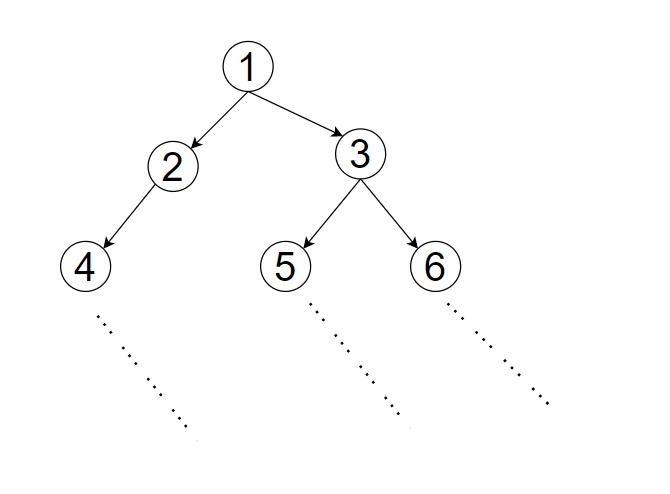
In the above binary tree, only node { 4, 5, 6 } is visible from the bottom right only node ‘1’ and node ‘3’ are hidden behind node ‘6’.
node ‘2’ is hidden behind node ‘5’.
Problem approach
Given a binary tree. Your task is to print the bottom right view of the binary tree.
Bottom right view, on viewing the given binary tree at the angle of 45 degrees from the bottom right side.
2. Maximum Subarray Sum
Moderate
25m average time
75% success
0/80
Asked in companies



Given an array of numbers, find the maximum sum of any contiguous subarray of the array.
For example, given the array [34, -50, 42, 14, -5, 86], the maximum sum would be 137, since we would take elements 42, 14, -5, and 86.
Given the array [-5, -1, -8, -9], the maximum sum would be -1.
Follow up: Do this in O(N) time.
Problem approach
You are given an array (ARR) of length N, consisting of integers. You have to find the sum of the subarray (including empty subarray) having maximum sum among all subarrays.
A subarray is a contiguous segment of an array. In other words, a subarray can be formed by removing 0 or more integers from the beginning, and 0 or more integers from the end of an array.
03
Round
Easy
HR Round
Duration30 mins
Interview date28 Jul 2022
Coding problem1
1. Basic HR Questions
What are your career options right now?
Explain how would be an asset to this organization?
What are your outside interests?
Would you lie for the company?


Here's your problem of the day 
Solving this problem will increase your chance to get selected in this company
Skill covered: Programming
What does the SQL function NOW() return?
Choose another skill to practice
Similar interview experiences
SDE - 1
4 rounds | 6 problems
Interviewed by Samsung
 Selected
2002 views

0 comments

0 upvotes
SDE - 1
3 rounds | 4 problems
Interviewed by Samsung
Selected 1292 views
0 comments
0 upvotes
SDE - 1
3 rounds | 6 problems
Interviewed by Samsung
Rejected
2309 views
0 comments
0 upvotes
SDE - 1
3 rounds | 5 problems
Interviewed by Samsung
Rejected
445 views
0 comments
0 upvotes
Companies with similar interview experiences

SDE - 1
5 rounds | 12 problems
Interviewed by Amazon
 Selected
 115740 views
24 comments
0 upvotes

SDE - 1
4 rounds | 5 problems
Interviewed by Microsoft
Selected 58753 views
5 comments
0 upvotes
SDE - 1
3 rounds | 7 problems
Interviewed by Amazon
 Selected
 35391 views
7 comments
0 upvotes