





Samsung interview experience Real time questions & tips from candidates to crack your interview

SDE - 1
Samsung


3 rounds | 5 Coding
problems

 Selected
 Interview preparation journey

Journey
Firstly, I had planned to start learning DSA from the first year, but I could not. So, I began practicing DSA from the fourth semester, and along with DSA, I also learned development because that is what I wanted to pursue. By the end of the third year, I was confident in both DSA and web development, but even then, I kept revising the concepts. Initially, I was placed in a software company in Gurgaon, but I wanted to join a well-known organization, so I continued doing DSA questions even after getting placed. Finally, my dream came true when I got placed at Samsung Electronics, Noida.
Application story
I got an email from the HR at Samsung Noida that they wanted to hire some candidates for the post of SDE-1, and if I wanted to apply, I just had to share my resume with them. Since I wanted to change my company, I emailed him my resume and proceeded to the interview rounds.
Why selected/rejected for the role?
I think my skills and knowledge were up to the mark, which made them consider me a valuable candidate. Moreover, my communication skills added to my strengths.
Preparation
Duration: 2 months
Topics: DS, Algorithms, OOPS, Dynamic Programming, System Design, Java Spring

Tip 1: Practice at least 300 questions.
Tip 2: Build your resume according to the job description.
Tip 3: Working with big data/distributed systems is a plus.
Application process
Where: Campus
Eligibility: 7+ CGPA
Tip 1: Skills relevant to the job description.
Tip 2: Do not include false information on your resume; ensure in-depth knowledge of everything listed.

Interview rounds
01
Round
Medium
Video Call
Duration90 minutes
Interview date2 Dec 2021
Coding problem2
This was a Data Structures round. Both questions were answered with optimal time complexity and clean code. Every other question was answered to the best of my knowledge.
1. Rotting Oranges
Moderate
20m average time
78% success

0/80
Asked in companies


You have been given a grid containing some oranges. Each cell of this grid has one of the three integers values:
Every second, any fresh orange that is adjacent(4-directionally) to a rotten orange becomes rotten.
Your task is to find out the minimum time after which no cell has a fresh orange. If it's impossible to rot all the fresh oranges then print -1.
Note:
1. The grid has 0-based indexing.
2. A rotten orange can affect the adjacent oranges 4 directionally i.e. Up, Down, Left, Right.
Problem approach
To solve this, we will follow these steps:
- minutes := 0
- rowMax := row size of grid
- colMax := column size of grid
- freshLeft := false
- newGrid := grid
While true (i.e., while there are still fresh cells), do the following:
- newGrid := grid
- flag := false
- freshLeft := false
For i := 0, while i < rowMax, increment i by 1, do the following:
For j := 0, while j < colMax, increment j by 1, do the following:
If newGrid[i, j] == 1, then:
- If (i-1 >= 0 and newGrid[i-1, j] == 2) or (i+1 < rowMax and newGrid[i+1, j] == 2) or (j-1 >= 0 and newGrid[i, j-1] == 2) or (j+1 < colMax and newGrid[i, j+1] == 2), then:
- grid[i, j] := 2
- flag := true
- freshLeft := true
If flag is true, then increment minutes by 1.
Otherwise, exit the loop.
Return:
- If freshLeft is false, return minutes; otherwise, return -1.
2. Find Smallest Integer
Moderate
10m average time
90% success
0/80
Asked in companies


You are given an array 'ARR' consisting of 'N' positive numbers and sorted in non-decreasing order, and your task is to find the smallest positive integer value that cannot be represented as a sum of elements of any proper subset of the given array.
An array 'B' is a subset of another array 'A' if each element of 'B' is present in 'A'.
For example:
For the given input array [1, 1, 3],
1 can be represented as the sum of elements of the subset [1],
2 can be represented as the sum of elements of a subset [1, 1],
3 can be represented as the sum of elements of a subset [3],
4 can be represented as the sum of elements of a subset [1, 3],
5 can be represented as the sum of elements of a subset [1, 1, 3]
So, the smallest positive integer value that cannot be represented as a sum of elements of any subset of a given array is 6.
Problem approach
Solved using Segment tree implementation.
02
Round
Medium
Video Call
Duration60 minutes
Interview date2 Dec 2021
Coding problem2
1. BFS in Graph
Easy
10m average time
90% success
0/40
Asked in companies


Given an adjacency list representation of a directed graph with ‘n’ vertices and ‘m’ edges. Your task is to return a list consisting of Breadth-First Traversal (BFS) starting from vertex 0.
In this traversal, one can move from vertex 'u' to vertex 'v' only if there is an edge from 'u' to 'v'. The BFS traversal should include all nodes directly or indirectly connected to vertex 0.
Note:
The traversal should proceed from left to right according to the input adjacency list.
Example:
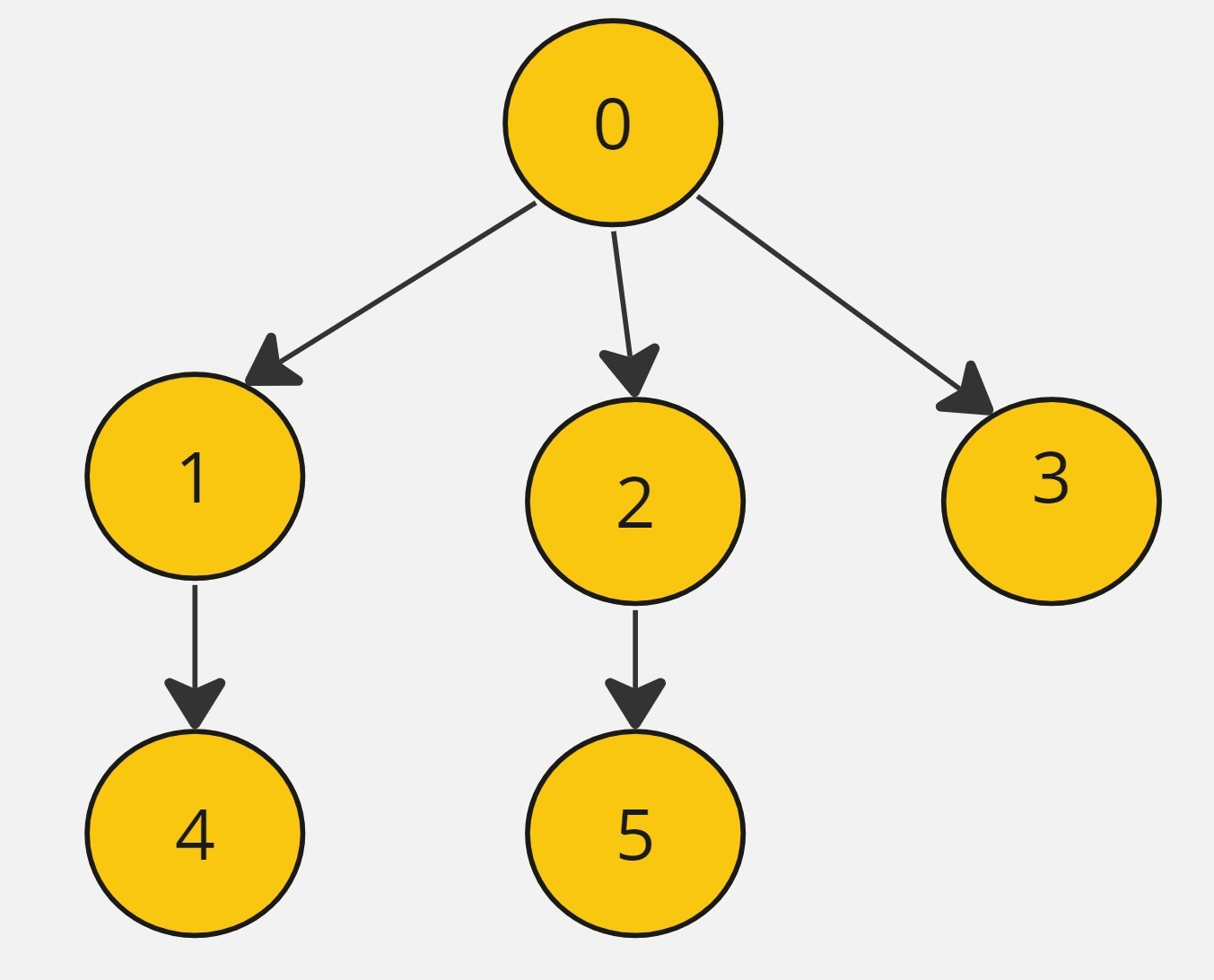
Adjacency list: { {1,2,3},{4}, {5}, {},{},{}}

The interpretation of this adjacency list is as follows:
Vertex 0 has directed edges towards vertices 1, 2, and 3.
Vertex 1 has a directed edge towards vertex 4.
Vertex 2 has a directed edge towards vertex 5.
Vertices 3, 4, and 5 have no outgoing edges.

We can also see this in the diagram below.

BFS traversal: 0 1 2 3 4 5
Problem approach
Complete BFS implementation.
03
Round
Easy
HR Round
Duration30 minutes
Interview date2 Dec 2021
Coding problem1
1. Basic HR Questions
- Introduce yourself.
- What are your strengths and weaknesses?
- What do you think of India as a tech giant in the near future?


Here's your problem of the day 
Solving this problem will increase your chance to get selected in this company
Skill covered: Programming
How do you remove whitespace from the start of a string?
Choose another skill to practice
Similar interview experiences
SDE - 1
4 rounds | 6 problems
Interviewed by Samsung
 Selected
1921 views

0 comments

0 upvotes
SDE - 1
3 rounds | 4 problems
Interviewed by Samsung
Selected 1221 views
0 comments
0 upvotes
SDE - 1
3 rounds | 6 problems
Interviewed by Samsung
Rejected
2230 views
0 comments
0 upvotes
SDE - 1
3 rounds | 5 problems
Interviewed by Samsung
Rejected
419 views
0 comments
0 upvotes
Companies with similar interview experiences

SDE - 1
5 rounds | 12 problems
Interviewed by Amazon
 Selected
 115097 views
24 comments
0 upvotes

SDE - 1
4 rounds | 5 problems
Interviewed by Microsoft
Selected 58238 views
5 comments
0 upvotes
SDE - 1
3 rounds | 7 problems
Interviewed by Amazon
 Selected
 35147 views
7 comments
0 upvotes