





Sigmoid interview experience Real time questions & tips from candidates to crack your interview
Data Engineer
Sigmoid


4 rounds | 5 Coding
problems

 Selected
 Interview preparation journey

Preparation
Duration: 2 months
Topics: Data Structures, Algorithms, OOPS, Dynamic Programming

Tip 1 : Practice popular questions from Arrays, Binary Trees, LinkedLists from CodeStudio's Interview Problems
Tip 2 : Make sure you are aware of calculating the time and space complexity for every problem you're coding.
Tip 3 : Prepare through Mock Interviews to practice explaining your approach while solving in an actual interview.
Application process
Where: Other
Eligibility: Decent work experience (for SDE-1 1-2 years experience was expected), self projects in any domain,
Tip 1 : Describe best of your projects in minimum words. Don't forget to add buzz words like REST APIs/ DB Indexing/ Benchmarking etc if you worked on backend.
Tip 2 : Don't add school achievements like Olympiads or Class Topper in your resume.
Tip 3 : If you've some work experience, put it in a way ,you're marketing yourself. Add terms like 'Created/Owned the Project through entire SDLC'
Tip 4 : Make sure you mention how your work experience actually impacted the company. Or how your self project can be actually useful to end user.

Interview rounds
01
Round
Medium
Video Call
Duration60 Minutes
Interview date12 Jun 2021
Coding problem2
Started with basic introduction about myself and then 2 DSA problems to be solved on CodeChef or any IDE of your preference. Interviewer was helpful throughout the interview and helped with syntaxes at one point as well.
Parameters tested -
1. Ability to think of edge test cases.
2. Coding Practices like naming variables and functions properly and using the most suitable access modifiers.
3. Ability to think of time and space complexity and optimise it.
Reaching the correct output was not mandatory but was preferred. Priority to coding practices was given.
1. Next Greater Element
Moderate
20m average time
90% success

0/80
Asked in companies



You are given an array arr of length N. You have to return a list of integers containing the NGE(next greater element) of each element of the given array. The NGE for an element X is the first greater element on the right side of X in the array. Elements for which no greater element exists, consider the NGE as -1.
For Example :
If the given array is [1, 3, 2], then you need to return [3, -1, -1]. Because for 1, 3 is the next greater element, for 3 it does not have any greater number to its right, and similarly for 2.
2. Zigzag Binary Tree Traversal
Easy
10m average time
90% success
0/40
Asked in companies



You are given a ‘Binary Tree’.
Return the level-order traversal of the Binary Tree.
Example:
Input: Consider the following Binary Tree:
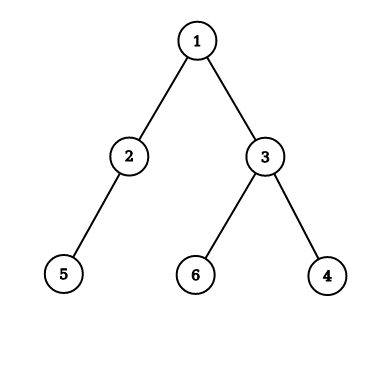
Output:
Following is the level-order traversal of the given Binary Tree: [1, 2, 3, 5, 6, 4]
02
Round
Medium
Video Call
Duration60 minutes
Interview date17 Jun 2021
Coding problem2
Started with basic introduction about myself and then 2 DSA problems to be solved on google doc. Interviewer was helpful throughout the interview.
Parameters tested -
1. Ability to think of edge test cases.
2. Coding Practices like naming variables and functions properly and using the most suitable access modifiers.
3. Ability to think of time and space complexity and optimise it.
4. Making it to the correct output.
Reaching the correct output was mandatory in best possible time comlexity.
1. Search In Rotated Sorted Array
Moderate
30m average time
65% success
0/80
Asked in companies



Aahad and Harshit always have fun by solving problems. Harshit took a sorted array consisting of distinct integers and rotated it clockwise by an unknown amount. For example, he took a sorted array = [1, 2, 3, 4, 5] and if he rotates it by 2, then the array becomes: [4, 5, 1, 2, 3].
After rotating a sorted array, Aahad needs to answer Q queries asked by Harshit, each of them is described by one integer Q[i]. which Harshit wanted him to search in the array. For each query, if he found it, he had to shout the index of the number, otherwise, he had to shout -1.
For each query, you have to complete the given method where 'key' denotes Q[i]. If the key exists in the array, return the index of the 'key', otherwise, return -1.
Note:
Can you solve each query in O(logN) ?
2. K-th element of 2 sorted array
Hard
20m average time
80% success
0/120
Asked in companies



You're given two sorted arrays 'arr1' and 'arr2' of size 'n' and 'm' respectively and an element 'k'.
Find the element that would be at the 'kth' position of the combined sorted array.
Position 'k' is given according to 1 - based indexing, but arrays 'arr1' and 'arr2' are using 0 - based indexing.
For example :
Input: 'arr1' = [2, 3, 45], 'arr2' = [4, 6, 7, 8] and 'k' = 4
Output: 6
Explanation: The merged array will be [2, 3, 4, 6, 7, 8, 45]. The element at position '4' of this array is 6. Hence we return 6.
03
Round
Easy
Video Call
Duration30 minutes
Interview date20 Jun 2021
Coding problem0
It was a hiring manager round with one of the Project Managers at Sigmoid. A discussion about my work at my internship was done. I was asked about the challenges I faced during the projects I did at my personal level and team level. Since, it's a semi-product based company, I was asked about my experience in dealing with clients. I was asked about my awareness of Data Engineering and why I want to move into this field.
04
Round
Easy
HR Round
Duration40 minutes
Interview date22 Oct 2021
Coding problem1
I was asked to introduce myself and general family background check and then discussion around salary negotiation.
1. Basic HR Questions
What are your expectations?
What are your hobbies?
Why should we hire you?
Problem approach
Tip 1 : Confidence in yourself and your skill set.
Tip 2 : Communicate properly through all your queries.
Tip 3 : Watch youtube videos to learn how to negotiate with an HR.
Tip 4 : Ask about the expectations they have from you as an employee.


Here's your problem of the day 
Solving this problem will increase your chance to get selected in this company
Skill covered: Programming
How do you remove whitespace from the start of a string?
Choose another skill to practice
Similar interview experiences
SDE - 1
4 rounds | 7 problems
Interviewed by Sigmoid
Selected 
2044 views

0 comments

0 upvotes
SDE - 1
4 rounds | 8 problems
Interviewed by Amazon
 Selected
 11210 views
0 comments
0 upvotes
SDE - Intern
1 rounds | 3 problems
Interviewed by Amazon
Selected 4456 views
0 comments
0 upvotes

SDE - 2
4 rounds | 6 problems
Interviewed by Expedia Group
 Selected
 3373 views
0 comments
0 upvotes