





Sigmoid interview experience Real time questions & tips from candidates to crack your interview
SDE - Intern
Sigmoid


2 rounds | 4 Coding
problems

Rejected
Interview preparation journey

Preparation
Duration: 3 months
Topics: Data structures, algorithms, OOPS, Dynamic programming, SQL.

Tip 1 : Practice popular questions from Arrays, Binary Trees, LinkedLists from CodeStudio's Interview Problems
Tip 2 : Make sure you are aware of calculating the time and space complexity for every problem you're coding.
Tip 3 : Prepare through Mock Interviews to practice explaining your approach while solving in an actual interview.
Application process
Where: Campus
Eligibility: Above 7 CGPA
Tip 1 : Describe best of your projects in minimum words. Don't forget to add buzz words like REST APIs/ DB Indexing/ Benchmarking etc if you worked on backend.
Tip 2 : Don't add school achievements like Olympiads or Class Topper in your resume.
Tip 3 : If you've some work experience, put it in a way ,you're marketing yourself. Add terms like 'Created/Owned the Project through entire SDLC'
Tip 4 : Make sure you mention how your work experience actually impacted the company. Or how your self project can be actually useful to end user.

Interview rounds
01
Round
Easy
Video Call
Duration45 minutes
Interview date14 Jul 2022
Coding problem2
1. Next Greater Element
Easy
10m average time
90% success

0/40
Asked in companies



You are given an array 'a' of size 'n'.
Print the Next Greater Element(NGE) for every element.
The Next Greater Element for an element 'x' is the first element on the right side of 'x' in the array, which is greater than 'x'.
If no greater elements exist to the right of 'x', consider the next greater element as -1.
For example:
Input: 'a' = [7, 12, 1, 20]

Output: NGE = [12, 20, 20, -1]

Explanation: For the given array,

- The next greater element for 7 is 12.

- The next greater element for 12 is 20.

- The next greater element for 1 is 20.

- There is no greater element for 20 on the right side. So we consider NGE as -1.
Problem approach
You are given an array arr of length N. You have to return a list of integers containing the NGE(next greater element) of each element of the given array. The NGE for an element X is the first greater element on the right side of X in the array. Elements for which no greater element exists, consider the NGE as -1.
2. Zigzag Binary Tree Traversal
Easy
10m average time
90% success
0/40
Asked in companies



You are given a ‘Binary Tree’.
Return the level-order traversal of the Binary Tree.
Example:
Input: Consider the following Binary Tree:
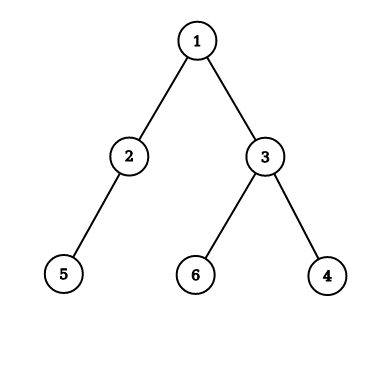
Output:
Following is the level-order traversal of the given Binary Tree: [1, 2, 3, 5, 6, 4]
Problem approach
Given a binary tree, return the zigzag level order traversal of the nodes' values of the given tree. Zigzag traversal means starting from left to right, then right to left for the next level and then again left to right and so on in an alternate manner.
02
Round
Easy
Video Call
Duration45 minutes
Interview date14 Jul 2022
Coding problem2
1. Search In Rotated Sorted Array
Moderate
30m average time
65% success
0/80
Asked in companies



Aahad and Harshit always have fun by solving problems. Harshit took a sorted array consisting of distinct integers and rotated it clockwise by an unknown amount. For example, he took a sorted array = [1, 2, 3, 4, 5] and if he rotates it by 2, then the array becomes: [4, 5, 1, 2, 3].
After rotating a sorted array, Aahad needs to answer Q queries asked by Harshit, each of them is described by one integer Q[i]. which Harshit wanted him to search in the array. For each query, if he found it, he had to shout the index of the number, otherwise, he had to shout -1.
For each query, you have to complete the given method where 'key' denotes Q[i]. If the key exists in the array, return the index of the 'key', otherwise, return -1.
Note:
Can you solve each query in O(logN) ?
Problem approach
Aahad and Harshit always have fun by solving problems. Harshit took a sorted array consisting of distinct integers and rotated it clockwise by an unknown amount. For example, he took a sorted array = [1, 2, 3, 4, 5] and if he rotates it by 2, then the array becomes: [4, 5, 1, 2, 3].
2. 0 1 Knapsack
Easy
15m average time
85% success
0/40
Asked in companies



A thief is robbing a store and can carry a maximal weight of W into his knapsack. There are N items and the ith item weighs wi and is of value vi. Considering the constraints of the maximum weight that a knapsack can carry, you have to find and return the maximum value that a thief can generate by stealing items.
Problem approach
Problem is totally based on 0/1 knapsack


Here's your problem of the day 
Solving this problem will increase your chance to get selected in this company
Skill covered: Programming
How do you remove whitespace from the start of a string?
Choose another skill to practice
Similar interview experiences
Software Developer
3 rounds | 5 problems
Interviewed by Sigmoid

 Selected
1471 views

0 comments

0 upvotes

SDE - 1
3 rounds | 7 problems
Interviewed by OYO
Selected 6182 views
0 comments
0 upvotes

SDE - 1
2 rounds | 5 problems
Interviewed by Meesho
Rejected
7245 views
0 comments
0 upvotes

SDE - 1
3 rounds | 9 problems
Interviewed by Salesforce
 Selected
 4552 views
0 comments
0 upvotes
Companies with similar interview experiences

SDE - Intern
2 rounds | 4 problems
Interviewed by Arcesium
 Selected
 3915 views
0 comments
0 upvotes
SDE - Intern
3 rounds | 5 problems
Interviewed by Arcesium
Selected 2888 views
0 comments
0 upvotes

SDE - Intern
3 rounds | 5 problems
Interviewed by BNY Mellon
Selected 2484 views
0 comments
0 upvotes