





Tata1mg interview experience Real time questions & tips from candidates to crack your interview
SDE - Intern
Tata1mg


3 rounds | 7 Coding
problems

 Selected
 Interview preparation journey

Preparation
Duration: 12 months
Topics: DSA, Algorithms, DBMS, Web Development, OOPS

Tip 1 : Keep solving DSA problems.
Tip 2 : Focus on development part also
Application process
Where: Referral
Tip 1 : Add everything with proof like add your project links, coding profiles links etc.
Tip 2 : Make your resume ATS-friendly. Find some ATS template from internet.

Interview rounds
01
Round
Easy
Video Call
Duration60 minutes
Interview date20 Sep 2021
Coding problem3
It was 60 minutes round. It was on google meet at 2 PM. Interviewer was so friendly I find it easy to discuss my doubts with him.
1. Reverse string Word Wise
Moderate

0/80
Asked in companies



Reverse the given string word wise. That is, the last word in given string should come at 1st place, last second word at 2nd place and so on. Individual words should remain as it is.
Problem approach
Step 1 : I took a temporary variable "temp"
Step 2 : Start traversing the string and keep adding each character to temp
Step 3 : As soon as I encountered a white space, I reversed temp and printed it.
Step 4 : Make temp empty.
Interviewer was satisfied with the solution.
2. Possible Words From A Phone Number
Hard
55m average time
45% success
0/120
Asked in companies



After years of research, Ninja is finally able to invent the time machine, and now he is back to the good old days when T9 keypads were being used in mobile phones.
Being a curious person, Ninja wants to find out all possible strings that can be formed by pressing the keys of the phone.
Formally, you are given a string S, that consists of digits from 2-9 (both inclusive), your task is to find out all the possible strings that can be formed from the input string by mapping the digits to the letters as in a T9 keypad. Then, print the strings in a lexicographically sorted order.
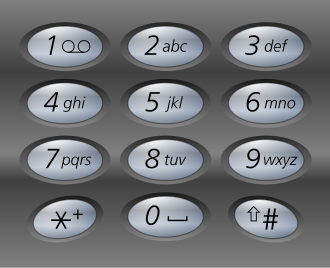
For Example:
If S = “34”, then all the possible letters that can be formed from string S are {“dg”, “dh”, “di”, “eg”, “eh”, “ei”, “fg”, “fh”, “fi”}.
Problem approach
Step 1 : First I created a map for value of each numbers. {2: ABC, 3: DEF.....}
Step 2 : Then I told him a recursive approach.
Step 3 : Interviewer asked me to write a pseudo code for the approach
Step 4 : He didn't ask me to code he was satisfied with pseudo code.
3. Trailing Zeros in Factorial
Moderate
15m average time
80% success
0/80
Asked in companies



You are given an integer N, you need to find the number of trailing zeroes in N! (N factorial).
Note:
1. Trailing zeros in a number can be defined as the number of continuous suffix zeros starting from the zeroth place of a number.
2. For example, if a number X = 1009000, then the number of trailing zeros = 3 where the zeroth place is 0, the tenth place is 0, the hundredth place is 0.
3. ! means “FACTORIAL”. Factorial of a number is calculated by the product of the integer and all integers below it till 1.
4. Value of 0! is 1.
Problem approach
Step 1 : As soon as the problem was asked, a previously solved problem was encountered in my mind.
Step 2 : I told the interviewer that the problem seems variation of that problem.
Step 3 : I gave him a DFS approach and used the same technique as the above question to find the number of trailing zeroes.
Step 4 : As enough time was left so Interviewer asked me to code this, It took me 15 minutes to code it.
02
Round
Medium
Video Call
Duration60 minutes
Interview date29 Sep 2021
Coding problem3
After two days of 1st interview, I got the mail that I cleared my first round and my 2nd round is after 1 week. It was scheduled at 2 PM. My all interviewers were really nice and supportive.
1. Search In A Row Wise And Column Wise Sorted Matrix
Moderate
15m average time
80% success
0/80
Asked in companies



You are given an 'N * N' matrix of integers where each row and each column is sorted in increasing order. You are given a target integer 'X'.
Find the position of 'X' in the matrix. If it exists then return the pair {i, j} where 'i' represents the row and 'j' represents the column of the array, otherwise return {-1,-1}
For example:
If the given matrix is:
[ [1, 2, 5],
  [3, 4, 9],
  [6, 7, 10]]
We have to find the position of 4. We will return {1,1} since A[1][1] = 4.
Problem approach
Step 1 : I started from the naive solution that was traversing the complete matrix and find the key element.
Step 2 : But I started telling an optimized approach before Interviewer say something,
Step 3 : I explained the second approach given in the article.
He was satisfied with the solution.
2. Rank from Stream
Moderate
15m average time
85% success
0/80
Asked in companies

You are given an array of ‘N’ integers say ‘ARR’ and provided with other integer say ‘K’. Now you have to find the Rank of ‘ARR[K]’.
Note:
The rank of any element in ‘ARR’ is equal to the number of smaller elements than ‘ARR[K]’ on its left side.
For example :
Input :
Let ‘ARR’’ = [6, 2, 9, 7] and ‘X’ = 3.
We can see there are two smaller elements than ‘ARR[3]’ = 7 on its left side
Output: 2
Follow Up :
Try to find rank in less time complexity than O(N), you may use some data structure to implement this.
Problem approach
Step 1 : I was trying to solve this problem using hash map, I tried for 15 minutes but was not able to solve it.
Step 2 : Interviewer suggested me to try any other Data Structure still I couldn't solve the problem.
Step 3 : Then he told me to use Binary Search Tree.
Step 4 : Then I got the solution and make a BST with node structure (number, rank).
Step 5 : So when a new number came, at the time of insertion I keep updating the rank of other numbers.
Step 6 : And at the time of telling rank, search than number and tell the rank that is saved with number.
3. DBMS
- Explain primary key, foreign key, candidate key and super key
- What is Indexing?
- What are acid properties?
Problem approach
Tip 1 : Read about concepts of DBMS.
03
Round
Easy
Video Call
Duration40 minitues
Interview date2 Oct 2021
Coding problem1
This round was focused on my projects mainly. First, we discussed my individual project which was an E-commerce application. After that, we discussed my previous experience at innotrail. Interviewer was friendly.
1. System Design
Implement the cart functionality from your e-commerce project
Problem approach
Tip 1 : Basic knowledge of low level design of systems will help in these type of questions.
Tip 2 : Learn to implement basic systems like Parking lot, snake and ladders etc


Here's your problem of the day 
Solving this problem will increase your chance to get selected in this company
Skill covered: Programming
Which data structure is used to implement a DFS?
Choose another skill to practice
Similar interview experiences
SDE - 1
4 rounds | 8 problems
Interviewed by Tata1mg

Rejected

1309 views

1 comments

0 upvotes
SDE - 1
3 rounds | 5 problems
Interviewed by Tata1mg
Rejected
1343 views
0 comments
0 upvotes
SDE - 1
1 rounds | 3 problems
Interviewed by Tata1mg
Rejected
1673 views
1 comments
0 upvotes
SDE - Intern
2 rounds | 4 problems
Interviewed by Tata1mg
Rejected
98 views
0 comments
0 upvotes
Companies with similar interview experiences
SDE - Intern
3 rounds | 6 problems
Interviewed by Amazon

Rejected
15660 views
4 comments
0 upvotes
SDE - Intern
4 rounds | 7 problems
Interviewed by Microsoft
 Selected
 15563 views
1 comments
0 upvotes
SDE - Intern
2 rounds | 4 problems
Interviewed by Amazon
Selected 10248 views
2 comments
0 upvotes