





Tekion Corp interview experience Real time questions & tips from candidates to crack your interview
SDE - 1
Tekion Corp


4 rounds | 8 Coding
problems

 Selected
 Interview preparation journey

Journey
I started Competitive coding in 1st year of college , I have solved more than 1000 problems on various platforms , I started interview preparation in january 2022. I used leetcode, GFG to learn DSA and other subjects.
Application story
Company visited On campus, i was eligible for the hiring process, Process included 4 rounds- 1 OA, 2 technical interviews, 1 HR round
Why selected/rejected for the role?
I was selected because of my good communication skills and good knowledge of DSA and computer fundamentals .
Preparation
Duration: 6 months
Topics: Data structures and algorithms, OOPs, Operating system, DBMS, SQL, Software engineering concepts, Computer networks

Tip 1 : Strengthen communication skills
Tip 2 : Keep revising
Tip 3 : Keep reading interview experiences
Application process
Where: Campus
Eligibility: No backlogs
Tip 1 : Don't write anything which you don't know
Tip 2 : Keep it short and concise, mention details of project with links

Interview rounds
01
Round
Medium
Online Coding Test
Duration90 minutes
Interview date25 Aug 2022
Coding problem3
It was online coding round which had 3 questions from medium to hard difficulty. It was conducted around 7pm
1. Next Greater Element
Easy
10m average time
90% success

0/40
Asked in companies



You are given an array 'a' of size 'n'.
Print the Next Greater Element(NGE) for every element.
The Next Greater Element for an element 'x' is the first element on the right side of 'x' in the array, which is greater than 'x'.
If no greater elements exist to the right of 'x', consider the next greater element as -1.
For example:
Input: 'a' = [7, 12, 1, 20]

Output: NGE = [12, 20, 20, -1]

Explanation: For the given array,

- The next greater element for 7 is 12.

- The next greater element for 12 is 20.

- The next greater element for 1 is 20.

- There is no greater element for 20 on the right side. So we consider NGE as -1.
Problem approach
Use a stack to find the next greater element suppose that is present at the index ind then find the next greater element that is at least (nums[cur] + x) using a segment tree in the range [ind + 1, n].
Expected time complexity: O(nlogn)
2. Fibonacci Sum
Moderate
15m average time
85% success
0/80
Asked in companies



Given two integers, ‘N’ and ‘M’, your task is to find the sum of Fibonacci numbers between ‘fib(N)’ and ‘fib(M)’ where ‘fib(N)’ represents the Nth Fibonacci number and ‘fib(M)’ represents the Mth Fibonacci number. The sum is given by sum(N, M) = fib(N) + fib(N+1) + fib(N+2) … fib(M). Since the answer could be large, so you have to return the sum modulo 10^9 + 7.
The fibonacci relation is given by:
fib(0) = 0
fib(1) = 1
fib(n) = fib(n-1) + fib(n-2), n >= 2, where fib(n) represents the nth fibonacci number.
3. N Queue Using Array
Easy
15m average time
85% success
0/40
Asked in companies



You will be given ‘N’ queries. You need to implement ‘N’ queues using an array according to those queries. Each query will belong to one of these two types:
1 ‘X’ N: Enqueue element ‘X’  into the end of the nth queue. Returns true if the element is enqueued, otherwise false.

2 N: Dequeue the element at the front of the nth queue. Returns -1 if the queue is empty, otherwise, returns the dequeued element.
Note:
Please note that Enqueue means adding an element to the end of the queue, while Dequeue means removing the element from the front of the queue.
02
Round
Medium
Video Call
Duration60 minutes
Interview date26 Jan 2023
Coding problem2
It was 1st technical round, interviewer focused on problem solving skills and projects.It lasted for 60 minutes
1. Squares of a Sorted Array
Easy
15m average time
85% success
0/40
Asked in companies
You are given an array/list ‘ARR’ of ‘N’ integers. You have to generate an array/list containing squares of each number in ‘ARR’, sorted in increasing order.
For example :
Input:
‘ARR’ = [-6,-3, 2, 1, 5]

If we take a square of each element then the array/list will become [36, 9, 4, 1, 25].
Then the sorted array/list will be [1, 4, 9, 25, 36].

Output :
[1, 4, 9, 25, 36].
Problem approach
iterate through the initial sorted array, and squaring every element.
After the loop finishes, we sort the new array since there are no negative numbers.
2. Diagonal Traversal
Moderate
20m average time
80% success
0/80
Asked in companies


You have been given a binary tree of integers. You have to return all the diagonal paths of the binary tree. A diagonal path is one in which all the nodes pass through -1 slope line.
A binary tree is a tree in which each parent node has at most two children.
Note:
Order of return of diagonal path’s array/vector: The rightmost diagonal path must come first, and so on.
Every parent node comes first then the child node. In other words, return the diagonal element from top to bottom.
Example
Consider the given binary tree.
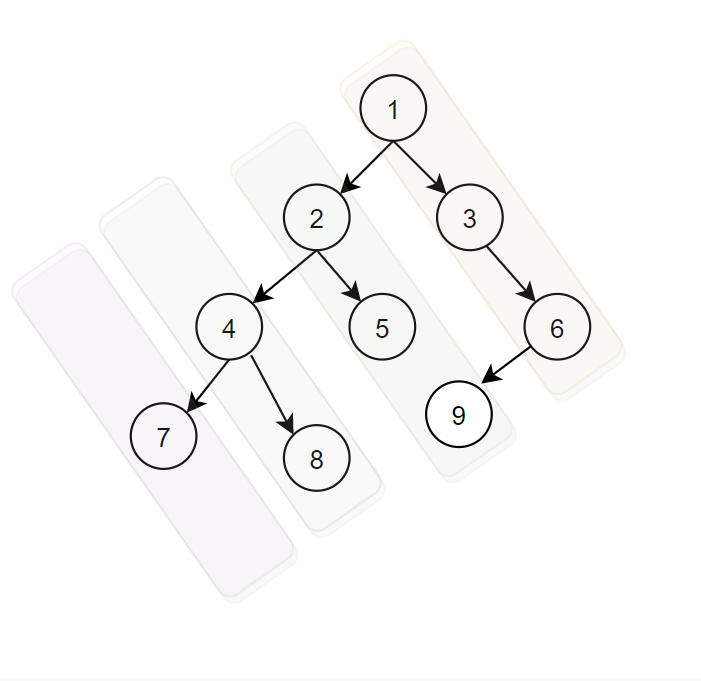
There are 4 diagonal paths:
1 3 6
2 5 9
4 8
7
You need to return ‘1 3 6 2 5 9 4 8 7’.

Let's consider this example
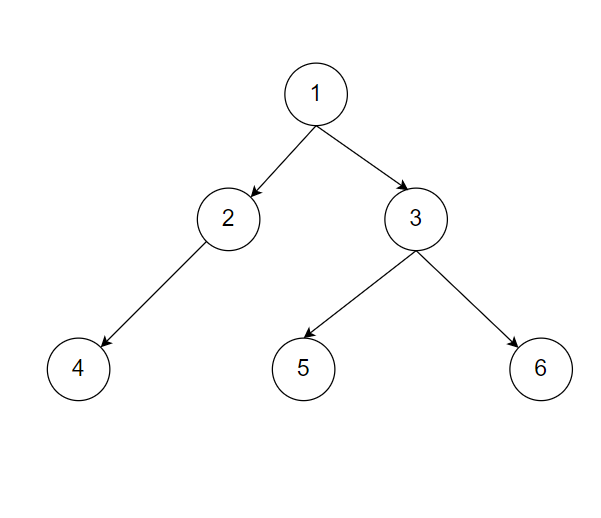
Diagonal paths are:
1 3 6
2 5
4

You need to return ‘1 3 6 2 5 4’.
Problem approach
Used a recursive approach to solve this, solution is available on various platforms
03
Round
Medium
Video Call
Duration60 minutes
Interview date26 Jan 2023
Coding problem2
It was 2nd technical round , it consisted 2 questions based on DSA
1. Most Frequent Word
Easy
15m average time
85% success
0/40
Asked in companies


You are given two strings 'A' and 'B' of words. Your task is to find out the most frequent and lexicographically smallest word in string 'A', which is not present in string 'B'. If no such word is present in 'A', then return -1.
Note:
1. A word is a sequence of one or more lowercase characters.

2. Words are separated by a single whitespace character.
Example:
For the given string 'A' = “coding ninjas coding ninjas” and 'B' = “data structures and algorithms”, so both the word 'coding' and 'ninjas' are not present in string 'B' and occur two times each, but the word “coding” is lexicographically smaller than the word “ninjas”. So the answer is “coding”.
2. Zero Pair Sum
Moderate
20m average time
70% success
0/80
Asked in companies



You are given an array ‘arr’ of ‘N’ integers. Your task is to find the count of pairs with a sum equal to zero.
Specifically, find the count of all pairs ( i , j ) such that i < j and arr[i] + arr[j] = 0
04
Round
Medium
HR Round
Duration30 minutes
Interview date26 Jan 2023
Coding problem1
It was HR round focusing on communication skills and thinking capability.
1. Basic HR Questions
How was the college journey, future expectations, why should we hire you.
Problem approach
Tip 1 : Be confident
Tip 2 : Have good communication skills
Tip 3 : Ask some questions about the company to show interest.


Here's your problem of the day 
Solving this problem will increase your chance to get selected in this company
Skill covered: Programming
How do you remove whitespace from the start of a string?
Choose another skill to practice
Similar interview experiences
SDE - 1
2 rounds | 3 problems
Interviewed by Tekion Corp
Rejected

2191 views

0 comments

0 upvotes
SDE - 1
3 rounds | 6 problems
Interviewed by Tekion Corp
Rejected
1050 views
0 comments
0 upvotes
SDE - 1
3 rounds | 7 problems
Interviewed by Tekion Corp
Selected 1075 views
0 comments
0 upvotes
SDE - 1
4 rounds | 6 problems
Interviewed by Tekion Corp
Selected 2031 views
0 comments
0 upvotes
Companies with similar interview experiences
SDE - 1
5 rounds | 12 problems
Interviewed by Amazon
 Selected
 117552 views
24 comments
0 upvotes
SDE - 1
4 rounds | 5 problems
Interviewed by Microsoft
Selected 60143 views
5 comments
0 upvotes
SDE - 1
3 rounds | 7 problems
Interviewed by Amazon
 Selected
 36138 views
7 comments
0 upvotes