





Tekion Corp interview experience Real time questions & tips from candidates to crack your interview
SDE - Intern
Tekion Corp


4 rounds | 11 Coding
problems
 Selected
 Interview preparation journey

Journey
My profile focuses on DSA and front-end web development projects. I successfully cleared the OA and secured a position at Tekion during the final selection, making it my first on-campus company.
Application story
Tekion will be visiting our campus during the last week of August. Our registration for the campus drive has been completed. As part of the selection process, we will have the opportunity to participate in the Online Assessment (OA) rounds, which will consist of 2 DSA questions and ten multiple-choice questions covering aptitude and core subjects, with a significant focus on operating systems.
There will be two technical rounds and one HR round following the OA rounds. Each technical round is expected to last approximately 1-1.5 hours, with a strong emphasis on DSA and core subject concepts.
Why selected/rejected for the role?
I answered every question asked in the interview very confidently and also asked some questions to the interviewer related to the growth I can expect while joining this company.
Preparation
Duration: 4.5 months
Topics: Array, 2-D Arrays, searching and sorting, Stack and Queue, Linked List, Dynamic programming, Trees, Bit Manipulation, Greedy Algorithms

Tip 1 : At least all standard DSA questions you must have done before appearing in an interview.
Tip 2 : Must go through all the basics concepts of OOPS, DBMS, Operating system, Computer Networks.
Tip 3 : whatever the project you have mentioned in your resume make sure you have clarity in the tech stack used.
Application process
Where: Campus
Eligibility: 7 CGPA
Tip 1: Keep your resume clean and well-organized with clear headings and sections.
Tip 2: Consider including additional sections such as extracurricular activities, leadership roles, volunteer experience, or relevant hobbies/interests if they add value to your application.

Interview rounds
01
Round
Medium
Online Coding Interview
Duration90 minutes
Interview date23 Aug 2022
Coding problem2
Online Assessment (OA) rounds consist of 2 DSA questions and 10 multiple-choice questions covering aptitude and core subjects, with a major focus on operating systems.
Q1: Based on Binary search
Q2: Based on BFS
1. Split Array Largest Sum
Hard
15m average time
85% success

0/120
Asked in companies


You’re given an array 'arr' of size 'n' and an integer 'k'.
Your task is to split 'arr' into 'k' sub-arrays such that the maximum sum achieved from the 'k' subarrays formed must be the minimum possible.
A subarray is a contiguous part of the array.
Return the minimum possible value of the maximum sum obtained after splitting the array into 'k' partitions.
Example:
Input: ‘arr’ = [1, 1, 2] and ‘k’ = 2

Output: 2

Explanation: If we want to make two subarrays, there are two possibilities: [[1], [1, 2]] and [[1, 1], [2]]. We can see that the maximum sum of any subarray is minimized in the second case. Hence, the answer is 2, which is the maximum sum of any subarray in [[1, 1], [2]].
Problem approach
Idea is to use Binary Search to find an optimal solution. For binary search, the minimum sum can be 1 and the maximum sum can be the sum of all the elements. To check if the mid is the maximum subarray sum possible, maintain a count of sub-arrays; include all possible elements in a subarray until their sum is less than mid. After this evaluation, if the count is less than or equal to K, then mid is achievable; otherwise, it is not. (Since if the count is less than K, we can further divide any subarray; its sum will never increase mid). Find the minimum possible value of mid which satisfies the condition.
2. Minimum Jumps
Moderate
25m average time
75% success
0/80
Asked in companies



Bob lives with his wife in a city named Berland. Bob is a good husband, so he goes out with his wife every Friday to ‘Arcade’ mall.
‘Arcade’ is a very famous mall in Berland. It has a very unique transportation method between shops. Since the shops in the mall are laying in a straight line, you can jump on a very advanced trampoline from the shop i, and land in any shop between (i) to (i + Arr[i]), where Arr[i] is a constant given for each shop.
There are N shops in the mall, numbered from 0 to N-1. Bob's wife starts her shopping journey from shop 0 and ends it in shop N-1. As the mall is very crowded on Fridays, unfortunately, Bob gets lost from his wife. So he wants to know, what is the minimum number of trampoline jumps from shop 0 he has to make in order to reach shop N-1 and see his wife again. If it is impossible to reach the last shop, return -1.
02
Round
Easy
Video Call
Duration90 minutes
Interview date24 Aug 2022
Coding problem4
The Interviewer asked 3 DSA questions and a few questions from the operating system.
1. Next Smaller Element
Moderate
25m average time
75% success
0/80
Asked in companies


You are given an array 'ARR' of integers of length N. Your task is to find the next smaller element for each of the array elements.
Next Smaller Element for an array element is the first element to the right of that element which has a value strictly smaller than that element.
If for any array element the next smaller element does not exist, you should print -1 for that array element.
For Example:
If the given array is [ 2, 3, 1], we need to return [1, 1, -1]. Because for 2, 1 is the Next Smaller element. For 3, 1 is the Next Smaller element and for 1, there is no next smaller element hence the answer for this element is -1.
Problem approach
Step 1: I initially solved the problem using the brute-force approach, utilizing two nested loops with a time complexity of O(N^2).
Step 2: Interviewer asked me to optimize the solution.
step 3: However, I later implemented an optimized approach based on the stack concept, which reduced the time complexity to O(n).
2. 3Sum
Moderate
15m average time
85% success
0/80
Asked in companies


You are given an array/list ARR consisting of N integers. Your task is to find all the distinct triplets present in the array which adds up to a given number K.
An array is said to have a triplet {ARR[i], ARR[j], ARR[k]} with sum = 'K' if there exists three indices i, j and k such that i!=j, j!=k and i!=j and ARR[i] + ARR[j] + ARR[k] = 'K'.
Note:
1. You can return the list of values in any order. For example, if a valid triplet is {1, 2, -3}, then {2, -3, 1}, {-3, 2, 1} etc is also valid triplet. Also, the ordering of different triplets can be random i.e if there are more than one valid triplets, you can return them in any order.
2. The elements in the array need not be distinct.
3. If no such triplet is present in the array, then return an empty list, and the output printed for such a test case will be "-1".
Problem approach
Step 1: Initially I solved the problem using the brute-force approach, which involved employing three nested loops to generate all possible triplets. Within each iteration, I compared the sum of every triplet with the given value. This approach had a time complexity of O(N^3).
Step 2: Interviewer asked me to optimize the solution.
Step 3: optimized approach by sorting the array and then traversing it. I fixed the first element of the triplet and implemented the Two Pointers algorithm to determine if there exists a pair whose sum is equal to the target minus the value of the fixed element (target - arr[i]). This optimized approach significantly improved the time complexity to O(N^2).
3. Construct Binary Tree From Inorder and Preorder Traversal
Easy
10m average time
90% success
0/40
Asked in companies


You have been given the preorder and inorder traversal of a binary tree. Your task is to construct a binary tree using the given inorder and preorder traversals.
Note:
You may assume that duplicates do not exist in the given traversals.
For example :
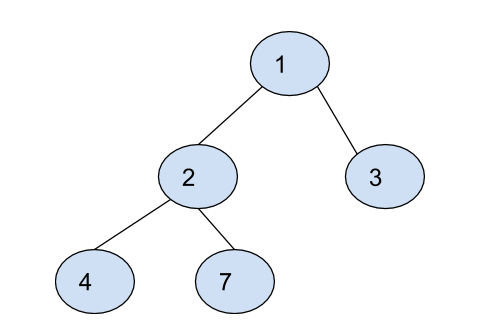
For the preorder sequence = [1, 2, 4, 7, 3] and the inorder sequence = [4, 2, 7, 1, 3], we get the following binary tree.
Problem approach
1) Pick an element from Preorder. Increment a Preorder Index Variable (preIndex in below code) to pick the next element in the next recursive call.
2) Create a new tree node tNode with the data as the picked element.
3) Find the picked element’s index in Inorder. Let the index be inIndex.
4) Call buildTree for elements before inIndex and make the built tree as a left subtree of tNode.
5) Call buildTree for elements after inIndex and make the built tree as a right subtree of tNode.
6) return tNode.
4. OS Question
What is CPU scheduling? (Learn)
03
Round
Medium
Video Call
Duration90 minutes
Interview date24 Aug 2022
Coding problem4
In this round interviewer asked DSA related questions and Project related questions
1. Cycle Detection in a Singly Linked List
Moderate
15m average time
80% success
0/80
Asked in companies



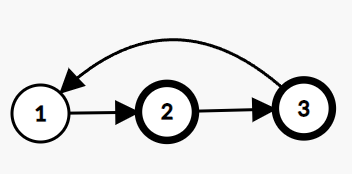
You are given a Singly Linked List of integers. Return true if it has a cycle, else return false.
A cycle occurs when a node's next points back to a previous node in the list.
Example:
In the given linked list, there is a cycle, hence we return true.
Problem approach
Step 1: slow and fast pointer approach.
Step 2: The Interviewer asked me to dry-run a few test cases.
Step 3: Interviewer asked me about Floyd's algorithm.
2. Reverse Linked List
Moderate
15m average time
85% success
0/80
Asked in companies



Given a singly linked list of integers. Your task is to return the head of the reversed linked list.
For example:
The given linked list is 1 -> 2 -> 3 -> 4-> NULL. Then the reverse linked list is 4 -> 3 -> 2 -> 1 -> NULL and the head of the reversed linked list will be 4.
Follow Up :
Can you solve this problem in O(N) time and O(1) space complexity?
3.
I have developed a portal project for my college Placement Cell. We had a detailed discussion about it for 15 minutes.
04
Round
Easy
HR Round
Duration45 minutes
Interview date26 Aug 2022
Coding problem1
It takes around 40-50 min.
Started with the general introduction.
Given a problem statement by the interviewer.
1. Technical Questions
Introduce yourself.
Given a hypothetical scenario: envision being the CEO/CTO of a startup similar to Instagram and tasked with launching the product in Tier 3-4 cities. The challenge is to enhance customer reach solely through organic promotion.
Why do you want to start your career at Tekion?
What difficulties did you face while making your final year project?


Here's your problem of the day 
Solving this problem will increase your chance to get selected in this company
Skill covered: Programming
Which traversal uses a queue as its primary data structure?
Choose another skill to practice
Similar interview experiences
Associate Software Engineer
4 rounds | 11 problems
Interviewed by Tekion Corp
 Selected
1168 views

1 comments

0 upvotes
Associate Software Engineer
4 rounds | 8 problems
Interviewed by Tekion Corp
 Selected
 1001 views
0 comments
0 upvotes
Associate Software Engineer
4 rounds | 11 problems
Interviewed by Tekion Corp
Selected 804 views
0 comments
0 upvotes
SDE - 1
4 rounds | 8 problems
Interviewed by Tekion Corp
Selected 1191 views
0 comments
0 upvotes
Companies with similar interview experiences
SDE - Intern
3 rounds | 6 problems
Interviewed by Amazon

Rejected
15749 views
4 comments
0 upvotes
SDE - Intern
4 rounds | 7 problems
Interviewed by Microsoft
 Selected
 15691 views
1 comments
0 upvotes
SDE - Intern
2 rounds | 4 problems
Interviewed by Amazon
Selected 10302 views
2 comments
0 upvotes