





Teradata interview experience Real time questions & tips from candidates to crack your interview
SDE - 1
Teradata


2 rounds | 3 Coding
problems

Rejected
Interview preparation journey

Journey
This was an on-campus opportunity. The company visited our campus in October 2025, and I was able to clear the online assessment.
It was a Day 1 company, although scheduled in a later slot.
Application story
I applied through our on-campus portal. There was a 1-hour online assessment round with two coding problems. Even candidates with one fully solved and one partially solved problem were selected, and I was one of them.
Why selected/rejected for the role?
I cleared the OA but messed up Interview Round 1, as I couldn’t reach the optimal approach in time, which was expected.
Preparation
Duration: 2 Months
Topics: DSA, graph algorithms, DP, CSES problem set, C++ basics

Tip 1: Participate in contests daily.
Tip 2: Upsolve problems that you couldn’t solve during the contest.
Tip 3: Practice coding platform problems topic-wise.
Application process
Where: Campus
Eligibility: 7+ CGPA. (Salary Package: 25 LPA)
Tip 1: Have projects that align with the company's JD.
Tip 2: Highlight achievements, if any.

Interview rounds
01
Round
Medium
Online Coding Interview
Duration60 minutes
Interview date15 Oct 2025
Coding problem2
1. Check If Binary Representation of a Number is Palindrome
Easy
15m average time
80% success

0/40
Asked in companies



Ninja is given an integer ‘N’. Ninja wants to find whether the binary representation of integer ‘N’ is palindrome or not.
A palindrome is a sequence of characters that reads the same backward as forward.
Ninja is busy with his training. Help Ninja in finding out whether the binary representation of ‘N’ is palindrome or not.
Problem approach
I brute-forced this problem by iterating through all the numbers and checking if each one is a palindrome. This led to 11 out of 16 test cases passing. I was only able to solve it partially.
2. Rectangle Area
Ninja
55m average time
45% success
0/200
Asked in companies



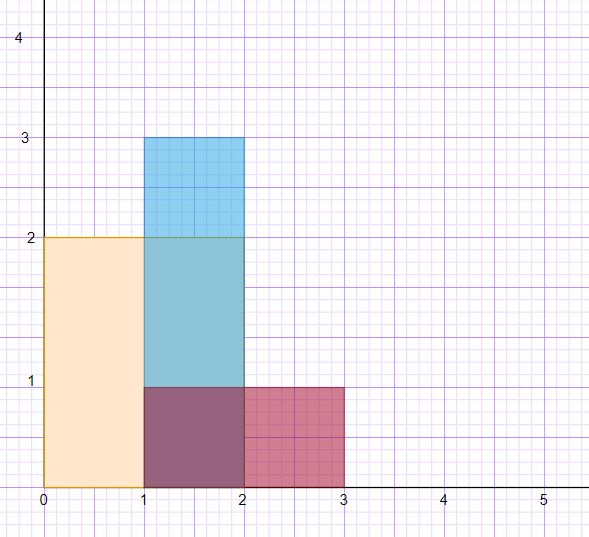
You are given a list of rectangles where each rectangle is represented by an array of four integers (i.e. Rectangle[i]=[x1, y1, x2, y2], where x1, y1 represents the bottom left point of the rectangle and x2.y2 represents the top right point of the rectangle, you have to find the total area covered by all the rectangles in the plane.
Example :
Rectangles = [[0, 0, 2, 2], [1, 0, 2, 3],[1, 0, 3, 1]],

For the given three rectangles, you can observe that the first rectangle occupies an area of 4 units and the second rectangle has an area of 3 units, but we have to keep one thing also in mind that they have an area of 3 units common overlapping among them, so we cannot include it again, so the final area which comes out for all the rectangles is 6 units.

Total Area = 6 units
Problem approach
I used coordinate compression and was then able to solve it.
02
Round
Medium
Video Call
Duration45 minutes
Interview date1 Dec 2025
Coding problem1
1. Triangle with the largest perimeter
Easy
10m average time
90% success
0/40
Asked in companies


You are given an array of positive integers ‘ARR’ of size ‘N’. The task is to return the largest perimeter of a triangle with a non-zero area, having any three elements of ‘ARR’ as its sides. If it’s impossible to form such a triangle, return 0.
Example:
‘N’ = 4, and ‘ARR’ = [2, 3, 4, 2]

For a triangle, the largest side should be strictly less than the sum of the other two sides. The triplet [2, 2, 4] cannot form a triangle as ‘4 = 2 + 2’. Here, two valid triangles can be formed, having sides as:
1. [2, 3, 4], with perimeter ‘9’.
2. [2, 2, 3], with perimeter ‘7’.

So, you should return ‘9’ as the answer.
Note:
The array ‘ARR’ contains at least three integers, i.e., ‘N >= 3’.
Problem approach
I knew that it had to be approached using DP. The idea was to use the length of the largest triangle with the bottom pixel at the (i−1, j−1) cell, i.e., dp[i−1][j−1], along with the length of the longest contiguous array of 1s in the i-th row. However, I was too late to come up with this approach and could not implement it.


Here's your problem of the day 
Solving this problem will increase your chance to get selected in this company
Skill covered: Programming
How do you remove whitespace from the start of a string?
Choose another skill to practice
Similar interview experiences
SDE - 1
4 rounds | 6 problems
Interviewed by Teradata
 Selected
0 views

0 comments

0 upvotes

SDE - 1
3 rounds | 7 problems
Interviewed by OYO
Selected 6182 views
0 comments
0 upvotes

SDE - 1
3 rounds | 9 problems
Interviewed by Salesforce
 Selected
 4552 views
0 comments
0 upvotes
SDE - 1
1 rounds | 3 problems
Interviewed by Teradata
Rejected
112 views
0 comments
0 upvotes
Companies with similar interview experiences

SDE - 1
5 rounds | 12 problems
Interviewed by Amazon
 Selected
 117552 views
24 comments
0 upvotes

SDE - 1
4 rounds | 5 problems
Interviewed by Microsoft
Selected 60143 views
5 comments
0 upvotes
SDE - 1
3 rounds | 7 problems
Interviewed by Amazon
 Selected
 36138 views
7 comments
0 upvotes