





Thought win interview experience Real time questions & tips from candidates to crack your interview
Intern
Thought win


3 rounds | 3 Coding
problems

 Selected
 Interview preparation journey

Journey
I am thrilled to share my interview experience with Coding Ninjas, a pivotal factor in securing my internship at Thoughtswin Systems. My journey began with Coding Ninjas' comprehensive Data Structures and Algorithms (DSA) course, where I honed my skills through their well-structured modules.
The 21-day DSA challenge played a pivotal role in enhancing my problem-solving abilities. The thoughtfully curated questions not only strengthened my grasp on fundamental concepts but also exposed me to diverse problem-solving approaches. Each day presented a new challenge, pushing me to think critically and efficiently.
As I embarked on the interview process with Thoughtswin Systems, the foundation laid by Coding Ninjas proved invaluable. The questions posed during the interview echoed the complexity and variety I had encountered in the Coding Ninjas curriculum. The real-world relevance of the DSA concepts learned on the platform became evident as I seamlessly navigated through the interview challenges.
I extend my heartfelt gratitude to Coding Ninjas for being the catalyst in my success. The meticulously designed courses and challenging assessments prepared me for the professional landscape, enabling me to secure this internship opportunity. I look forward to applying the skills acquired on this exciting journey ahead. Thank you, Coding Ninjas, for empowering me to turn my aspirations into reality.
- Shubham Kumawat
Application story
Applied via Poornima Group placement using Google Forms; eager to embark on this exciting opportunity.
Why selected/rejected for the role?
I am delighted to announce that I have been selected for the internship role at Thoughtswin Systems. The rigorous preparation with Coding Ninjas' DSA course and the 21-day challenge proved instrumental in navigating the interview process successfully. I am grateful for the invaluable skills gained, and I look forward to contributing effectively to the team at Thoughtswin Systems.
Preparation
Duration: 2 months
Topics: Data Structures,Pointers,OOPS,Object,Array

Tip 1 : Consistency in solving Problems everyday.
Tip 2 : Do atleast 100 DSA questions.
Application process
Where: Campus
Eligibility: 7 CGPA and no backlog
Tip 1:It should be straight forward.
Tip 2: Don't put false information

Interview rounds
01
Round
Easy
Online Coding Interview
Duration60
Interview date31 Oct 2023
Coding problem1
The in-house placement at my college comprised three rounds. The initial online test, conducted on a dedicated test platform, assessed candidates on various technical and problem-solving skills. Following the test, successful candidates advanced to the Group Discussion (GD) round, where communication, teamwork, and analytical abilities were evaluated. This interactive session allowed candidates to express their thoughts on given topics while engaging with peers. Finally, the Personal Interview (PI) round delved deeper into individual capabilities, covering technical knowledge, problem-solving approaches, and personal experiences. These three comprehensive rounds aimed to identify candidates with a well-rounded skill set and the potential to contribute effectively to the organization. The process ensured a thorough evaluation of both technical expertise and interpersonal skills, aligning with the holistic development goals of our college placement program.
1. Two Sum
Easy
10m average time
90% success

0/40
Asked in companies



You are given an array of integers 'ARR' of length 'N' and an integer Target. Your task is to return all pairs of elements such that they add up to Target.
Note:
We cannot use the element at a given index twice.
Follow Up:
Try to do this problem in O(N) time complexity.
02
Round
Easy
Online Coding Interview
Duration39
Interview date31 Oct 2023
Coding problem1
Successful candidates from the online test proceed to the Group Discussion (GD) round. In this round, candidates engage in discussions on given topics. The GD evaluates communication skills, teamwork, and the ability to express thoughts clearly. It aims to assess how well candidates can articulate their ideas, listen to others, and contribute meaningfully to a group conversation.
1. Cycle Detection in a Singly Linked List
Moderate
15m average time
80% success
0/80
Asked in companies


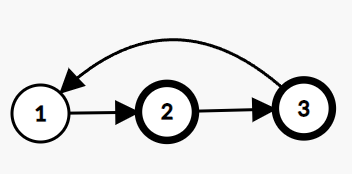
You are given a Singly Linked List of integers. Return true if it has a cycle, else return false.
A cycle occurs when a node's next points back to a previous node in the list.
Example:
In the given linked list, there is a cycle, hence we return true.
Problem approach
Tip 1: read problem carefully
Tip 2: try to solve brute force
03
Round
Easy
Face to Face
Duration30
Interview date31 Oct 2023
Coding problem1
The final round is the Personal Interview (PI). This one-on-one interview delves deeper into a candidate's technical knowledge, problem-solving approach, and overall suitability for the role. Interviewers may ask about the candidate's academic and project experiences, test problem-solving skills through coding questions, and
1. Dijkstra's shortest path
Moderate
25m average time
65% success
0/80
Asked in companies


You have been given an undirected graph of ‘V’ vertices (labeled 0,1,..., V-1) and ‘E’ edges. Each edge connecting two nodes (‘X’,’Y’) will have a weight denoting the distance between node ‘X’ and node ‘Y’.
Your task is to find the shortest path distance from the source node, which is the node labeled as 0, to all vertices given in the graph.
Example:
Input:
4 5
0 1 5
0 2 8
1 2 9
1 3 2
2 3 6
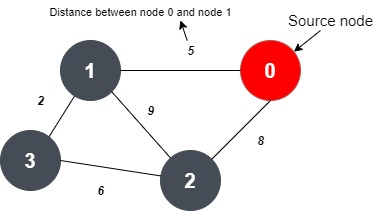
In the given input, the number of vertices is 4, and the number of edges is 5.

In the input, following the number of vertices and edges, three numbers are given. The first number denotes node ‘X’, the second number denotes node ‘Y’ and the third number denotes the distance between node ‘X’ and ‘Y’.

As per the input, there is an edge between node 0 and node 1 and the distance between them is 5.

The vertices 0 and 2 have an edge between them and the distance between them is 8.
The vertices 1 and 2 have an edge between them and the distance between them is 9.
The vertices 1 and 3 have an edge between them and the distance between them is 2.
The vertices 2 and 3 have an edge between them and the distance between them is 6.
Note:
1. There are no self-loops(an edge connecting the vertex to itself) in the given graph.

2. There can be parallel edges i.e. two vertices can be directly connected by more than 1 edge.
Problem approach
Tip 1: read the problem carefully
Tip 2: try to solve in brute force


Here's your problem of the day 
Solving this problem will increase your chance to get selected in this company
Skill covered: Programming
How do you remove whitespace from the start of a string?
Choose another skill to practice
Similar interview experiences

SDE - 1
3 rounds | 7 problems
Interviewed by OYO
 Selected
6182 views

0 comments

0 upvotes
SDE - Intern
2 rounds | 3 problems
Interviewed by Amazon
Rejected
1565 views
0 comments
0 upvotes

SDE - 1
2 rounds | 5 problems
Interviewed by Meesho
Rejected
7245 views
0 comments
0 upvotes

SDE - 1
3 rounds | 9 problems
Interviewed by Salesforce
Selected 4552 views
0 comments
0 upvotes
Companies with similar interview experiences

Intern
3 rounds | 4 problems
Interviewed by CIS - Cyber Infrastructure
 Selected
 722 views
0 comments
0 upvotes

Intern
2 rounds | 2 problems
Interviewed by Microsoft
Selected 1750 views
0 comments
0 upvotes

Intern
2 rounds | 2 problems
Interviewed by Adobe
Selected 1179 views
0 comments
0 upvotes