





Tricon Infotech interview experience Real time questions & tips from candidates to crack your interview
Associate Software Engineer
Tricon Infotech


4 rounds | 4 Coding
problems
 Selected
 Interview preparation journey

Journey
I started my journey by building strong fundamentals in data structures, algorithms, and core computer science concepts. Alongside academics, I consistently practiced coding, solved over 600 DSA problems, and worked on real-world projects to apply what I learned. My internship experience helped me understand industry standards, teamwork, and problem-solving under real constraints. There were setbacks and rejections, but each one refined my approach and strengthened my mindset. I focused on learning from mistakes, improving daily, and staying disciplined. Cracking this opportunity at Tricon Infotech is the result of persistence, continuous learning, and belief in the process.
Application story
I applied for the role through an online job portal and later received communication from the recruitment team regarding the selection process. The application journey was well-structured, starting with an initial screening, followed by scheduled technical evaluations and discussions. Clear instructions and timely updates were provided at each stage, making the overall process smooth and organized up to the interview phase.
Why selected/rejected for the role?
I believe I was selected for my strong fundamentals in data structures and problem-solving, along with hands-on project experience that demonstrated the practical application of concepts. My ability to clearly explain my thought process, adapt to feedback, and maintain a consistent learning mindset helped me stand out. At the same time, the process highlighted areas, such as system design depth, where continuous improvement is essential, which became an important lesson from the experience.
Preparation
Duration: 6 Months
Topics: Data Structures and Algorithms, Object-Oriented Programming (OOP), Operating Systems, Database Management Systems (DBMS), Computer Networks

Tip 1: Practice Data Structures and Algorithms regularly, focusing on problem patterns and edge cases rather than memorization.
Tip 2: Build and improve real-world projects to strengthen core concepts, code quality, and practical system understanding.
Application process
Where: Linkedin
Eligibility: 2025 Pass-out, (Salary Package: 5.5 LPA)
Tip 1: Highlight relevant projects and internships, emphasizing measurable impact and the technologies used.
Tip 2: Keep the resume concise, truthful, and tailored to the job role you are applying for.

Interview rounds
01
Round
Medium
Online Coding Interview
Duration90 minutes
Interview date5 Mar 2025
Coding problem1
1. Operating System
- What are semaphores, and how are they used in operating systems?
- What is virtual memory, and how does it help in memory management?
02
Round
Medium
Video Call
Duration50 minutes
Interview date25 Jun 2025
Coding problem1
1. Count of Subsequences with Given Sum
Moderate

0/80
Asked in company

You are given an array A of N non-negative integers and a target sum S. Your task is to find the total number of subsequences of the array whose elements sum up to S.
A subsequence is a sequence that can be derived from the array by deleting some or no elements without changing the order of the remaining elements.
Problem approach
Step 1: I first tried a brute-force approach by generating all possible subsequences and checking their sums. This worked for small inputs but was inefficient for larger arrays.
Step 2: The interviewer suggested optimizing the solution. I then identified it as a classic Dynamic Programming problem.
Step 3: I implemented a DP solution using a 2D array dp[n+1][sum+1], where dp[i][j] represents the number of subsequences from the first i elements with sum j. I filled the table iteratively, considering whether to include or exclude each element.
Step 4: The final solution efficiently calculated the answer in O(n * sum) time and passed all test cases. The interviewer appreciated the optimized approach and the clarity of my explanation.
03
Round
Easy
Video Call
Duration65 Minutes
Interview date10 Jul 2025
Coding problem1
1. Cycle Detection In Undirected Graph
Moderate
0/80
Asked in companies



You have been given an undirected graph with 'N' vertices and 'M' edges. The vertices are labelled from 1 to 'N'.
Your task is to find if the graph contains a cycle or not.
A path that starts from a given vertex and ends at the same vertex traversing the edges only once is called a cycle.
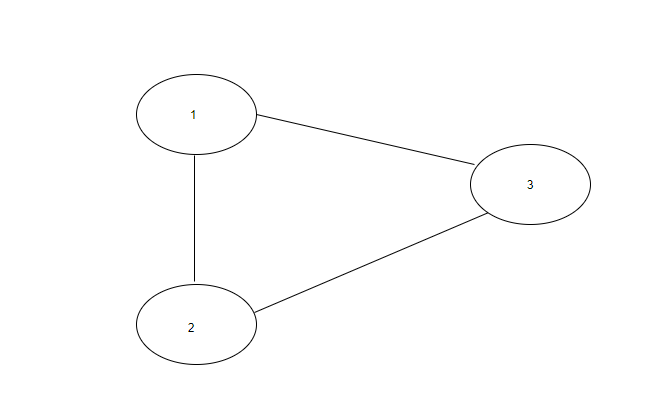
Example :
In the below graph, there exists a cycle between vertex 1, 2 and 3.
Note:
1. There are no parallel edges between two vertices.

2. There are no self-loops(an edge connecting the vertex to itself) in the graph.

3. The graph can be disconnected.
For Example :
Input: N = 3 , Edges =  [[1, 2], [2, 3], [1, 3]].
Output: Yes

Explanation : There are a total of 3 vertices in the graph. There is an edge between vertex 1 and 2, vertex 2 and 3 and vertex 1 and 3. So, there exists a cycle in the graph.
Problem approach
Step 1: I first tried a naive approach by checking all possible paths for cycles, but it was inefficient for larger graphs.
Step 2: The interviewer suggested using a standard graph traversal method for optimization. I then decided to use Depth-First Search (DFS) to detect cycles efficiently.
Step 3: I implemented DFS, keeping track of visited nodes and parent nodes. If a visited node was encountered that was not the parent, it indicated a cycle.
Step 4: The solution correctly detected cycles in O(N + M) time and worked for all test cases. The interviewer appreciated the clarity of my approach and the optimized solution.
04
Round
Easy
HR Round
Duration25 Minute
Interview date24 Jul 2025
Coding problem1
1. HR Questions
The HR round mainly focused on understanding my background, communication skills, and career goals. Questions included my educational journey, internship and project experiences, strengths and weaknesses, reasons for applying to the company, and how I handle challenges and teamwork situations. The interviewer also assessed my cultural fit and motivation for the role.


Here's your problem of the day 
Solving this problem will increase your chance to get selected in this company
Skill covered: Programming
How do you remove whitespace from the start of a string?
Choose another skill to practice
Similar interview experiences

SDE - 1
3 rounds | 7 problems
Interviewed by OYO
 Selected
6182 views

0 comments

0 upvotes

SDE - 1
3 rounds | 9 problems
Interviewed by Salesforce
 Selected
 4551 views
0 comments
0 upvotes
Associate Software Engineer
3 rounds | 17 problems
Interviewed by Tricon Infotech
 Selected
 336 views
0 comments
0 upvotes
Associate Software Engineer
3 rounds | 7 problems
Interviewed by Tricon Infotech
Selected 271 views
0 comments
0 upvotes
Companies with similar interview experiences

Associate Software Engineer
3 rounds | 10 problems
Interviewed by Amdocs
Selected 2609 views
0 comments
0 upvotes

Associate Software Engineer
3 rounds | 2 problems
Interviewed by Ernst & Young (EY)
 Selected
 3118 views
0 comments
0 upvotes
Associate Software Engineer
3 rounds | 15 problems
Interviewed by Ernst & Young (EY)
Selected 2657 views
0 comments
0 upvotes