





Trilogy Innovations interview experience Real time questions & tips from candidates to crack your interview
SDE - 1
Trilogy Innovations


6 rounds | 10 Coding
problems

Rejected
Interview preparation journey

Journey
Prior to the Interview, I was a competitive programmer and have solved standard DSA problems on LeetCode.
I was a Candidate Master at Codeforces and 5 stars at codechef at that time.
Application story
TI visits multiple on-campus colleges at once. I applied from my college. Then all the applicants will get the chance to appear in the first coding test conducted on interviewbit
Why selected/rejected for the role?
I have gone up to the final round with the CEO. Finally, I was rejected but not much feedback was given for why I was rejected.
Preparation
Duration: 10 months
Topics: Data Structures and Algorithms, OOPS, System Design, DBMS

Tip 1 : Doing CP will help
Tip 2 : Prepare all standard DSA topics
Tip 3 : Preparing system Design as well
Application process
Where: Campus
Eligibility: must reside in India and be a fresher (Graduating in 2023/2024) pursuing BTech, BE, MTech, ME, MCA, MS, Dual Degree- MTech+BTech, PHD.
Tip 1 : 2 or more good projects
Tip 2 : mention coding profiles and achievement

Interview rounds
01
Round
Hard
Online Coding Test
Duration120 minutes
Interview date17 Jul 2022
Coding problem3
There were 3 coding problems based on DSA. Timing was daytime around 12:01 pm
1. Matrix Multiplication
Moderate
15m average time
85% success

0/80
Asked in companies



Ninja has been given two sparse matrices ‘MAT1’ and ‘MAT2’ of integers having size ‘N’ x ‘M’ and ‘M’ x ‘P’, respectively.
A sparse matrix is a matrix that contains very few non-zero elements.
Ninja has to find the matrix formed by the multiplication of ‘MAT1’ and ‘MAT2’. As Ninja is busy with some other tasks so he needs your help. Can you help Ninja to find the matrix formed by the multiplication of ‘MAT1’ and ‘MAT2’?
Note: The number of columns in ‘MAT1’ i.e ‘M’ is equal to the number of rows in ‘MAT2’ i.e ‘M’. It means we can always multiply ‘MAT1’ with ‘MAT2’.
For example:
For the ‘MAT1’ and ‘MAT2’ given below, ‘MAT3’ is the matrix formed by multiplying ‘MAT1’ and ‘MAT2’.
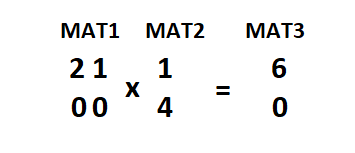
1. MAT3[0][0] = MAT1[0][0] * MAT2[0][0] + MAT1[0][1] * MAT2[1][0]  ie. 2 * 1 + 1 * 4 = 6
2. MAT3[1][0] = MAT1[1][0] * MAT2[1][0] + MAT1[1][1] * MAT2[1][0] ie. 0 * 6 + 0 * 4 = 0
2. Special Sum of Array
Easy
15m average time
80% success
0/40
Asked in companies



You have been given an array/list ‘arr’ of length ‘N’, which contains single digit elements at every index. Your task is to return the sum of all elements of the array. But the final sum should also be a single digit.
To keep the output single digit - you need to keep adding the digits of the output number till a single digit is left.
For example:
For the given array [5, 8, 4, 9]

The sum of the elements of the array will be
5 + 8 + 4 + 9 = 26.
Since 26 is not a single-digit number, we will again take the sum of the digits of 26.
2 + 6 = 8.
Now 8 is a single-digit number. So we will stop here and return 8.
3. Longest Common Prefix
Moderate
40m average time
60% success
0/80
Asked in companies



You are given an array ‘ARR’ consisting of ‘N’ strings. Your task is to find the longest common prefix among all these strings. If there is no common prefix, you have to return an empty string.
A prefix of a string can be defined as a substring obtained after removing some or all characters from the end of the string.
For Example:
Consider ARR = [“coding”, ”codezen”, ”codingninja”, ”coders”]
The longest common prefix among all the given strings is “cod” as it is present as a prefix in all strings. Hence, the answer is “cod”.
02
Round
Hard
Online Coding Interview
Duration15 minutes
Interview date18 Aug 2022
Coding problem2
This was an Aptitude MCQ round where the candidate have to solve 40 out of 50 questions to get to the next round.
1. Aptitude Question
If a milkman earns 12 Rs profit per litre of milk then the total profit he will earn from selling 35 litre of milk is?
Problem approach
answer is 420 (12*35)
2. Aptitude Question
Find the total rows where the words on left and right side are exactly same
Bangalore Banglore
Chennai Chennai
12,45 Gate 12,46 GAte
Castle Castle
Problem approach
answer is 2 (2nd and 4rth are same)
03
Round
Hard
Video Call
Duration30 minutes
Interview date15 Sep 2022
Coding problem2
This was a resume review round. It was a 30-minute round and the interviewer would ask questions based on my resume and previous experience.
1. System Design Question
interviewer asked me to implement a feature to rate the tips and add feedback on tips to update their rating based on feedback.
2. Technical Questions
discussion happened around my previous internship experience
Asked about my project i.e ( tips to users ) and ask me to to add other features to my project and how I will add them
04
Round
Medium
Video Call
Duration60 Minutes
Interview date25 Sep 2022
Coding problem1
DSA interview round. The interviewer asked one DSA problem based on a tree(medium-hard) and I was able to solve it easily
1. Tree Traversals
Easy
15m average time
85% success
0/40
Asked in companies


You have been given a Binary Tree of 'N'
nodes, where the nodes have integer values.
Your task is to return the ln-Order, Pre-Order, and Post-Order traversals of the given binary tree.
For example :
For the given binary tree:
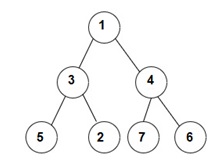
The Inorder traversal will be [5, 3, 2, 1, 7, 4, 6].
The Preorder traversal will be [1, 3, 5, 2, 4, 7, 6].
The Postorder traversal will be [5, 2, 3, 7, 6, 4, 1].
05
Round
Hard
Video Call
Duration70 minutes
Interview date1 Oct 2023
Coding problem1
It was a kind of system design round on an open-ended problem. The interviewer was one of the VP of Trilogy Innovation. This is different from normal interviews and how to approach an open-ended problem was tested. I was able to give a satisfactory solution.
1. System Design Question
Design a Miniature Railway city zoo that can be controlled by children using a controller with 3 inputs (select the train color, starting point, and ending point). This was an open-ended problem and I have to define things from scratch with proper reasoning.
Problem approach
Tip 1 : I proposed a graph-based solution for the problem and the interview was satisfied with it.
06
Round
Easy
HR Round
Duration15 minutes
Interview date5 Oct 2023
Coding problem1
Interview with the CEO. This was the last round. The round went well and I was hoping for a positive but got rejected after few days.
1. Basic HR Questions
why I want to join Trilogy
He asked me things like what were the most challenging problems I have solved and other general HR questions


Here's your problem of the day 
Solving this problem will increase your chance to get selected in this company
Skill covered: Programming
How do you remove whitespace from the start of a string?
Choose another skill to practice
Similar interview experiences
Web Developer
2 rounds | 4 problems
Interviewed by Trilogy Innovations
 Selected
1007 views

0 comments

0 upvotes
SDE - Intern
4 rounds | 5 problems
Interviewed by Trilogy Innovations
Selected 4204 views
0 comments
0 upvotes
SDE - Intern
5 rounds | 3 problems
Interviewed by Trilogy Innovations
Selected 5276 views
0 comments
0 upvotes
SDE - 1
1 rounds | 2 problems
Interviewed by Trilogy Innovations
Rejected
1115 views
0 comments
0 upvotes
Companies with similar interview experiences
SDE - 1
5 rounds | 12 problems
Interviewed by Amazon
 Selected
 117552 views
24 comments
0 upvotes
SDE - 1
4 rounds | 5 problems
Interviewed by Microsoft
Selected 60142 views
5 comments
0 upvotes
SDE - 1
3 rounds | 7 problems
Interviewed by Amazon
 Selected
 36138 views
7 comments
0 upvotes