





Trilogy Innovations interview experience Real time questions & tips from candidates to crack your interview
SDE - Intern
Trilogy Innovations


4 rounds | 5 Coding
problems

 Selected
 Interview preparation journey

Preparation
Duration: 6 months
Topics: DSA, OOPS, Operating Systems, DBMS, Networking.

Tip 1 : Practice problems of different types from websites like codeforces ranging from a rating of 1400 to 2200.
Tip 2 : Give competitive coding contests to be able to think quickly.
Tip 3 : Learn everything mentioned in your resume in depth.
Application process
Where: Campus
Eligibility: Above 7 CGPA
Tip 1 : Mention good projects with good system design to enable healthy discussion in interview.
Tip 2 : Don't write anything in which you are not comfortable enough.

Interview rounds
01
Round
Medium
Online Coding Test
Duration90 minutes
Interview date8 Aug 2021
Coding problem3
There were three coding questions of increasing difficulty. This was the major elimination round as only 4 were shortlisted for next rounds.
1. Palindromic Substrings
Moderate
20m average time
80% success

0/80
Asked in companies


You have been given a string STR. Your task is to find the total number of palindromic substrings of STR.
Example :
If the input string is "abbc", then all the possible palindromic substrings would be: ["a", "b", "b", c", "bb"] and hence, the output will be 5 since we have 5 substrings in total which form a palindrome.
Note :
A string is said to be a 'Palindrome' if it is read the same forwards and backwards.
For example, “abba” is a palindrome, but “abbc” is not.

A 'Substring' is a contiguous sequence of characters within a string.
For example, "a", "b", "c", "ab", "bc", "abc" are substrings of "abc".
Problem approach
Observation
2. Modulo
Given an array of N integers, find the number of ways modulo 1e9+7 to select K integers such that their product is positive integer. The given integers can positive or negative. N <= 1e6, K <= N.
Problem approach
Basic combinatorics, Preprocessing, Modular inverse
3. Check Bipartite Graph
Moderate
50m average time
50% success
0/80
Asked in companies



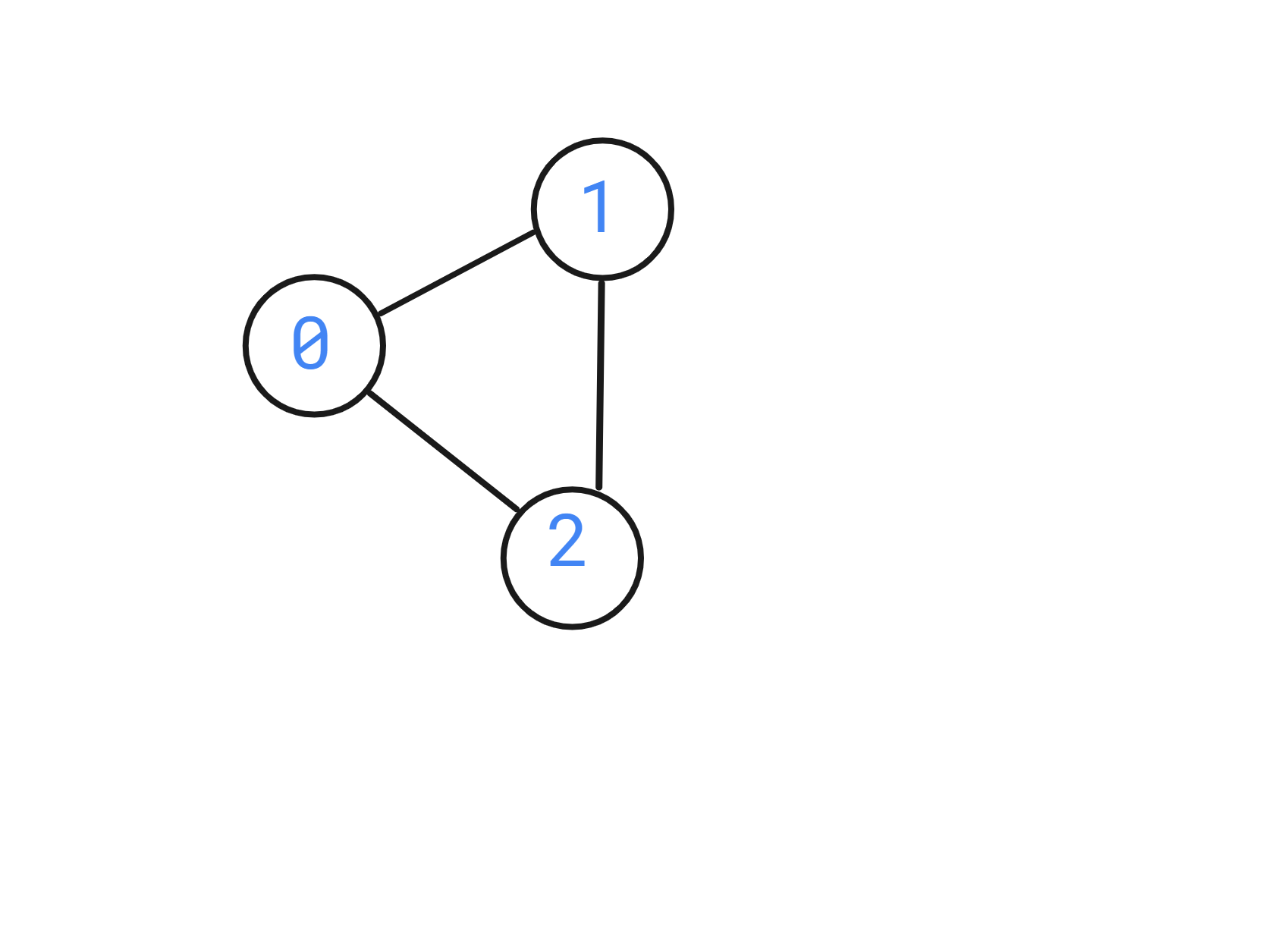
Given a graph, check whether the graph is bipartite or not. Your function should return true if the given graph's vertices can be divided into two independent sets, ‘U’ and ‘V’ such that every edge (‘u’, ‘v’) either connects a vertex from ‘U’ to ‘V’ or a vertex from ‘V’ to ‘U’.
You are given a 2D array ‘edges’ which contains 0 and 1, where ‘edges[i][j]’ = 1 denotes a bi-directional edge from ‘i’ to ‘j’.
Note:
If edges[i][j] = 1, that implies there is a bi-directional edge between ‘i’ and ‘j’, that means there exists both edges from ‘i’ to ‘j’ and to ‘j’ to ‘i’.
For example
Given:
‘N’ = 3
‘edges’ = [[0, 1, 1], [0, 0, 1], [0,0,0]].
Problem approach
DSU, Two coloring
02
Round
Easy
Telephonic
Duration30 minutes
Interview date9 Aug 2021
Coding problem0
The interviewer was subject matter expert from IIT Delhi in the topic of my project. So this was resume discussion round in which I was asked to explain the nitty gritty details of my project of what, why and how I did. He also came up with a slightly different situation in which my skill of project could be applied and he expected to think through the solution to that.
03
Round
Medium
Video Call
Duration45 minutes
Interview date9 Aug 2021
Coding problem2
The interviewer was a SDE-1 and had a good knowledge of data structures and algorithms and was really cool and patient.
1. Break Number
Moderate
35m average time
70% success
0/80
Asked in companies



Given a number 'N', you need to find all possible unique ways to represent this number as the sum of positive integers.
Note
1. By unique it is meant that no other composition can be expressed as a permutation of the generated composition. For eg. [1, 2, 1] and [1, 1, 2] are not unique.

2. You need to print all combinations in non-decreasing order for eg. [1, 2, 1] or [1, 1, 2] will be printed as [1, 1, 2], however, the order of printing all the sequences can be random.
2. Unequal Adjacent Elements
Moderate
25m average time
75% success
0/80
Asked in companies


You have been given an array/list ‘ARR’ of integers consisting of ‘N' integers. You need to rearrange ‘ARR’ so that no two adjacent elements are equal. You may return any valid rearrangement and it is guaranteed the answer exists.
Example :
Let’s say you have an array/list ‘ARR = [1,1,2,2]’.

Then a valid rearrangement can be [1,2,1,2] or [2,1,2,1] such that no two adjacent elements are equal. [2,1,1,2] is an invalid arrangement because two adjacent elements are equal.
04
Round
Easy
Video Call
Duration45 minutes
Interview date9 Aug 2021
Coding problem0
The interviewer was a VP and had great experience in the subject matter of my project. He was really cool and the interview seemed like a discussion rather than an interview.
We started off with a brief discussion of my projects and then he asked me to come up with a approach to a problem which involved the same subject matter.
My project was based on deep learning so the problem statement was meant to check my data preparation skills, knowledge of deep learning algorithms and their understanding of when to use what based on the situation and kind of data available.
Pro Tip: Take all these system design interviews as discussion and go with explaining your approach and gradually improving by taking feedbacks. Interviewer never expects to listen the best solution. He is really interested in a healthy discussion.


Here's your problem of the day 
Solving this problem will increase your chance to get selected in this company
Skill covered: Programming
How do you remove whitespace from the start of a string?
Choose another skill to practice
Similar interview experiences
SDE - Intern
2 rounds | 6 problems
Interviewed by Trilogy Innovations
Selected 
0 views

0 comments

0 upvotes
SDE - Intern
5 rounds | 4 problems
Interviewed by Trilogy Innovations
 Selected
 1108 views
0 comments
0 upvotes
SDE - Intern
5 rounds | 3 problems
Interviewed by Trilogy Innovations
Selected 5276 views
0 comments
0 upvotes
SDE - Intern
4 rounds | 6 problems
Interviewed by Trilogy Innovations
Selected 2226 views
0 comments
0 upvotes
Companies with similar interview experiences
SDE - Intern
3 rounds | 6 problems
Interviewed by Amazon

Rejected
16212 views
4 comments
0 upvotes
SDE - Intern
4 rounds | 7 problems
Interviewed by Microsoft
 Selected
 16223 views
1 comments
0 upvotes
SDE - Intern
2 rounds | 4 problems
Interviewed by Amazon
Selected 10541 views
2 comments
0 upvotes