





Twilio interview experience Real time questions & tips from candidates to crack your interview

SDE - 1
Twilio


3 rounds | 7 Coding
problems

Rejected
Interview preparation journey

Journey
When I joined college, I was unaware of this Data Structure and Algorithm, which made my journey to getting an internship more complicated. From that point, I started practicing questions on Code Studio.
Application story
This company visited my campus for the placement where I applied for it.
Why selected/rejected for the role?
I was rejected because i was not able to provide a good approach to the DSA question which are being asked.
Preparation
Duration: 4 months
Topics: Data Structures, Pointers, OOPS, System Design, Algorithms, Dynamic Programming

Tip 1: Practice from coding platforms to solve its medium-level problems.
Tip 2: Brush up computer fundamentals from subjects like OS, DBMS, and CN.
Tip 3: Good project or internship experience and in-depth work knowledge.
Application process
Where: Campus
Eligibility: Above 7 CGPA
Tip 1: Have some projects on your resume.
Tip 2: Do not put false things on your resume

Interview rounds
01
Round
Easy
Video Call
Duration60 mins
Interview date29 Mar 2023
Coding problem3
1. Largest Island
Moderate
30m average time
90% success

0/80
Asked in companies



You are given two integers 'n' and 'm', the dimensions of a grid. The coordinates are from (0, 0) to (n - 1, m - 1).
The grid can only have values 0 and 1.
The value is 0 if there is water and 1 if there is land.
An island is a group of ‘1’s such that every ‘1’ has at least another ‘1’ sharing a common edge.
You are given an array 'queries' of size 'q'.
Each element in 'queries' contains two integers 'x' and 'y', referring to the coordinates in the grid.
Initially, the grid is filled with 0, which means only water and no land.
At each query, the value of 'grid' at (x, y) becomes 1, which means it becomes land.
Find out, after each query, the number of islands in the grid.
Example :
Input: 'n' = 3, 'm' = 4
'queries' = [[1, 1], [1, 2], [2, 3]]

Output: [1, 1, 2]

Explanation:

Initially, the grid was:
0 0 0 0
0 0 0 0
0 0 0 0

After query (1, 1):
0 0 0 0
0 1 0 0
0 0 0 0
There is one island having land (1, 1).

After query (1, 2):
0 0 0 0
0 1 1 0
0 0 0 0
Since (1, 1) and (1, 2) share a common edge, they form one island. So there is one island having lands (1, 1) and (1, 2).

After query (2, 3):
0 0 0 0
0 1 1 0
0 0 0 1
Now there are two islands, one having lands (1, 1) and (1, 2), and another having land (2, 3).

So the number of islands after each query is [1, 1, 2].
Problem approach
DFS using visited set.
2. DBMS Question
Pros and cons of indexing in a database. (Learn)
Problem approach
Tip 1 : Prepare CS fundamentals.
Tip 2 : Prepare short notes on each topic.
3. OS Question
What is the difference between Write-back and write-through cache? Which one should be preferred? (Learn)
Problem approach
Tip 1 : Read about caching and its implementation.
02
Round
Easy
Video Call
Duration60 mins
Interview date29 Mar 2023
Coding problem2
1. Maximum Subarray Sum
Moderate
25m average time
75% success
0/80
Asked in companies



Given an array of numbers, find the maximum sum of any contiguous subarray of the array.
For example, given the array [34, -50, 42, 14, -5, 86], the maximum sum would be 137, since we would take elements 42, 14, -5, and 86.
Given the array [-5, -1, -8, -9], the maximum sum would be -1.
Follow up: Do this in O(N) time.
Problem approach
Tip 1 : Used dictionary to find the sum of the number.
2. Technical Question
What is pickling? (Learn)
Problem approach
Tip 1: Prepare your resume and update yourself.
Tip 2: If you have mentioned some of the latest technology, you should have a basic idea about that and go through the interview questions from that topic, which will be helpful to you.
03
Round
Easy
Video Call
Duration60 mins
Interview date29 Mar 2023
Coding problem2
1. Word Search - l
Moderate
30m average time
60% success
0/80
Asked in companies


You are given a 2D board('N' rows and 'M' columns) of characters and a string 'word'.
Your task is to return true if the given word exists in the grid, else return false. The word can be constructed from letters of sequentially adjacent cells, where adjacent cells are horizontally or vertically neighboring.
Note:
The same letter cell should not be used more than once.
For Example:
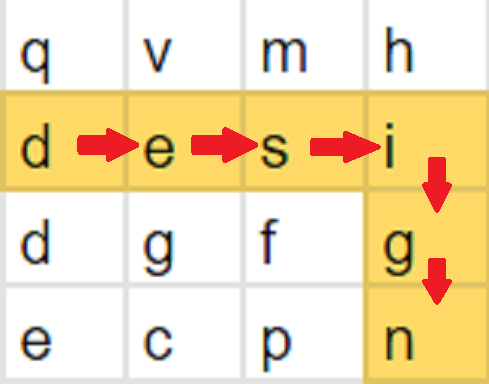
For a given word “design” and the given 2D board
[[q’, ‘v’, ‘m’, ‘h’],
 [‘d’, ‘e’, ‘s’, ‘i’],
 [‘d’, ‘g’, ‘f’, ‘g’],
 [‘e’, ‘c’, ‘p’, ‘n’]]

The word design can be formed by sequentially adjacent cells as shown by the highlighted color in the 2nd row and last column.
Problem approach
This was a straightforward DFS problem solved by maintaining a visited set.
2. Print Nodes at Distance K From a Given Node
Hard
20m average time
80% success
0/120
Asked in companies


You are given an arbitrary binary tree, a node of the tree, and an integer 'K'. You need to find all such nodes which have a distance K from the given node and return the list of these nodes.
Distance between two nodes in a binary tree is defined as the number of connections/edges in the path between the two nodes.
Note:
1. A binary tree is a tree in which each node has at most two children.
2. The given tree will be non-empty.
3. The given tree can have multiple nodes with the same value.
4. If there are no nodes in the tree which are at distance = K from the given node, return an empty list.
5. You can return the list of values of valid nodes in any order. For example if the valid nodes have values 1,2,3, then you can return {1,2,3} or {3,1,2} etc.
Example :
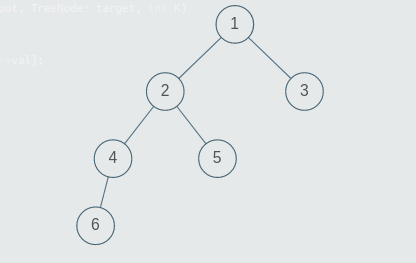
Consider this tree above. The target node is 5 and K = 3. The nodes at distance 1 from node 5 are {2}, nodes at distance 2 from node 5 are {1, 4} and nodes at distance 3 from node 5 are {6, 3}.
Problem approach
Tip 1 : First understand the problem statement very carefully.
Tip 2 : Make a short dry code on paper.
Tip 3 : Dry Run it Again.


Here's your problem of the day 
Solving this problem will increase your chance to get selected in this company
Skill covered: Programming
How do you remove whitespace from the start of a string?
Choose another skill to practice
Similar interview experiences
SDE - 1
2 rounds | 5 problems
Interviewed by Twilio
Rejected

923 views

0 comments

0 upvotes
SDE - 1
2 rounds | 5 problems
Interviewed by Twilio
Rejected
961 views
0 comments
0 upvotes
SDE - 1
2 rounds | 5 problems
Interviewed by Twilio

Rejected
773 views
0 comments
0 upvotes
SDE - 1
3 rounds | 6 problems
Interviewed by Twilio
Rejected
612 views
0 comments
0 upvotes
Companies with similar interview experiences
SDE - 1
5 rounds | 12 problems
Interviewed by Amazon

 Selected
 117552 views
24 comments
0 upvotes

SDE - 1
4 rounds | 5 problems
Interviewed by Microsoft
Selected 60143 views
5 comments
0 upvotes
SDE - 1
3 rounds | 7 problems
Interviewed by Amazon
 Selected
 36138 views
7 comments
0 upvotes