





Ula interview experience Real time questions & tips from candidates to crack your interview
SDE - Intern
Ula


3 rounds | 13 Coding
problems
Rejected
Interview preparation journey

Journey
In the start I mostly focused on theory subjects and utilized whatever time I use to get in college computer lab. with the help of my college friends started practicing on various coding platform like codechef, codeforces, hackerrank, coding ninjas, geekforgeeks, leetcode plus the regular theory subjects ( CS Fundamentals )
Application story
It was a On-campus drive so college placement cell shared google form to fill our details. Students were shortlisted on the basis of CGPA and number of offers they have in hand.
Why selected/rejected for the role?
ULA is a growing start-up, they were looking for someone with decent problem solving skills and having projects focused on backend, All my projects and skills were inclined to frontend
Preparation
Duration: 3 months
Topics: Data Structures, OOPS, Algorithms, Computer Networks, Operating System, Database Management System

Tip 1 : Practice variety of problems, try to find patterns rather than learning solutions
Tip 2 : make sure you keep balance in DSA and development.
Application process
Where: Campus
Eligibility: Branches: BE- CSE/IT , M.Tech-CSE CGPA: 6.5+
Tip 1 : Try to do and put some real world projects
Tip 2 : mention platform links that shows your problem solving skills

Interview rounds
01
Round
Medium
Online Coding Interview
Duration90 minutes
Interview date18 Oct 2021
Coding problem4
1. Find Duplicate in Array
Easy
15m average time
85% success

0/40
Asked in companies



You are given an array of integers 'ARR' containing N elements. Each integer is in the range [1, N-1], with exactly one element repeated in the array.
Your task is to find the duplicate element. The duplicate element may be repeated more than twice in the error, but there will be exactly one element that is repeated in the array.
Note :
All the integers in the array appear only once except for precisely one integer which appears two or more times.
2. Find prime numbers
Easy
15m average time
80% success
0/40
Asked in companies



You are given a positive integer ‘N’. Your task is to print all prime numbers less than or equal to N.
Note: A prime number is a natural number that is divisible only by 1 and itself. Example - 2, 3, 17, etc.
You can assume that the value of N will always be greater than 1. So, the answer will always exist.
3. Ninja's Gift
Hard
45m average time
55% success
0/120
Asked in companies


Ninja is going to visit her friend Mico. He is thinking to gift her a string. But he came to know that Mico only likes the string 'S'. Ninja already has a string 'K'. Now, Ninja can change the string 'K' in some other string by choosing any character in one move and change all its occurrence with any other lowercase English character. He can do this several times.
Help Ninja to find if he can change his string 'K' to string 'S', which Mico likes.
Note:
Both 'S' and 'K' contain only lowercase English characters.
For Example:
K = "aabb" and S = "bbcc"
Now Ninja can do the following changes:
- Change ‘b’ to ‘c’ -> “aacc”
- Change ‘a’ to ‘b’ -> “bbcc”

Hence Ninja can give Mico the desired gift.
4. Perfect Rectangle
Moderate
20m average time
85% success
0/80
Asked in companies


You are given N rectangles whose sides are aligned with the x-axis and the y-axis. Each rectangle is represented by 4 integers [ a, b, c ,d ]. Here, (a, b) are x and y coordinates of the bottom left corner, and (c, d) are x and y coordinates of the top right corner.
You need to find if they all together form a rectangular region cover.
For Example :
If the given rectangle is [1, 1, 3, 2]. It means the bottom left corner is at [1, 1] and the top right corner is at [3, 2]. Hence, the top left corner is at [1, 2] and the bottom right corner is at [3, 1].
For the given figure is for N = 4, rectangle[0] = [1, 1, 4, 5], rectangle[1] = [4, 1, 6, 2], rectangle[3] = [4, 2, 6, 5], rectangle[4] = [6, 1, 8, 5].
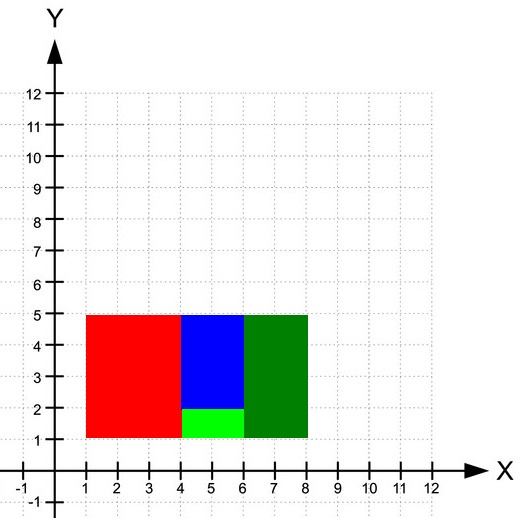
As they all form a big rectangle [1, 1, 8, 5]. So, the answer is 1.
Note :
Two integers are used to represent Point - x and y coordinates.

Two points are used to represent a Rectangle - Bottom left corner and top right corner.
02
Round
Easy
Video Call
Duration40 minutes
Interview date19 Oct 2021
Coding problem2
This round was taken by a senior software engineer, focusing on problem solving skills
1. Trapping Rain Water
Moderate
15m average time
80% success
0/80
Asked in companies



You have been given a long type array/list 'arr’ of size 'n’.
It represents an elevation map wherein 'arr[i]’ denotes the elevation of the 'ith' bar.
Print the total amount of rainwater that can be trapped in these elevations.
Note :
The width of each bar is the same and is equal to 1.
Example:
Input: ‘n’ = 6, ‘arr’ = [3, 0, 0, 2, 0, 4].

Output: 10

Explanation: Refer to the image for better comprehension:

Note :
You don't need to print anything. It has already been taken care of. Just implement the given function.
Problem approach
Step 1 :Traverse every array element and find the highest bars on the left and right sides.
Step 2 : Take the smaller of two heights. The difference between the smaller height and the height of the current element is the amount of water that can be stored in this array element.
Step 3 : interviewer asked me to optimize but wasn't able to
2. Minimum Elements
Moderate
40m average time
56% success
0/80
Asked in companies



You are given an array of ‘N’ distinct integers and an integer ‘X’ representing the target sum. You have to tell the minimum number of elements you have to take to reach the target sum ‘X’.
Note:
You have an infinite number of elements of each type.
For example
If N=3 and X=7 and array elements are [1,2,3].
Way 1 - You can take 4 elements  [2, 2, 2, 1] as 2 + 2 + 2 + 1 = 7.
Way 2 - You can take 3 elements  [3, 3, 1] as 3 + 3 + 1 = 7.
Here, you can see in Way 2 we have used 3 coins to reach the target sum of 7.
Hence the output is 3.
03
Round
Easy
Video Call
Duration30 minutes
Interview date19 Oct 2021
Coding problem7
The Role was for Backend Developer , and my skills were more inclined to frontend so we discussed about Operating System. The interviewer was very friendly ( even talked about stand-up comedy )
1. OS Question
1) In the following process state transition diagram for a uniprocessor system, assume that there are always some processes in the ready state: Now consider the following statements:
I. If a process makes a transition D, it would result in another process making transition A immediately.
II. A process P2 in blocked state can make transition E while another process P1 is in running state.
III. The OS uses preemptive scheduling.
IV. The OS uses non-preemptive scheduling.
Which of the above statements are TRUE?
(A) I and II
(B) I and III
(C) II and III
(D) II and IV
2. MCQ Question
Consider the following code fragment:
if (fork() == 0)
{ a = a + 5; printf(“%d,%d\n”, a, &a); }
else { a = a –5; printf(“%d, %d\n”, a, &a); }
Let u, v be the values printed by the parent process, and x, y be the values printed by the child process. Which one of the following is TRUE?
(A) u = x + 10 and v = y
(B) u = x + 10 and v != y
(C) u + 10 = x and v = y
(D) u + 10 = x and v != y
3. OS Question
Consider the following statements about user level threads and kernel level threads. Which one of the following statement is FALSE?
(A) Context switch time is longer for kernel level threads than for user level threads.
(B) User level threads do not need any hardware support.
(C) Related kernel level threads can be scheduled on different processors in a multi-processor system.
(D) Blocking one kernel level thread blocks all related threads.
4. OS Question
A thread is usually defined as a “light weight process” because an operating system (OS) maintains smaller data structures for a thread than for a process. In relation to this, which of the following is TRUE?
(A) On per-thread basis, the OS maintains only CPU register state
(B) The OS does not maintain a separate stack for each thread
(C) On per-thread basis, the OS does not maintain virtual memory state
(D) On per-thread basis, the OS maintains only scheduling and accounting information
5. MCQ Question
onsider the following code fragment:
if (fork() == 0)
{ a = a + 5; printf(“%d,%d\n”, a, &a); }
else { a = a –5; printf(“%d, %d\n”, a, &a); }
Let u, v be the values printed by the parent process, and x, y be the values printed by the child process. Which one of the following is TRUE?
(A) u = x + 10 and v = y
(B) u = x + 10 and v != y
(C) u + 10 = x and v = y
(D) u + 10 = x and v != y
6. OS Question
Consider the following statements about user level threads and kernel level threads. Which one of the following statement is FALSE?
(A) Context switch time is longer for kernel level threads than for user level threads.
(B) User level threads do not need any hardware support.
(C) Related kernel level threads can be scheduled on different processors in a multi-processor system.
(D) Blocking one kernel level thread blocks all related threads.
7. OS Question
A thread is usually defined as a “light weight process” because an operating system (OS) maintains smaller data structures for a thread than for a process. In relation to this, which of the following is TRUE?
(A) On per-thread basis, the OS maintains only CPU register state
(B) The OS does not maintain a separate stack for each thread
(C) On per-thread basis, the OS does not maintain virtual memory state
(D) On per-thread basis, the OS maintains only scheduling and accounting information


Here's your problem of the day 
Solving this problem will increase your chance to get selected in this company
Skill covered: Programming
How do you remove whitespace from the start of a string?
Choose another skill to practice
Similar interview experiences

SDE - 1
3 rounds | 7 problems
Interviewed by OYO

 Selected
6182 views

0 comments

0 upvotes
Software Backend Engineer
2 rounds | 4 problems
Interviewed by Ula
Rejected
655 views
0 comments
0 upvotes
SDE - 1
2 rounds | 5 problems
Interviewed by Meesho
Rejected
7245 views
0 comments
0 upvotes

SDE - 1
3 rounds | 9 problems
Interviewed by Salesforce
 Selected
 4552 views
0 comments
0 upvotes
Companies with similar interview experiences
SDE - Intern
3 rounds | 6 problems
Interviewed by Amazon

Rejected
16212 views
4 comments
0 upvotes
SDE - Intern
4 rounds | 7 problems
Interviewed by Microsoft
 Selected
 16223 views
1 comments
0 upvotes
SDE - Intern
2 rounds | 4 problems
Interviewed by Amazon
Selected 10541 views
2 comments
0 upvotes