





Veridic Private Limited interview experience Real time questions & tips from candidates to crack your interview
SDE - 1
Veridic Private Limited


3 rounds | 6 Coding
problems

Rejected
Interview preparation journey

Journey
My personal journey has been very challenging. Coming from a middle-class family, I did not have access to a computer for a long time. I first learned about computers when I joined college, but from that point on, I never looked back.
Application story
This is an on-campus placement opportunity for me. The company visited my campus for recruitment.
Why selected/rejected for the role?
This was a great experience for me. I was able to perform well, and I am satisfied with the effort I have put in.
Preparation
Duration: 3 months
Topics: Data Structures, Pointers, OOPS, System Design, Algorithms, Dynamic Programming

Tip 1: Prepare your resume well.
Tip 2: Deploy your projects so the interviewer can view them. Also, provide a hyperlink in your resume.
Tip 3: Be thorough with Data Structures and Algorithms. Also, prepare well for topics such as OS and DBMS.
Application process
Where: Campus
Eligibility: Above 6 CGPA
Tip 1: Deploy your projects so that the interviewer can view them. Also, provide a hyperlink to them on your resume.
Tip 2: It's not important to have fancy projects. Only mention those you're confident about.

Interview rounds
01
Round
Medium
Video Call
Duration60 minutes
Interview date25 Mar 2023
Coding problem2
1. Minimize the Maximum
Easy
15m average time
85% success

0/40
Asked in companies



You are given an array of N integers and an integer K. For each array element, you are allowed to increase or decrease it by a value k. The task is to minimize the difference between the maximum element and the minimum element after modifications.
Problem approach
At first, I couldn’t think of any approach, but I provided the interviewer with a completely brute-force solution, which did not satisfy him. Then, I considered using sorting, but despite making a lot of effort, I still couldn’t come up with a proper approach. Eventually, the interviewer moved on to the next question. Also, I was a bit nervous at that time.
2. Minimum Number of Platform Needed
Easy
23m average time
85% success
0/40
Asked in companies


You are given the arrival and departure times of N trains at a railway station in a day. You need to find the minimum of platforms required for the railway station such that no train waits i.e No train should wait for the platform to be clear or free.
Problem approach
Firstly, I pretended that I was seeing this question for the first time. Then, I explained the sorting-based solution to him. After thinking for a few minutes, I simply sorted both the arrival and departure time arrays and found the minimum number of platforms required.
02
Round
Medium
Video Call
Duration60 minutes
Interview date25 Mar 2023
Coding problem2
1. Two and Four Wheeler Roads
Hard
48m average time
0/120
Asked in companies


There is a country with 'N' cities and 'M' bidirectional roads of 3 types.
Type 1: Two Wheeler Road, It means only vehicles having two wheels can use this road.
Type 2: Four Wheeler Road, It means only vehicles having four wheels can use this road.
Type 3: Both two and four Wheeler Road, It means this road can be used by both type of vehicles.
The problem is to find the maximum number of roads that can be removed such that a path exists for every pair of cities for each two-wheeler and four-wheeler vehicle.
Note:
1. Roads may form a cycle.

2. The cities do not have multiple same roads i.e all the roads are unique.

3. If every city cannot be reached, then return -1.
Problem approach
There is a country with 'N' cities and 'M' bidirectional roads of three types:
- Type 1: Two-Wheeler Road – Only vehicles with two wheels can use this road.
- Type 2: Four-Wheeler Road – Only vehicles with four wheels can use this road.
- Type 3: Both Two- and Four-Wheeler Road – This road can be used by both types of vehicles.
The problem is to find the maximum number of roads that can be removed while ensuring that a path exists between every pair of cities for both two-wheeler and four-wheeler vehicles.
2. Puzzle
An archer is hitting a target (a circle). He fires the first shot and then the second shot. Given that his first shot was better than the second, find the probability that the third shot he fires is the best among the three. The three shots are independent of each other.
Problem approach
This was a probability-based question, and I am weak in that. I considered various approaches, such as Bayes' theorem and intersection, but I could not find the answer to the question.
03
Round
Easy
Video Call
Duration60 minutes
Interview date25 Mar 2023
Coding problem2
1. Best Time to Buy and Sell
Moderate
20m average time
80% success
0/80
Asked in companies



You are given an array(PRICES) of stock prices for N consecutive days. Your task is to find the maximum profit that you can make by completing as many transactions as you like, where a transaction denotes buying one and selling one share of the stock.
Note:
You must sell the stock before you buy it again.
Problem approach
This was a standard question, and I solved it using the concepts of local minima and local maxima. I also wrote the code for the interviewer, and he was satisfied with both my code and my approach.
2. Minimum Depth Of Binary Tree
Moderate
20m average time
80% success
0/80
Asked in companies

You have been given a Binary Tree of integers, find the minimum depth of this Binary Tree. The minimum depth of a Binary Tree is the number of nodes along the shortest path from the root node down to the nearest leaf node.
Note:
A leaf is a node with no children.
For example:
For the given binary tree
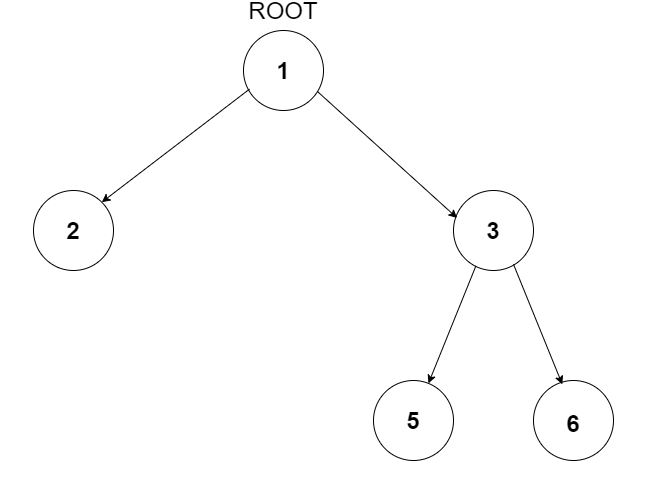
Output: 2
The shortest path is from root node 1 to leaf node 2 which contains 2 nodes in the path. Hence, the minimum depth is 2.
Problem approach
I first presented him with a recursive approach. Then, he asked me to optimize it for a skewed tree. I provided a level-order traversal-based approach, and he was happy with it.


Here's your problem of the day 
Solving this problem will increase your chance to get selected in this company
Skill covered: Programming
How do you remove whitespace from the start of a string?
Choose another skill to practice
Similar interview experiences
System Engineer Specialist
3 rounds | 6 problems
Interviewed by Veridic Private Limited
Rejected

399 views

0 comments

0 upvotes
SDE - 1
2 rounds | 4 problems
Interviewed by Veridic Private Limited
Rejected
413 views
0 comments
0 upvotes
SDE - 1
3 rounds | 6 problems
Interviewed by Veridic Private Limited
Rejected
424 views
0 comments
0 upvotes
SDE - 1
3 rounds | 5 problems
Interviewed by Veridic Private Limited
Rejected
432 views
0 comments
0 upvotes
Companies with similar interview experiences

SDE - 1
5 rounds | 12 problems
Interviewed by Amazon

 Selected
 117552 views
24 comments
0 upvotes

SDE - 1
4 rounds | 5 problems
Interviewed by Microsoft
Selected 60143 views
5 comments
0 upvotes
SDE - 1
3 rounds | 7 problems
Interviewed by Amazon
 Selected
 36138 views
7 comments
0 upvotes