





VMware Inc interview experience Real time questions & tips from candidates to crack your interview

Software Testing Engineer
VMware Inc


3 rounds | 6 Coding
problems

 Selected
 Interview preparation journey

Journey
Right from my first year, we were told to do coding to bag internships. Therefore, I started with basic coding in C++ in my first year. Then, I took a DSA course from Coding Ninjas and practiced well. I was able to solve most of the difficult questions by then. I also did Interview Bit 2 months before applying for interviews.
Application story
I applied in the on-campus placement process. The company visited our campus for internships and placements. I was shortlisted based on my resume and coding test.
Why selected/rejected for the role?
I was rejected because I could not give an optimized approach for one of the coding problems. There was a lack of practice from my end.
Preparation
Duration: 6 months
Topics: DSA, CS FUNDAMENTALS, WEB CONCEPTS, OOPS

Tip 1: Take your time before directly jumping to the solution. Even if you have already written the code, the interviewer might add constraints of their own.
Tip 2: Speak out loud; that's very important. If you get stuck during the interview, don’t just sit idle or give up. Talk to your interviewer and let them know what’s going on in your mind and what approach you are trying to implement. The interviewer is your only ally in that room.
Tip 3: Don’t worry if you haven’t been involved in competitive programming before. You can still impress many companies with decent DSA skills. Projects are an added advantage.
Tip 4: For preparation, thoroughly review the Coding Ninja's course. It’s likely you will encounter the same questions covered in the course—common problems like stock span, balanced parentheses, edit distance-DP, etc.
Tip 5: Don’t panic if you see a question you haven’t encountered before. Try to break the given problem into smaller problems first, just like we do in DP; it will surely help you in building logic, if not in finding a solution.
Application process
Where: Campus
Eligibility: No criteria
Tip 1: Choose a nice template for your resume. You can refer to sites like novoresume.com for good templates. Just pick one with no fancy fonts or colors. Keep it simple.
Tip 2: Be very specific. Write only the important details, especially if you are applying for a tech job. No one will care about your dance or acting skills during the interview.
Tip 3: If you have mentioned your projects, add the source code link or GitHub repository link as a hyperlink. This is very important as it helps the interviewer verify that you have completed the project and are not faking it.

Interview rounds
01
Round
Easy
Face to Face
Duration60 Minutes
Interview date13 Dec 2022
Coding problem2
1. Longest Valid Parentheses
Moderate
10m average time
90% success

0/80
Asked in companies



You are given a string ‘S’ containing only the characters ‘)’ and ‘(‘. You need to find the length of the longest valid i.e. well-formed parentheses substring.
For example:
Let the given string be “(()())((”.

Here the valid parentheses substrings are: “()”, “()” and “(()())”. Out of these the longest valid string is “(()())” which has a length 6.
2. First Missing Positive
Moderate
18m average time
84% success
0/80
Asked in companies



You are given an array 'ARR' of integers of length N. Your task is to find the first missing positive integer in linear time and constant space. In other words, find the lowest positive integer that does not exist in the array. The array can have negative numbers as well.
For example, the input [3, 4, -1, 1] should give output 2 because it is the smallest positive number that is missing in the input array.
02
Round
Easy
Video Call
Duration60 Minutes
Interview date7 Jun 2021
Coding problem2
1. Game of Stones
Easy
15m average time
85% success
0/40
Asked in companies


Given the count of total stones in a game. Two-player ‘Ale’ and ‘Bob’ are playing the game. Your task is to find who will win the game if both the players are playing optimally.
Rules of the game.
1. In a single turn, a player can choose a single stone or ‘even’ number of stones.
2. They will play alternatively, which means in the first chance ‘Ale’ will collect the stones, in second-chance ‘Bob’ will collect the stones. And always ‘Ale’ will start the game.
3. If any player is not able to take any stones then another player will win the game.
2. Russian Doll Envelopes
Hard
50m average time
50% success
0/120
Asked in companies

You are given a set of ‘N’ rectangular envelopes. The height and width of each envelope are given by arrays, ‘height’ and ‘width’ respectively, each consisting of ‘N’ positive integers. The height, width of the ith envelope is given by ‘height[i]’ and ‘width[i]’ respectively.
You can put one envelope inside another envelope if and only if both the height and width of one envelope is strictly greater than the height and width of the other envelope.
What is the maximum number of envelopes you can Russian doll? (put one inside other)
Note
Rotation of envelope is not allowed, that is, height and width can’t be exchanged
03
Round
Easy
Video Call
Duration60 Minutes
Interview date20 Jun 2023
Coding problem2
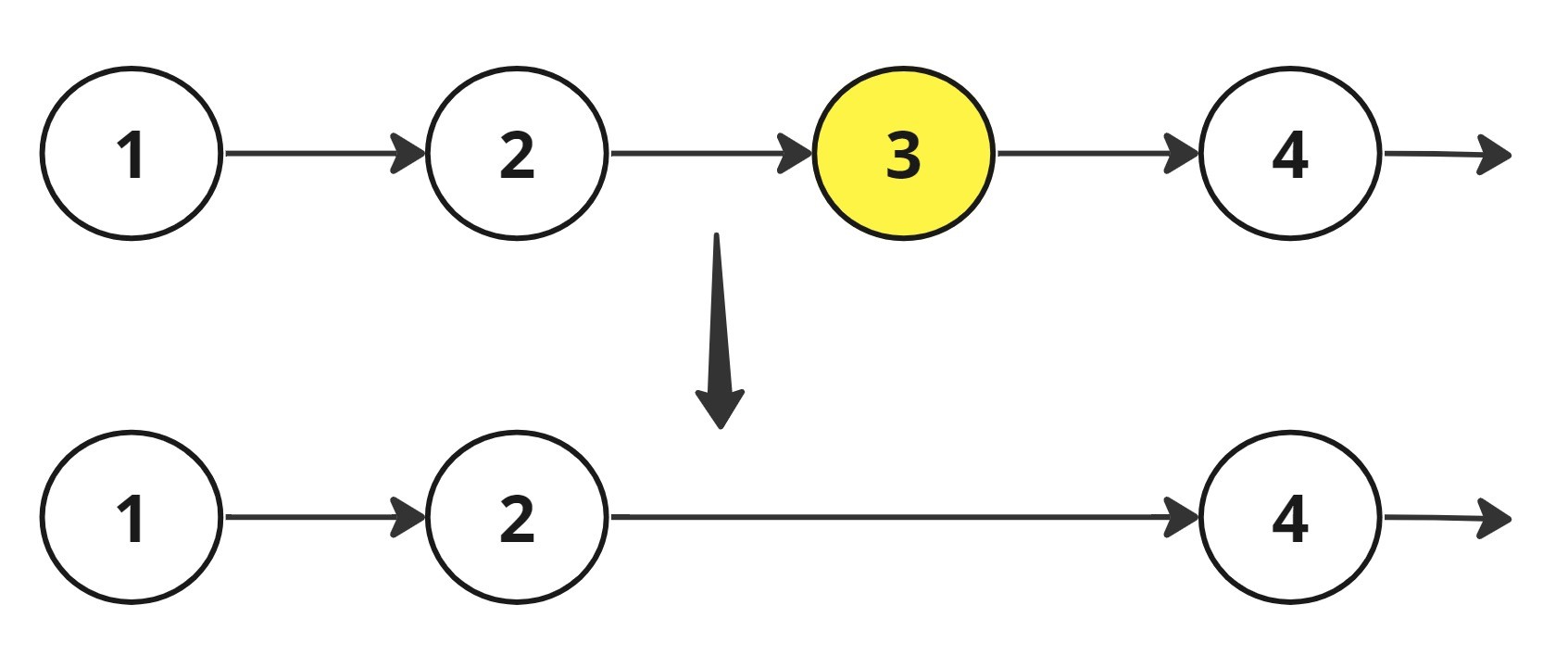
1. Delete Kth Node From End
Moderate
15m average time
95% success
0/80
Asked in companies


You have been given a singly Linked List of 'N' nodes with integer data and an integer 'K'.
Your task is to remove the 'K'th node from the end of the given Linked List and return the head of the modified linked list.
Example:
Input : 1 -> 2 -> 3 -> 4 -> 'NULL'  and  'K' = 2
Output: 1 -> 2 -> 4 -> 'NULL'
Explanation:
After removing the second node from the end, the linked list become 1 -> 2 -> 4 -> 'NULL'.
2. Median of two sorted arrays
Hard
25m average time
65% success
0/120
Asked in companies



Given two sorted arrays 'a' and 'b' of size 'n' and 'm' respectively.
Find the median of the two sorted arrays.
Median is defined as the middle value of a sorted list of numbers. In case the length of list is even, median is the average of the two middle elements.
The expected time complexity is O(min(logn, logm)), where 'n' and 'm' are the sizes of arrays 'a' and 'b', respectively, and the expected space complexity is O(1).
Example:
Input: 'a' = [2, 4, 6] and 'b' = [1, 3, 5]

Output: 3.5

Explanation: The array after merging 'a' and 'b' will be { 1, 2, 3, 4, 5, 6 }. Here two medians are 3 and 4. So the median will be the average of 3 and 4, which is 3.5.


Here's your problem of the day 
Solving this problem will increase your chance to get selected in this company
Skill covered: Programming
How do you remove whitespace from the start of a string?
Choose another skill to practice
Similar interview experiences
SDE - 1
2 rounds | 4 problems
Interviewed by VMware Inc

Rejected

956 views

0 comments

0 upvotes
SDE - 1
2 rounds | 5 problems
Interviewed by VMware Inc
Rejected
958 views
0 comments
0 upvotes
SDE - 1
3 rounds | 5 problems
Interviewed by VMware Inc
Rejected
445 views
0 comments
0 upvotes
SDE - 1
3 rounds | 5 problems
Interviewed by VMware Inc
Rejected
449 views
0 comments
0 upvotes
Companies with similar interview experiences

Software Testing Engineer
5 rounds | 4 problems
Interviewed by Sprinklr
Selected 2533 views
0 comments
0 upvotes

Software Testing Engineer
3 rounds | 2 problems
Interviewed by Amdocs

Rejected
392 views
0 comments
0 upvotes