





VMware Inc interview experience Real time questions & tips from candidates to crack your interview

Software Developer
VMware Inc


3 rounds | 5 Coding
problems

Rejected
Interview preparation journey

Journey
I started my journey in coding in my second year, motivated by my seniors. Initially, I began by learning basic programming languages. Later, I participated in contests on coding platforms and solved questions there. I consistently tried to maintain this practice. After 2-3 months, I was able to solve some questions on coding platforms. In my third year, I studied core subjects like OS, DBMS, OOPS, and CN in depth. This way, I was well-prepared before the placement season.
Application story
This company visited my campus for the placement.
Why selected/rejected for the role?
I was rejected because I was not able to maintain the timing of the questions to be answered; I should be faster.
Preparation
Duration: 6 months
Topics: Data Structures, Pointers, OOPS, System Design, Algorithms, Dynamic Programming

Tip 1 : Practice coding from coding platforms, at least 100 questions.
Tip 2 : Practice any one automation framework includes design patterns.
Application process
Where: Campus
Eligibility: Above 7 CGPA
Tip 1 : Restrict your resume to 1 page and write your practical work only.
Tip 2 : Mention top topics like Selenium, Rest Assured Automation, Language used, Java etc.

Interview rounds
01
Round
Easy
Video Call
Duration60 mins
Interview date22 Oct 2022
Coding problem2
1. Valid Parentheses
Easy
10m average time
80% success

0/40
Asked in companies



You're given a string 'S' consisting of "{", "}", "(", ")", "[" and "]" .
Return true if the given string 'S' is balanced, else return false.
For example:
'S' = "{}()".

There is always an opening brace before a closing brace i.e. '{' before '}', '(' before ').
So the 'S' is Balanced.
Problem approach
You're given string ‘STR’ consisting solely of “{“, “}”, “(“, “)”, “[“ and “]” . Determine whether the parentheses are balanced.
2. Group Anagrams
Moderate
30m average time
70% success
0/80
Asked in companies


You have been given an array/list of strings 'inputStr'. You are supposed to return the strings as groups of anagrams such that strings belonging to a particular group are anagrams of one another.
An anagram is a word or phrase formed by rearranging the letters of a different word or phrase. We can generalize this in string processing by saying that an anagram of a string is another string with the same quantity of each character in it, in any order.
Note:
The order in which the groups and members of the groups are printed does not matter.
For example:
inputStr = {"eat","tea","tan","ate","nat","bat"}
Here {“tea”, “ate”,” eat”} and {“nat”, “tan”} are grouped as anagrams. Since there is no such string in “inputStr” which can be an anagram of “bat”, thus, “bat” will be the only member in its group.
Problem approach
You have been given an array/list of strings 'inputStr'. You are supposed to return the strings as groups of anagrams such that strings belonging to a particular group are anagrams of one another.
02
Round
Easy
Video Call
Duration60 mins
Interview date22 Oct 2022
Coding problem2
1. Validate Binary Tree Nodes
Moderate
15m average time
85% success
0/80
Asked in companies


You are given ‘N’ binary tree nodes numbered from 0 to N - 1 where node ‘i’ has two children LEFT_CHILD[i] and RIGHT_CODE[i]. Return ‘True’ if and only if all the given nodes form exactly one valid binary tree. If node ‘i’ has no left child then 'LEFT_CHILD[i]' will equal -1, similarly for the right child.
Example:
Let’s say we have n=4 nodes, 'LEFT_CHILD' = {1, -1, 3, -1} and
RIGHT_CHILD = {2, -1, -1, -1}. So the resulting tree will look like this:
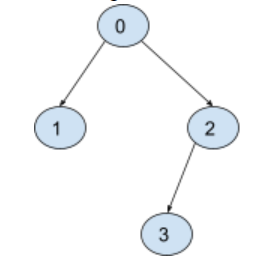
It will return True as there is only one valid binary tree and each node has only one parent and there is only one root.
Problem approach
A simple O(N) approach for this question would be to perform an inorder traversal of the tree and store all the values in a temporary array. Next, check if the array is sorted in ascending order. If it is sorted, the given tree is a BST.
The above approach uses an auxiliary array. To avoid using an auxiliary array, maintain track of the previously visited node in a variable named 'prev.' Perform an inorder traversal of the tree and store the value of the previously visited node in 'prev.' If the value of the current node is less than 'prev,' then the given tree is not a BST.
2. Maximum Subarray Sum
Moderate
35m average time
81% success
0/80
Asked in companies


You are given an array 'arr' of length 'n', consisting of integers.
A subarray is a contiguous segment of an array. In other words, a subarray can be formed by removing 0 or more integers from the beginning and 0 or more integers from the end of an array.
Find the sum of the subarray (including empty subarray) having maximum sum among all subarrays.
The sum of an empty subarray is 0.
Example :
Input: 'arr' = [1, 2, 7, -4, 3, 2, -10, 9, 1]

Output: 11

Explanation: The subarray yielding the maximum sum is [1, 2, 7, -4, 3, 2].
Problem approach
The direct approach to solve this problem is to run two for loops and check if every subarray is the maximum sum possible.
03
Round
Easy
HR Round
Duration30 mins
Interview date22 Oct 2022
Coding problem1
1. Basic HR Questions
Q1. Tell me about yourself.
Q2. What is your real goal in life?
Q3. Your manager is being bossy. How will you tackle this situation?
Q4. Toughest challenge you faced in your college.
Problem approach
Tip 1: The cross-questioning can get intense sometimes, so think before you speak.
Tip 2: Be open-minded and answer whatever you are thinking. In these rounds, I feel it is important to have an opinion.
Tip 3: The context of questions can be switched, so pay attention to the details. It is okay to ask questions in these rounds, such as what projects the company is currently investing in, which team you are mentoring, how the work environment is, etc.


Here's your problem of the day 
Solving this problem will increase your chance to get selected in this company
Skill covered: Programming
How do you remove whitespace from the start of a string?
Choose another skill to practice
Similar interview experiences
Staff Engineer
3 rounds | 4 problems
Interviewed by VMware Inc

Rejected

1221 views

0 comments

0 upvotes
Member of Technical Staff II
4 rounds | 7 problems
Interviewed by VMware Inc

 Selected
 1257 views
0 comments
0 upvotes
SDE - 1
3 rounds | 5 problems
Interviewed by VMware Inc
Rejected
1219 views
0 comments
0 upvotes
SDE - 1
3 rounds | 6 problems
Interviewed by VMware Inc
Rejected
1139 views
0 comments
0 upvotes
Companies with similar interview experiences

Software Developer
5 rounds | 14 problems
Interviewed by Microsoft
 Selected
 4029 views
1 comments
0 upvotes

Software Developer
6 rounds | 12 problems
Interviewed by SAP Labs
Selected 2912 views
0 comments
0 upvotes
Software Developer
3 rounds | 3 problems
Interviewed by Amazon
Selected 1271 views
0 comments
0 upvotes