





VMware Software India Pvt Ltd interview experience Real time questions & tips from candidates to crack your interview

SDE - 1
VMware Software India Pvt Ltd


2 rounds | 4 Coding
problems

Rejected
Interview preparation journey

Journey
As a fresher, I've solved around 300 questions and received an offer from TCS. I've pursued mechanical engineering, and most of the coding skills I possess were acquired during my last semester or after graduation.
Application story
In 2021, fintech was receiving significant funding, so I listed all fintech startups. I then removed those paying below 10LPA and began connecting with people working there. This is how I obtained the opportunity here.
Why selected/rejected for the role?
I was not able to perform well in the interview, hence I was rejected for this role. I struggled to provide effective solutions.
Preparation
Duration: 6 months
Topics: JAVA, DSA, OOPS, Advance DSA like graphs

Tip 1: Solve problems to gain hands-on confidence.
Tip 2: Solve high-quality questions.
Tip 3: Try solving questions yourself instead of relying on YouTube videos.
Application process
Where: Referral
Eligibility: Above 7 CGPA
Tip 1: Include projects related to the company's current endeavors, such as adding Spring Boot.
Tip 2: Highlight relevant skills; since fintech mostly works with Java, I added Java to my repertoire.

Interview rounds
01
Round
Easy
Video Call
Duration60 minutes
Interview date26 Sep 2022
Coding problem2
1. Tiling Problem
Hard
45m average time

0/120
Asked in companies



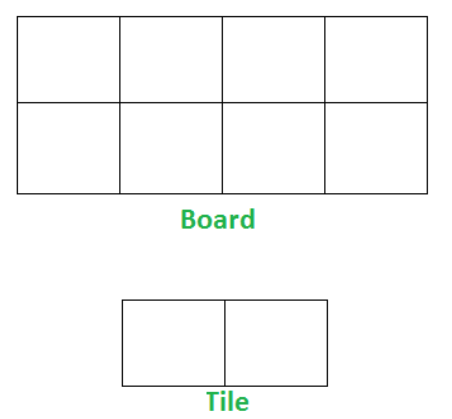
You have been given a board where there are '2' rows and 'N' columns. You have an infinite supply of 2x1 tiles, and you can place a tile in the following ways:
1. Horizontally as 1x2 tile
2. Vertically as 2x1 tile
Count the number of ways to tile the given board using the available tiles.
Note :
The number of ways might be large so output your answer modulo 10^9 + 7.
Here an example of tile and board for 'N' = 4 :
Problem approach
I have done this problem earlier so got the DP based approach during the test and this approach passed all the test cases.
2. Find K’th Character of Decrypted String
Moderate
33m average time
0/80
Asked in companies


You have been given an Encrypted String where repetitions of substrings are represented as substring followed by the count of substrings.
Example: String "aabbbcdcdcd" will be encrypted as "a2b3cd3".
You need to find the 'K'th character of Decrypted String. Decrypted String would have 1-based indexing.
Note :
Input string will always be lowercase characters without any spaces.

If the count of a substring is 1 then also it will be followed by Integer '1'.
Example: "aabcdee" will be Encrypted as "a2bcd1e2"
This means it's guaranteed that each substring is followed by some Integer.

Also, the frequency of encrypted substring can be of more than one digit. For example, in "ab12c3", ab is repeated 12 times. No leading 0 is present in the frequency of substring.

The frequency of a repeated substring can also be in parts.
Example: "aaaabbbb" can also have "a2a2b3b1" as Encrypted String.
Problem approach
I simply decrypt the string by reading substring and their frequency and append current substring to the decrypted string and after the end of traversal of given string our answer will be kth element of the decrypted string.
02
Round
Easy
Video Call
Duration60 minutes
Interview date27 Sep 2022
Coding problem2
1. Positive Negative Pair
Easy
10m average time
90% success
0/40
Asked in companies


Given an array of distinct integers, find all the pairs having positive value and negative value of a number that exists in the array. Return the pairs in any order.
Note:
The pair consists of equal absolute values, one being positive and another negative.

Return an empty array, if no such pair exists.
Problem approach
I asked for some clarifications whether I should print all distinct x‘s or if I should print an x if a pair of +x and -x is encountered. The first approach I told was to use a map and I was keeping a flag for +x and -x if it’s found once. Later he asked me to print all pairs, so I stored the frequencies of all the elements in the map and iterated through the negative elements and for each element x , I would print x min(count[-x],count[+x]) times. He said he can’t afford that much space and he wanted me to optimise space further. So I told him a 2 pointer approach where I sort the array once and then keep two pointers to the start and end. I would move the start pointer forward if the sum is less than 0 and I’ll move the end pointer backward if the sum is greater than 0. He was fine with the solution and asked me to code it in a paper. I wrote the code and walked him through it.
2. Count All Subarrays With Given Sum
Moderate
15m average time
85% success
0/80
Asked in companies


You are given an integer array 'arr' of size 'N' and an integer 'K'.
Your task is to find the total number of subarrays of the given array whose sum of elements is equal to k.
A subarray is defined as a contiguous block of elements in the array.
Example:
Input: ‘N’ = 4, ‘arr’ = [3, 1, 2, 4], 'K' = 6

Output: 2

Explanation: The subarrays that sum up to '6' are: [3, 1, 2], and [2, 4].
Problem approach
Your task is to find the total number of subarrays of the given array whose sum of elements is equal to k.


Here's your problem of the day 
Solving this problem will increase your chance to get selected in this company
Skill covered: Programming
How do you remove whitespace from the start of a string?
Choose another skill to practice
Similar interview experiences

SDE - 1
3 rounds | 7 problems
Interviewed by OYO
 Selected
6182 views

0 comments

0 upvotes

SDE - Intern
2 rounds | 3 problems
Interviewed by Amazon
Rejected
1566 views
0 comments
0 upvotes

SDE - 1
2 rounds | 5 problems
Interviewed by Meesho
Rejected
7246 views
0 comments
0 upvotes

SDE - 1
3 rounds | 9 problems
Interviewed by Salesforce
 Selected
 4552 views
0 comments
0 upvotes
Companies with similar interview experiences
SDE - 1
5 rounds | 12 problems
Interviewed by Amazon
 Selected
 117552 views
24 comments
0 upvotes

SDE - 1
4 rounds | 5 problems
Interviewed by Microsoft
Selected 60143 views
5 comments
0 upvotes
SDE - 1
3 rounds | 7 problems
Interviewed by Amazon
 Selected
 36138 views
7 comments
0 upvotes