





Wipro pvt interview experience Real time questions & tips from candidates to crack your interview
System Engineer
Wipro pvt


2 rounds | 4 Coding
problems

 Selected
 Interview preparation journey

Preparation
Duration: 6 months
Topics: Data Structures, Algorithms, OOPS, Dynamic Programming

Tip 1 : Practice popular questions from Arrays, Binary Trees, LinkedLists from CodeStudio's Interview Problems
Tip 2 : Make sure you are aware of calculating the time and space complexity for every problem you're coding.
Tip 3 : Prepare through Mock Interviews to practice explaining your approach while solving in an actual interview.
Application process
Where: Referral
Eligibility: Above 7 CGPA
Tip 1 : Describe best of your projects in minimum words. Don't forget to add buzz words like REST APIs/ DB Indexing/ Benchmarking etc if you worked on backend.
Tip 2 : Don't add school achievements like Olympiads or Class Topper in your resume.
Tip 3 : If you've some work experience, put it in a way ,you're marketing yourself. Add terms like 'Created/Owned the Project through entire SDLC'
Tip 4 : Make sure you mention how your work experience actually impacted the company. Or how your self project can be actually useful to end user.

Interview rounds
01
Round
Easy
Video Call
Duration45 minutes
Interview date20 Nov 2021
Coding problem2
1. K-th node from the end of the linked list
Easy
15m average time
85% success

0/40
Asked in companies



Given the head node of the singly linked list and an integer ‘k’, , find the value at the kth node from the end of the linked list.
For example:
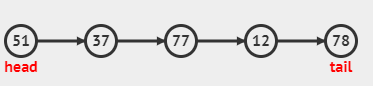
For the above-linked list, if k=2, then the value at the kth i.e second node from the end is ‘12’.
Note :
1.You don’t need to take any input. It has already been taken care of. Just implement the given function and return a pointer pointing to the k-th element from the last of the linked list.
2.It is guaranteed that k<=size of the linked list.
Problem approach
Given the head node of the singly linked list and an integer ‘k’, , find the value at the kth node from the end of the linked list.
2. Greatest Common Divisor
Easy
15m average time
85% success
0/40
Asked in companies



You are given two numbers, ‘X’ and ‘Y’. Your task is to find the greatest common divisor of the given two numbers.
The Greatest Common Divisor of any two integers is the largest number that divides both integers.
For Example:
You are given ‘X’ as 20 and ‘Y’ as 15. The greatest common divisor, which divides both 15 and 20, is 5. Hence the answer is 5.
Problem approach
You are given two numbers, ‘X’ and ‘Y’. Your task is to find the greatest common divisor of the given two numbers.
The Greatest Common Divisor of any two integers is the largest number that divides both integers.
02
Round
Easy
Video Call
Duration30 minutes
Interview date20 Nov 2021
Coding problem2
1. Factorial of a Number
Moderate
25m average time
70% success
0/80
Asked in companies


You are given an integer ‘N’. You have to print the value of Factorial of ‘N’. The Factorial of a number ‘N’ is defined as the product of all numbers from 1 to ‘N’.
For Example:
Consider if ‘N’ = 4, the Factorial of 4 will be the product of all numbers from 1 to 4, which is 1 * 2 * 3 * 4 = 24. Hence, the answer is 24.
Problem approach
You are given an integer ‘N’. You have to print the value of Factorial of ‘N’. The Factorial of a number ‘N’ is defined as the product of all numbers from 1 to ‘N’.
2. Armstrong Number
Easy
15m average time
85% success
0/40
Asked in companies


You are given an integer ‘NUM’ . Your task is to find out whether this number is an Armstrong number or not.
A k-digit number ‘NUM’ is an Armstrong number if and only if the k-th power of each digit sums to ‘NUM’.
Example
153 = 1^3 + 5^3 + 3^3.

Therefore 153 is an Armstrong number.
Problem approach
You are given an integer ‘NUM’ . Your task is to find out whether this number is an Armstrong number or not.
A k-digit number ‘NUM’ is an Armstrong number if and only if the k-th power of each digit sums to ‘NUM’.


Here's your problem of the day 
Solving this problem will increase your chance to get selected in this company
Skill covered: Programming
How do you remove whitespace from the start of a string?
Choose another skill to practice
Similar interview experiences
System Engineer
2 rounds | 4 problems
Interviewed by Wipro pvt
 Selected
2569 views

0 comments

0 upvotes
System Engineer
2 rounds | 4 problems
Interviewed by Wipro pvt
Selected 1221 views
0 comments
0 upvotes
System Engineer
2 rounds | 3 problems
Interviewed by Wipro pvt
Selected 1798 views
2 comments
0 upvotes
System Engineer
2 rounds | 3 problems
Interviewed by Wipro pvt
Selected 1463 views
0 comments
0 upvotes
Companies with similar interview experiences
System Engineer
2 rounds | 4 problems
Interviewed by HCL Technologies
 Selected
 1426 views
0 comments
0 upvotes

System Engineer
1 rounds | 3 problems
Interviewed by Microsoft
Rejected
0 views
0 comments
0 upvotes
System Engineer
3 rounds | 6 problems
Interviewed by HCL Technologies
Rejected
944 views
0 comments
0 upvotes