





Wipro pvt interview experience Real time questions & tips from candidates to crack your interview
SDE - 1
Wipro pvt


2 rounds | 4 Coding
problems

 Selected
 Interview preparation journey

Preparation
Duration: 3 Months
Topics: Data Structures and Algorithms, Object-Oriented Programming System, Operating system, Database Management System

Tip 1 : Try to do Data Structures and Algorithms based questions and firstly attempt it yourself before going to the solution, also try to do it as quickly as you can.
Tip 2 : Also prepare for theory subjects like Operating system, Database Management System, etc which I prepared through Coding Ninjas subjective notes and they are very accurate and up to mark.
Application process
Where: Campus
Eligibility: Above 7 CGPA
Tip 1 : Keep your resume simple and complete.
Tip 2 : Mention some good level projects, your previous experiences and coding achievements if any.

Interview rounds
01
Round
Easy
Face to Face
Duration45 Minutes
Interview date1 Jun 2020
Coding problem2
1. Convert binary tree to mirror tree
Easy
15m average time
85% success

0/40
Asked in companies



Given a binary tree, convert this binary tree into its mirror tree.
A binary tree is a tree in which each parent node has at most two children.
Mirror of a Tree: Mirror of a Binary Tree T is another Binary Tree M(T) with left and right children of all non-leaf nodes interchanged.
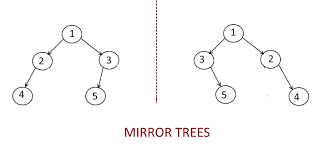
Note:
1. Make in-place changes, that is, modify the nodes given a binary tree to get the required mirror tree.
2. Puzzle
Light bulbs are numbered 1 to 100, and kept off initially. First person comes and toggles all the bulbs which are multiple of 1, i.e. he switches all bulbs to on. Second person toggles all multiples of 2, i.e he turns of even bulbs. Third person comes and toggles all multiples of 3. This process continues till 100 persons pass. After this, how many bulbs are ON?
Problem approach
Tip 1 : There are 10 bulbs
Tip 2 : All the perfect square are the answers
02
Round
Easy
Face to Face
Duration45 minutes
Interview date1 Jun 2020
Coding problem2
1. Second largest element in the array
Easy
15m average time
80% success
0/40
Asked in companies


You have been given an array/list 'ARR' of integers. Your task is to find the second largest element present in the 'ARR'.
Note:
a) Duplicate elements may be present.

b) If no such element is present return -1.
Example:
Input: Given a sequence of five numbers 2, 4, 5, 6, 8.

Output:  6

Explanation:
In the given sequence of numbers, number 8 is the largest element, followed by number 6 which is the second-largest element. Hence we return number 6 which is the second-largest element in the sequence.
2. Puzzle
There are n bikes and each can cover 100 km when fully fueled. What is the maximum amount of distance you can go using n bikes? You may assume that all bikes are similar and a bike takes 1 litre to cover 1 km.
Problem approach
Total distance covered = Distance covered by 100 ltr in first bike +
Distance covered by fuel transferred from
first bike.
summation of 100/n where n is from 1 to number of bikes


Here's your problem of the day 
Solving this problem will increase your chance to get selected in this company
Skill covered: Programming
How do you remove whitespace from the start of a string?
Choose another skill to practice
Similar interview experiences
SDE - 1
2 rounds | 5 problems
Interviewed by Wipro pvt

Rejected

1196 views

0 comments

0 upvotes
SDE - 1
3 rounds | 12 problems
Interviewed by Wipro pvt
Selected 0 views
0 comments
0 upvotes
SDE - 1
2 rounds | 7 problems
Interviewed by Wipro pvt
Selected 0 views
0 comments
0 upvotes
SDE - 1
3 rounds | 4 problems
Interviewed by Wipro pvt
Selected 1072 views
0 comments
0 upvotes
Companies with similar interview experiences

SDE - 1
5 rounds | 12 problems
Interviewed by Amazon
 Selected
 115097 views
24 comments
0 upvotes

SDE - 1
4 rounds | 5 problems
Interviewed by Microsoft
Selected 58238 views
5 comments
0 upvotes
SDE - 1
3 rounds | 7 problems
Interviewed by Amazon
 Selected
 35147 views
7 comments
0 upvotes