





Zomato interview experience Real time questions & tips from candidates to crack your interview
SDE - Intern
Zomato


3 rounds | 5 Coding
problems

Rejected
Interview preparation journey

Preparation
Duration: 6 months
Topics: Data Structures, Pointers, OOPS, System Design, Algorithms, Dynamic Programming, java, OS

Tip 1 - Practice Atleast 250 Questions from geeks from geeks and coding ninjas
Tip 2 - Ex- Do atleast 2 good projects
Application process
Where: Campus
Eligibility: Above 7 CGPA
Tip 1 : Have some projects on resume.
Tip 2 : Do not put false things on resume and be confident.

Interview rounds
01
Round
Medium
Online Coding Test
Duration60 minutes
Interview date2 Nov 2021
Coding problem2
2 coding questions
1. Unique Paths II
Moderate
25m average time
70% success

0/80
Asked in companies



Given a ‘N’ * ’M’ maze with obstacles, count and return the number of unique paths to reach the right-bottom cell from the top-left cell. A cell in the given maze has a value '-1' if it is a blockage or dead-end, else 0. From a given cell, we are allowed to move to cells (i+1, j) and (i, j+1) only. Since the answer can be large, print it modulo 10^9 + 7.
For Example :
Consider the maze below :
0 0 0
0 -1 0
0 0 0

There are two ways to reach the bottom left corner -

(1, 1) -> (1, 2) -> (1, 3) -> (2, 3) -> (3, 3)
(1, 1) -> (2, 1) -> (3, 1) -> (3, 2) -> (3, 3)

Hence the answer for the above test case is 2.
Problem approach
The most efficient solution to this problem can be achieved using dynamic programming. Like every dynamic problem concept, we will not recompute the subproblems. A temporary 2D matrix will be constructed and value will be stored using the top-down approach.
2. Allocate Books
Hard
0/120
Asked in companies



You are the Librarian of the Ninja library. There are ‘N’ books available in the library and ‘B’ ninjas want to read the books. You know the number of pages in each book and you have to allocate the books to the ‘B’ ninjas in such a way that the maximum number of pages allocated to a ninja is minimum.
Note
A book will be allocated to exactly one ninja.
At least one book has to be allocated to a ninja.
Allotment of the books should be done in a contiguous manner. For example, a ninja can not be allocated book 2 and book 4, skipping book 3.
The task is to return the minimum of the maximum number of pages allocated to a ninja.
Problem approach
The idea is to use Binary Search. We fix a value for the number of pages as mid of current minimum and maximum. We initialize minimum and maximum as 0 and sum-of-all-pages respectively. If a current mid can be a solution, then we search on the lower half, else we search in higher half.
02
Round
Easy
Face to Face
Duration60 minutes
Interview date4 Nov 2021
Coding problem2
The interviewer started with asking my intro and then asked 2 DSA question.
1. Partition String
Moderate
25m average time
75% success
0/80
Asked in companies


Given a string S of lowercase English letters, your task is to partition the list in as many parts as possible such that each letter appears in at most one part, and return a list of integers representing the size of these parts.
Note
You don’t have to print anything, it has already been taken care of. Just implement the function.
The string will contain lowercase alphabets only.
2. Largest rectangle in a histogram
Hard
25m average time
75% success
0/120
Asked in companies


You have been given an array/list 'HEIGHTS' of length ‘N. 'HEIGHTS' represents the histogram and each element of 'HEIGHTS' represents the height of the histogram bar. Consider that the width of each histogram is 1.
You are supposed to return the area of the largest rectangle possible in the given histogram.
For example :
In the below histogram where array/list elements are {2, 1, 5, 6, 2, 3}.
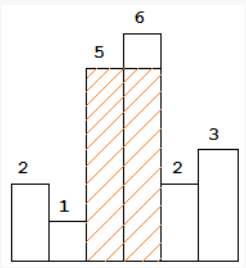
The area of largest rectangle possible in the given histogram is 10.
Problem approach
By finding next smaller element and previous smaller element for every element in O(n) time complexity and O(n) auxiliary space .
03
Round
Medium
Face to Face
Duration60 minutes
Interview date19 Nov 2021
Coding problem1
As the round is only for 40-45 minutes, he told me not to write the code. Then he told me about his work at zomato and his recent achievements. I asked a few doubts regarding his work and how did they tackle a few problems (about the search option in the Zomato app as the interviewer worked on this particularly). This discussion went on for another 5 minutes and he ended the interview by adding a few points on work culture at zomato.
1. LRU Cache Implementation
Moderate
25m average time
65% success
0/80
Asked in companies



Design and implement a data structure for Least Recently Used (LRU) cache to support the following operations:
1. get(key) - Return the value of the key if the key exists in the cache, otherwise return -1.

2. put(key, value), Insert the value in the cache if the key is not already present or update the value of the given key if the key is already present. When the cache reaches its capacity, it should invalidate the least recently used item before inserting the new item.
You will be given ‘Q’ queries. Each query will belong to one of these two types:
Type 0: for get(key) operation.
Type 1: for put(key, value) operation.
Note :
1. The cache is initialized with a capacity (the maximum number of unique keys it can hold at a time).

2. Access to an item or key is defined as a get or a put operation on the key. The least recently used key is the one with the oldest access time.
Problem approach
When a page is referenced, the required page may be in the memory. If it is in the memory, we need to detach the node of the list and bring it to the front of the queue.
If the required page is not in memory, we bring that in memory. In simple words, we add a new node to the front of the queue and update the corresponding node address in the hash. If the queue is full, i.e. all the frames are full, we remove a node from the rear of the queue, and add the new node to the front of the queue.


Here's your problem of the day 
Solving this problem will increase your chance to get selected in this company
Skill covered: Programming
How do you remove whitespace from the start of a string?
Choose another skill to practice
Similar interview experiences
SDE - Intern
3 rounds | 6 problems
Interviewed by Zomato

 Selected
3286 views

0 comments

0 upvotes
SDE - Intern
2 rounds | 6 problems
Interviewed by Zomato
 Selected
 0 views
0 comments
0 upvotes
SDE - Intern
2 rounds | 3 problems
Interviewed by Zomato
Selected 1735 views
0 comments
0 upvotes
SDE - Intern
2 rounds | 4 problems
Interviewed by Zomato
Selected 1533 views
0 comments
0 upvotes
Companies with similar interview experiences
SDE - Intern
3 rounds | 6 problems
Interviewed by Amazon

Rejected
16213 views
4 comments
0 upvotes

SDE - Intern
4 rounds | 7 problems
Interviewed by Microsoft
 Selected
 16224 views
1 comments
0 upvotes
SDE - Intern
2 rounds | 4 problems
Interviewed by Amazon
Selected 10541 views
2 comments
0 upvotes