





Zynga interview experience Real time questions & tips from candidates to crack your interview
SDE - Intern
Zynga


4 rounds | 5 Coding
problems

 Selected
 Interview preparation journey

Journey
Zynga came to our college quite early in the placement season (Aug 1). It was quite surprising to us as Zynga was one of the highest paying companies and was also one of the most niche ones. I started by looking at previous year experiences and from the few that I found I was able to determine that DSA along with LLD (Low level design) is a must and in core subjects mostly OS related questions were being asked. A great thing about the Zynga interviews was that all 3 rounds were held on the same day and the result was published by the end of day. Overall interviewing with Zynga was a great experience, although I couldn't join Zynga due to college placement rules (the result of another company came before Zynga's), I really liked their interview process and the niche tech space they were operating in (mobile games).
Application story
Zynga was one of the first companies that came to our college (Aug 1), and it was paying higher than the big name tech giants (Amazon, Microsoft, Google), It was definitely not in my radar as I was preparing mostly for Big product based companies. I tried to
Why selected/rejected for the role?
I think my resume was selected based off of my projects and my CGPA, even though the eligibility was 6.0 CGPA, there was still an internal cutoff (8+) according to me. I had great conversations with the interviewers and I am also passionate about the space Zynga operates in (Mobile gaming), so this helped me connect with the interviewers really well. In terms of clearing the DSA rounds, I think that being consistent definitely helped me, even though I had not solved a lot of questions, I had a consistent solving pattern (100 + days of consistently solving 1-2 questions a day) at the time of the interviews, which helped me recognize the patterns and solve the questions.
Preparation
Duration: 4 Months
Topics: Common Algorithms, OOPS, LLD, HLD, Dynamic Programming, Graphs, Trees

Tip 1 : Don't try to aim for a particular company, instead try to aim for a band of companies in placements, and increase your preparation level gradually to get to the desired band.
Tip 2 : Try to pay utmost attention to consistency, giving contests consistently and upsolving questions will definitely help
Tip 3 : Try to write succinct and concrete information in resume instead of trying to write bigger sentences.
Tip 4 : Do at least 2 projects, try to explore a breadth of technologies in projects, such as Web Dev, Mobile Dev, ML etc.
Application process
Where: Campus
Eligibility: % in X and XII – 60% or 6.0 CGPA, in Pursuing Degree – 60% or 6.0 CGPA, in UG (for PGs) – 60% or 6.0 CGPA, No Standing Arrears
Tip 1 : Try to have projects where you have explored some technology on your resume. I had a project about GPU based ray tracing that really helped me a lot, as it stood out from normal projects.
Tip 2 : Highlight your previous work experience in terms of the direct and indirect impact you created in that role.
Tip 3 : Make your resume more concrete and succinct.

Interview rounds
01
Round
Medium
Online Coding Interview
Duration90 minutes
Interview date8 Aug 2022
Coding problem2
The test was held in 3 slots, and each slot had different starting times, 3pm, 4pm, 5pm. I was in the last slot. The test was conducted in our college labs. The test was being held on a portal that I had never used before, It was quite a different setting and we had to scan a QR code to log into the portal. Once the test started, the portal interface was fairly intuitive.
1. Nearly Sorted
Moderate
10m average time
90% success

0/80
Asked in companies



You’re given an array/list 'ARR' of N elements, where each element is at most K away from its target position(Position if the array was sorted). Now, your task is to devise an algorithm that sorts the given array in O(N log K) time.
For example:
Let us consider 'K' is 3, an element at index 4 in the sorted array, can be at indexes 1, 2, 3, 4, 5, 6, 7 in the given array, because the absolute difference of all these indices with 4 is at most 3.
2. Unique Paths III
Hard
0/120
Asked in companies


Robot is given a task to clean a room. The room can be visualized as a matrix ‘ARR’ containing ‘N’ rows and ‘M’ columns. The cells of the room are denoted as:
1) Cells with a value of 0 indicate empty space in the room.
2) Cells with a value of -1 indicate an obstacle in the room.
3) Cell with a value of 1 indicates the starting position of the robot.
4) Cell with a value of 2 indicates the ending position of the robot.
In each move, the robot is only allowed to move to one of the four adjacent cells if it exists and is not occupied by an obstacle. Robot has to clean this room entirely. To complete this task his path must start from his starting cell and should visit all the empty cells (denoted by value 0) exactly once, and he should finally arrive at the ending cell. You have to find the number of all possible paths using which the robot can clean the room.
Note that the cells corresponding to the starting and ending position of the robot are never occupied by an obstacle. And starting and ending positions will always be in different cells.
For Example :
If ‘N’ = 3, ‘M’ = 3 and ‘ARR’ = [ [1, 0, 0], [0, 0, 0], [0, 0, 2] ]

Then the room is represented as:

The 2 unique paths are marked in the image above.
The first path is: (0, 0) -> (0, 1) -> (0, 2) -> (1, 2) -> (1, 1) -> (1, 0) -> (2, 0) -> (2, 1) -> (2, 2).

The second path is: (0, 0) -> (1, 0) -> (2, 0) -> (2, 1) -> (1, 1) -> (0, 1) -> (0, 2) -> (1, 2) -> (2, 2).
Problem approach
1. I recognized that number of unique path problems are often solved using DP so I tried to fined a recurrence relation. I was unable to figure out how to keep track of visiting a cell only once.
2. As the constraints were quite low, I decided to write a brute force way.
3. While writing the brute force solution I realized, I can use simple DFS here with backtracking. We can check that a particular path has covered all the non-obstacle blocks by counting all the blocks encountered in the way and finally comparing it with the total number of blocks available and if they match, then we add it as a valid solution.
02
Round
Medium
Face to Face
Duration60 minutes
Interview date10 Aug 2022
Coding problem1
This was the first interview round, it was held at 10am in the morning and we were given the zoom links 15 minutes before the interview was scheduled. Once, we joined the call we were sent to our waiting rooms (in zoom) where the interviewer joined at the interview time. The interviewer was very cheerful and made me feel at ease instantly. He started by introducing himself, followed by my introduction. We then we had a 5 minute talk about my resume and my projects. Then he gave me a DSA question which I was able to solve.
1. Binary Tree To BST
Easy
15m average time
85% success
0/40
Asked in companies



You have been given a binary tree consisting of ‘N’ nodes where nodes have distinct integer values. Your task is to convert the given Binary Tree to a Binary Search Tree(BST).
Note: The conversion must be done in such a way that keeps the original structure of the Binary Tree.
A binary search tree (BST) is a binary tree data structure which has the following properties.
• The left subtree of a node contains only nodes with data less than the node’s data.
• The right subtree of a node contains only nodes with data greater than the node’s data.
• Both the left and right subtrees must also be binary search trees.
For Example:
For the given binary tree :
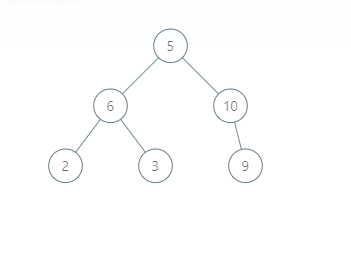
The BST will be:
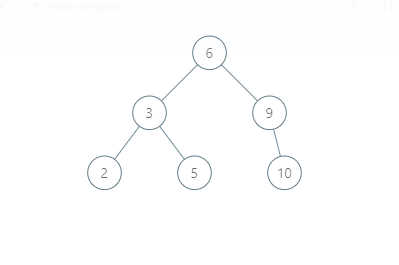
Note: Each node is associated with a unique integer value.
03
Round
Hard
Face to Face
Duration90 minutes
Interview date10 Aug 2022
Coding problem1
After the first round was completed it was intimated to me that I have cleared the round and I will be progressing to the next round, that will be held after 30 minutes. It was going to be a design round. This round was held at 11:30.
1. Technical Questions
Initially we had a lengthy discussion (30 minutes) about my projects and then later on about OS, where we talked about Semaphores and Mutexes and mutual exclusion along with topics like race conditions and DBMS types, this was more of just a conversation and not really questions, I felt like the interviewer was trying to gauge my knowledge of the subjects and didn't dive deep into any topics.
We then progressed to a system design question. Design an online book reader system.
Problem approach
Tip 1 : System design questions can be quite open ended, so it is best to communicate well through them and think of the round as a collaboration instead of a question/answer type of round.
Tip 2 : I tried to identify as many problems as I could upright, as then I would have a defined set of problems to work with and I would spend my time solving them, instead of running into/ realizing new problems in the middle of the round.
Tip 3 : Once the problems have been identified and communicated along with the rough estimates about the data considerations, we should prioritize and start solving the problems. One thing that really helped me was that I was trying to draw comparisons with already existing concepts such as memory management in OS etc.
Tip 4 : Some problems are quite tricky so it is advisable to try and solve them creatively for the brownie points.
04
Round
Easy
Face to Face
Duration60 Minutes
Interview date10 Sep 2022
Coding problem1
This was the final round for me, a few people had another problem solving round after the first one. This interview round was more of a Hiring Manager round as the person asked me about my projects extensively (tech stack choices I made, my contribution, research work related to projects etc). The interviewer also gave me a DSA problem to solve but it was relatively simple. We then talked about Zynga, the tech stack and mobile gaming in general.
1. Winner Of Candies
Easy
20m average time
70% success
0/40
You and your friend met after a long time and decided to have candies. You brought ‘X’ candies while your friend brought ‘Y’ candies. Since you both were bored you decided to play a game where each of you will play one by one and you will start first. The game goes as follows :
In the ith move, the person will give i candies to the other person.
The person who is unable to donate the required amount of candies will lose. You are required to find out who will win the game.
For Example:
For X = 1, Y = 2 the game goes as follows -

You will donate 1 candy. So you now have 0 and your friend has 3 candies.

Your friend will donate 2 candies. So you now have 2 and your friend has 1 candy.

You are required to donate 3 candies but you only have 2 candies.

Hence your friend wins.


Here's your problem of the day 
Solving this problem will increase your chance to get selected in this company
Skill covered: Programming
How do you remove whitespace from the start of a string?
Choose another skill to practice
Similar interview experiences

SDE - 1
3 rounds | 7 problems
Interviewed by OYO
 Selected
6182 views

0 comments

0 upvotes
SDE - Intern
2 rounds | 3 problems
Interviewed by Amazon
Rejected
1566 views
0 comments
0 upvotes

SDE - 1
2 rounds | 5 problems
Interviewed by Meesho
Rejected
7245 views
0 comments
0 upvotes

SDE - 1
3 rounds | 9 problems
Interviewed by Salesforce
 Selected
 4552 views
0 comments
0 upvotes
Companies with similar interview experiences
SDE - Intern
3 rounds | 6 problems
Interviewed by Amazon

Rejected
16212 views
4 comments
0 upvotes
SDE - Intern
4 rounds | 7 problems
Interviewed by Microsoft
 Selected
 16223 views
1 comments
0 upvotes
SDE - Intern
2 rounds | 4 problems
Interviewed by Amazon
Selected 10541 views
2 comments
0 upvotes