




Problem
Submissions
Hints & solutions
Discuss
Lakshay and Manik
Moderate

0/80
Contributed by
1 upvote
Asked in company

Problem statement
Lakshay can move Up(j, k) -> (j - 1, k), RIght(j, k) -> (j, k + 1) or Up-Right(j, k) -> (j - 1, k + 1).
Answers can be very large, so return the answer modulo 1000000007.
For Example :N = 2
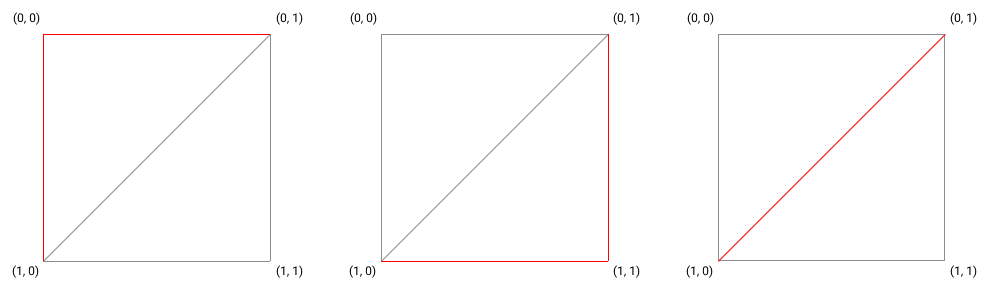
For n = 2, there can be three possible moves, as shown in the figure. Hence the answer is 3.
Detailed explanation ( Input/output format, Notes, Images )
Input Format :
The first line contains a single integer ‘T’ denoting the number of test cases, then each test case follows:

The first line of each test case contains a single integer ‘N’ denoting the size of the square matrix.
For each test case, print a single integer “ans” denoting the total number of paths.

Output for each test case will be printed in a separate line.
You are not required to print anything; it has already been taken care of. Just implement the function.
Constraints :
1 <= T <= 10
1 <= N <= 500

Time limit: 1 sec
Sample Input 1 :
2
3
2
Sample Output 1 :
13
3
Explanation For Sample Input 1 :
In the first test case, There is a total of thirteen possible paths. Hence, the answer is 13.

In the second test case, There is a total of 3 possible paths. Hence, the answer is 3.
Sample Input 2 :
2
5
7
Sample Output 2 :
321
8989
Hint
Hint 1
Hint 2
Hint 3
Recursively call all the possible paths and return the final answer.
Approaches (3)
Approach 1
Approach 2
Approach 3
Recursion
In this approach, we will start from the (N - 1, 0) and add all the possible paths for down, left, and down-left.
The steps are as follows:
- In the “main” function:
- Return the function recursion and pass the value of ‘N’ as ‘x’ and one as ‘y’.
- In the “recursion” function:
- If x equals to 1 or y equals to N, return 1.
- Else take a variable “ans” to store the answer.
- Update “ans” = (recursion(x - 1, y) + recursion(x, y + 1) + recursion(x - 1, y + 1)) % 1000000007.
- Return “ans”.
Time Complexity
O( 3 ^ N ), where N is the length of the square matrix.
As we are going through all the paths.
Hence the time complexity is O( 3 ^ N ).
Space Complexity
O( 1 )
No extra space is used.
Hence the space complexity is O(1).
Code Solution
(100% EXP penalty)
Lakshay and Manik
C++ (g++ 5.4)

Console