Key highlights:
● Around 37% of employers are more likely to shortlist candidates who mention unique hobbies on a resume.
● Quantified or measurable hobbies (for example - lifting 100 kg) attract more attention than broad interests.
● Hobbies are most useful for freshers and candidates with limited work experience.
● Always match your hobbies to the job role and avoid generic ones.
● Adding 3 to 5 relevant hobbies keeps the resume clear and easy to scan.
● Place the “Hobbies and Interests” section toward the end of the resume.
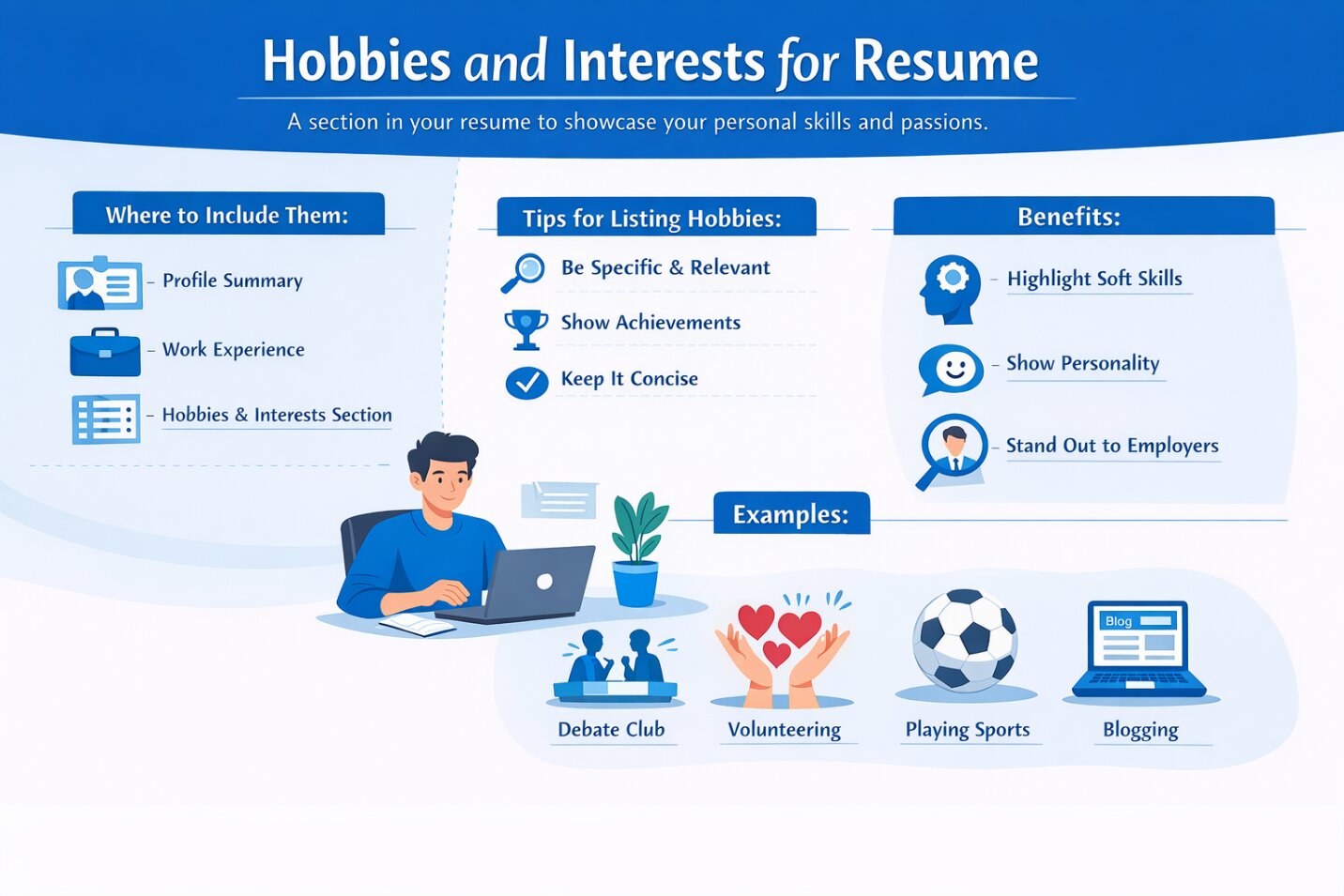
Should you add hobbies and interests to your resume?
Since hobbies and interests are not a core resume section, you should include hobbies for resume only when they add value to your profile. You do not need to include this section in every application. Let’s look at when it adds value and when it’s best to skip it.
When to include hobbies and interests on a resume
You should include this section if:
● You are a fresher or student
● You have limited work experience
● Your hobbies relate to the job role
● They show transferable or soft skills
● Your hobbies support company culture fit
When to avoid adding hobbies and interests to your resume
You should skip this section if:
● You have extensive work experience
● Your hobbies are irrelevant to the role
● Resume space is limited
● Your hobbies are vague or generic
● They distract from core qualifications
Example of a resume with hobbies
Here is a resume example with hobbies to help you understand how to present this section professionally. It shows where to place hobbies in a resume and how much detail to include.
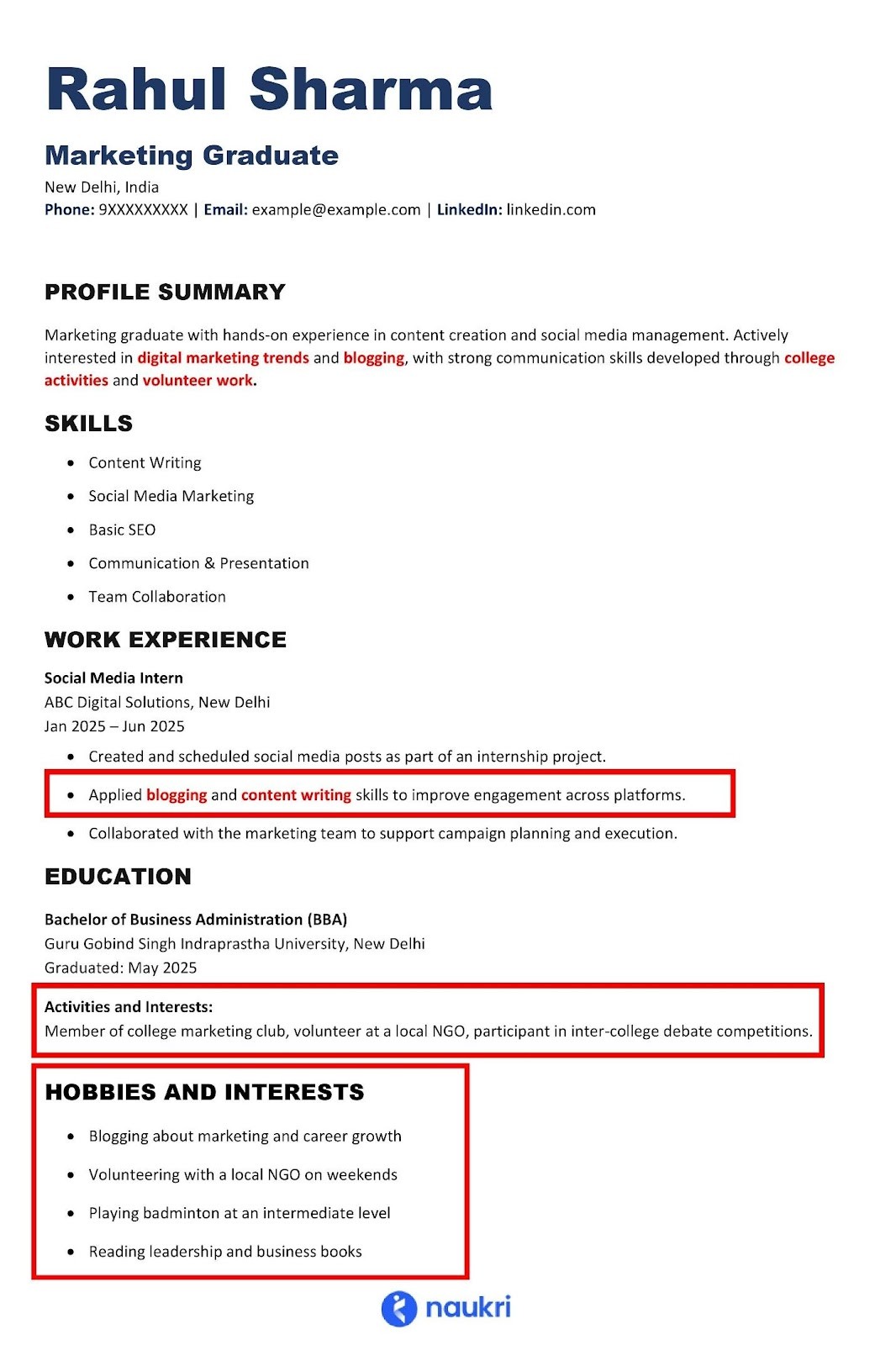
Note: This resume example shows hobbies and interests in multiple places. It includes a dedicated “Hobbies and Interests” section at the end and integrates a few relevant hobbies into the profile summary and experience bullet points to support key skills.
Why include hobbies and interest in your resume?
The hobbies and interests section in your resume can showcase important soft skills and personal traits that make you a stronger candidate for the job. Here’s why you should not skip this part:
● Shows transferable skills: Relevant hobbies for resume can reflect skills such as communication, teamwork, or problem-solving.
● Adds personality to your profile: Including interests in resume helps recruiters understand your work style and motivations.
● Helps when experience is limited: Hobbies in resume for freshers can highlight your initiative and experiences beyond academics.
● Supports cultural fit assessment: Thoughtful activities for resume signal alignment with company values.
● Creates interview talking points: Clear resume hobbies examples often lead to meaningful interview discussions.
What’s the difference between hobbies and interests?
Hobbies and interests are often listed together in a single section on a resume, but they are not the same.
● Hobbies are activities you actively do in your free time and have practiced regularly. When listed as hobbies for resume, they often show skills or real experience.
● Interests are topics or areas you enjoy learning about. An area of interest in resume shows what motivates you, even if you don’t actively practice it.
Because recruiters review resumes quickly, hobbies and interests usually appear in one section.
Example of hobbies and interests in a resume:
Below is an example of how hobbies and interests in a resume are commonly listed together under one section.
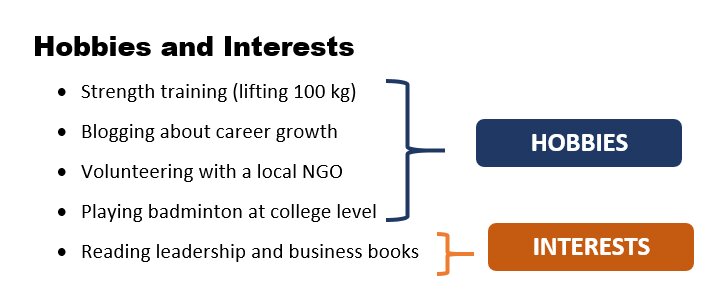
This format helps recruiters quickly see both your hobbies for resume and your areas of interest without needing separate sections.
Best hobbies and interests to include in your resume
Good hobbies for a resume are those that reflect your personality while also supporting the skills required for the job. Below are some of the best types of hobbies you can include to strengthen your profile and make your application more relevant.
● Community involvement: This type of hobby shows that you enjoy working with people and contributing to shared goals. Common examples include volunteering, social work, mentoring, and community projects. These activities work well as hobbies for resume for freshers.
● Creative pursuits: Creative hobbies such as writing, photography, blogging, or playing a musical instrument show your ability to think differently and express ideas clearly. These are strong resume hobbies examples for creative roles.
● Learning and intellectual interests: These hobbies show curiosity and a willingness to learn. Strategic games, debates or continuous learning reflect analytical thinking and personal growth. Listing them as an area of interest in resume signals a growth mindset.
● Multicultural and global exposure: Such interests suggest openness to new perspectives and comfort with diversity. Learning new languages or exploring different cultures reflects adaptability and communication skills valued across industries.
● Professional or skill-based activities: These hobbies show genuine interest in your career field beyond formal work or studies. Being part of industry groups, tech communities or career-related projects counts as good hobbies for resume because they support your professional goals.
● Health and discipline-focused hobbies: This category reflects consistency and balance. Regular fitness, sports, or yoga demonstrate self-discipline and stress management. Employers actually value such qualities in a candidate.
100+ examples of hobbies to put on a resume
Hobbies add value to your resume when they match the job role and required skills. Below are resume hobby examples grouped by skill type and job to help you choose the right ones. Select options that support your career goals.
A. Examples of skill-based hobbies
Here are examples of hobbies that focus on specific skills employers value and help you present your strengths clearly when listing hobbies in resume sections.
1. Hobbies that show communication and interpersonal skills
These hobbies for resume highlight how well you communicate and interact with others in professional settings.
● Blogging | ● Storytelling |
● Public speaking | ● Social media content creation |
● Debate participation | ● Community outreach |
● Podcast hosting | ● Teaching or tutoring |
● Content writing | ● Anchoring events |
2. Hobbies that demonstrate leadership skills
Here are some best hobbies for your resume to show your ability to guide people effectively.
● Mentoring juniors | ● Fundraising initiatives |
● Leading student clubs | ● Coordinating workshops |
● Organising events | ● Student council participation |
● Coaching a sports team | ● Team supervision |
● Managing volunteer groups | ● Running a book club |
3. Hobbies that reflect teamwork and collaboration
These hobbies and interests in resume demonstrate how well you collaborate and work toward shared goals.
● Team sports | ● Music bands |
● Group fitness classes | ● Dance teams |
● Drama or theatre groups | ● Hackathons |
● College clubs | ● Debate teams |
● Community projects | ● Group volunteering |
4. Hobbies that highlight creativity and innovation
You can use these hobbies for a resume to showcase creative thinking and the ability to approach problems with fresh ideas.
● Photography | ● Music composition |
● Creative writing | ● Crafting |
● Graphic design | ● UI/UX design practice |
● Sketching or illustration | ● Content creation |
● Video editing | ● Blogging |
5. Hobbies that require analytical and problem-solving skills
Here are some good hobbies to list on a resume when to show you analytical or problem-solving skills.
● Chess | ● Strategy games |
● Sudoku | ● Financial planning |
● Coding challenges | ● Research writing |
● Data analysis projects | ● Case study analysis |
● Logic puzzles | ● Competitive quizzes |
6. Hobbies that reflect discipline and strong work ethic
Here are some hobbies and interests for resume to show your strong work ethic and commitment to long-term goals.
● Regular gym training | ● Competitive sports |
● Long-distance running | ● Personal goal tracking |
● Yoga practice | ● Time-bound challenges |
● Martial arts | ● Habit building |
● Daily journaling | ● Learning new skills online |
B. Examples of hobbies by candidate type and job role
Not all hobbies work the same for everyone. These hobbies for resume are grouped by experience level and role to help you choose what fits your profile best.
7. Best hobbies for freshers and students
You can add these hobbies in resume for freshers to show your strengths even when your professional experience is limited.
● Volunteering | ● Teaching juniors |
● College clubs | ● Content creation |
● Online courses | ● Social initiatives |
● Blogging | ● Learning new skills |
● Sports participation | ● Event coordination |
8. Best hobbies for IT and software roles
Here are some of the best hobbies to put on a resume for software or technology-driven roles.
● Coding side projects | ● UI/UX design |
● Open-source contributions | ● Game development |
● Hackathons | ● System automation |
● App development | ● Algorithm practice |
● Tech blogging | ● Learning new languages |
9. Best hobbies for marketing and sales roles
These hobbies for a resume work well to show your key skills in marketing and sales.
● Content writing | ● Copywriting |
● Social media management | ● Networking activities |
● Podcasting | ● Event promotion |
● Public speaking | ● Brand analysis |
● Blogging | ● Market research |
10. Common hobbies that work across most job roles
These are safe and widely accepted hobbies and interests for a resume that suit multiple industries and experience levels.
● Reading non-fiction | ● Online learning |
● Fitness activities | ● Creative writing |
● Volunteering | ● Public speaking |
● Blogging | ● Photography |
● Team sports | ● Community involvement |
11. Unique hobbies that that set you apart from others
Below are unique hobbies for a resume that add individuality and can leave a positive impression on recruiters.
● Strength training achievements | ● Language learning |
● Competitive chess | ● Travel blogging |
● Podcast hosting | ● Research writing |
● Marathon running | ● Data storytelling |
● Community leadership projects | ● Teaching niche skills |
How to choose the right hobbies for your resume
Choosing the right hobbies is less about listing what you like and more about showing what supports your role and career direction.
● Start with the job description: Look at the skills and traits the role requires, then pick hobbies that support them. This helps you choose relevant hobbies to add in resume sections.
● Research the company’s values and mission: Aligning your hobbies with what the organisation stands for makes your profile more strong and shows cultural fit.
● Focus on relevance, not variety: A few well-chosen hobbies are better than a long list. Select simple hobbies for resume only if they clearly connect to useful skills or habits.
● Prefer hobbies with outcomes: Activities that show effort or results work better than vague interests. This makes it easier to decide which hobbies to write in resume formats.
● Adjust based on experience level: Choose hobbies based on your experience level. For example - the best hobbies for resume for freshers should highlight initiative and learning rather than long-term professional achievements.
How to list hobbies and interests on a resume (with examples)
Once you have chosen relevant hobbies that align with the job role and company culture, the next step is placing them correctly on your resume. The way you list hobbies and interests on resume can change how recruiters perceive their value.
1. Add hobbies in the profile summary (only if relevant)
Use this approach when a hobby directly supports your role or career direction. This works well for freshers, career changers, or candidates with limited experience.
Example:
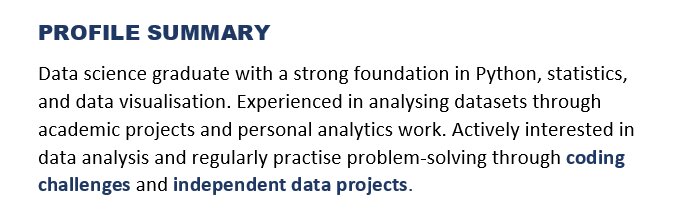
This is a good interest in resume examples because the interest supports the role and is not random.
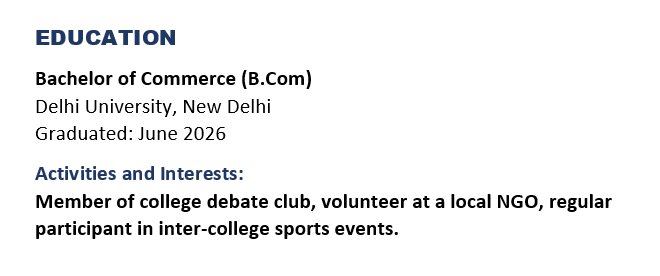
2. Mention hobbies in the education section (for students and freshers)
If you are a student or fresher, you can list hobbies under “Activities and Interests” to show involvement beyond academics. This is common in interests in CV formats as well.
Example:
3. Integrate hobbies into work experience bullets (when applicable)
Some hobbies involve hands-on work or leadership and can be written like experience. This adds more weight than listing them separately.
Example:
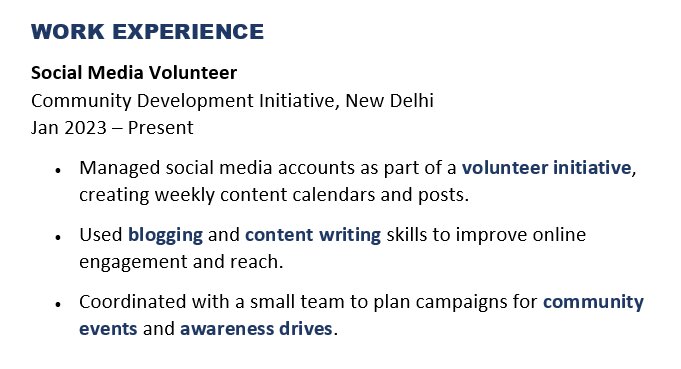
Here, a hobby becomes a meaningful activity for resume rather than a casual interest.
4. Use a separate “Hobbies and Interests” section
This is the safest and most widely accepted format for listing hobbies for resume and hobbies for CV, especially for experienced candidates.
Example:
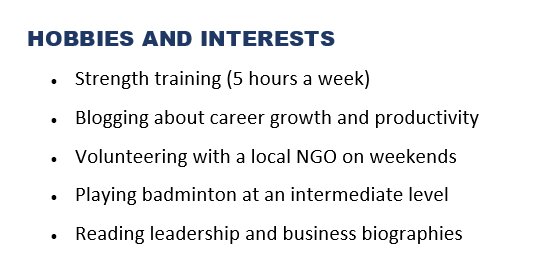
This format is clean and works well when you want to add example of hobbies on resume without overexplaining.
5. Keep formatting simple and focused
Limit your list to 3 to 5 items. Avoid vague entries like “reading” or “music” unless you clarify them. This helps recruiters quickly understand your hobbies ideas for resume.
How to turn generic hobbies into resume-ready highlights
Generic hobbies don’t add much value unless you show what you do and what it reflects. Turning them into specific, outcome-focused entries makes them stronger and more relevant for a resume.
Generic Hobby | Resume-Ready Version |
● Reading | ● Reading leadership and business biographies |
● Fitness | ● Strength training (lifting 100 kg) |
● Music | ● Playing guitar at college events |
● Volunteering | ● Teaching underprivileged students on weekends |
Why this works
● Specific details make hobbies for resume more meaningful.
● Measurable or contextual hobbies look more credible.
● Recruiters quickly understand the skill or effort involved.
This approach helps you choose hobbies to write in resume sections that feel intentional rather than generic.
Hobbies you should avoid putting on a resume
Not all hobbies add value. Some can distract recruiters or weaken your profile, especially when they don’t support your skills or the job role. Here’s what you should avoid:
● Vague or generic hobbies: Entries like reading, music, or travelling without context don’t explain skills and add little value to hobbies in resume sections.
● Irrelevant interests: Hobbies that have no connection to the job or industry can make your resume feel unfocused. This is especially true when listing an interest in resume without explanation.
● Controversial or sensitive topics: Avoid hobbies related to politics, religion or divisive opinions unless they are directly relevant to the role.
● Risky or extreme activities: High-risk hobbies may raise concerns about availability or safety, particularly in traditional roles.
● Overly time-consuming hobbies: Interests that seem to demand excessive time can create doubts about work commitment.
● Too many hobbies: Listing a long set of hobbies can clutter your resume. Stick to a few hobbies to add in resume sections that clearly support your profile.
Wrapping up
Choosing the right hobbies and interests can make a strong impression on your potential employer and increase your chances of landing the job. Include this section only when it feels relevant, and select hobbies that genuinely support your profile. You can use the examples shared above to choose interests and hobbies for your resume that align with your role and experience level.