

Engineering is a highly competitive field, with more than 1.5 lakh students graduating every year in India. That is why a strong engineering student resume is essential to secure a…

How Long Should a Resume Be?: One Page vs. Two Page Resume
6 min read
10,201 views
1 likes

Crafting a compelling resume is a crucial step in any job search. But alongside highlighting your skills and experience, a critical question arises: how long should your resume be? The one-page versus two-page debate has raged for years, with no single, definitive answer.
This article delves into the factors influencing resume length, explores the pros and cons of each format, and equips you with strategies to create a resume that gets noticed, regardless of its page count.
Table of Content
One-Page Resume vs. the Two-Page Resume
In today’s fast-paced job market, recruiters often spend mere seconds scanning resumes before deciding on an interview. This makes it essential to present your qualifications concisely and effectively.
The One-Page Resume
| Strengths | Weaknesses |
|---|---|
| Focus and Concision: A one-page resume forces you to prioritize your most relevant skills and experience, ensuring recruiters see the most impactful information first. | Limited Space: Showcasing extensive experience or a diverse skillset can be challenging with limited space. |
| Easy to Read: Recruiters are busy. A one-pager is easier to scan and digest, increasing the chances of them spotting your key qualifications. | Newer Graduates: Recent graduates with limited job history might struggle to fill a full page without including irrelevant details. |
| Modern Standard: In recent years, one-page resumes have become the preferred format, particularly for early-career professionals and those with less than 10 years of experience. |
Two-Page Resume
| Strengths | Weaknesses |
|---|---|
| Detail-Oriented: A two-page resume allows you to elaborate on your accomplishments and responsibilities, providing a richer picture of your career trajectory. | Lengthy and Time-Consuming: Recruiters might perceive a lengthy resume as tedious, potentially leading to them overlooking key qualifications. |
| Experienced Professionals: For seasoned professionals with extensive experience (10+ years), a two-page format offers room to showcase a comprehensive career history. | Focus Issue: The additional space can tempt you to include irrelevant information, diluting the impact of your core strengths. |
| Academia: In certain fields like academia, where detailed research and publications are crucial, a two-page resume might be necessary. |
Why Consider a One-Page Resume?
For many job seekers, particularly those in the early stages of their careers, a one-page resume reigns supreme. Here’s why:
- Attention Span: Recruiters and hiring managers are busy. A concise one-page resume is easier to scan and digest, increasing your chances of landing an interview.
- Focus and Clarity: A single page forces you to prioritize your most relevant skills and accomplishments, creating a clear and focused document.
- Modern Standard: In today’s digital age, many Applicant Tracking Systems (ATS) are optimized for one-page resumes. Exceeding the limit can lead to information getting lost in the parsing process.
Crafting a Powerful One-Page Resume
Now that you understand the benefits, let’s explore how to craft a one-page resume that packs a punch:
- Prioritize Relevant Experience: List your work experience in reverse chronological order, highlighting achievements most aligned with the target job. Quantify your impact using metrics and results.
- Target Your Keywords: Integrate relevant keywords from the job description throughout your resume. This helps your resume pass through ATS filters and land in the “to-be-reviewed” pile.
- Action Verbs and Strong Language: Replace passive voice with action verbs that showcase your skills and initiative. Use strong adjectives to paint a vivid picture of your accomplishments.
- Conciseness is Key: Eliminate unnecessary information like hobbies or irrelevant work experience. Every line counts, so make sure it contributes to your candidacy.
- Visual Appeal: Use clear headings, bullet points, and white space to create a visually appealing and easy-to-read document. Consider using a professional resume template for a polished look.
When a Two-Page Resume Might Be Acceptable
There are situations where a two-page resume might be justifiable:
- Extensive Experience (10+ Years): For seasoned professionals with a long and diverse career history, a two-page resume might be necessary to comprehensively showcase their qualifications.
- Highly Specialized Fields: Certain fields, like academia or research, might require detailed descriptions of publications, grants, or complex projects.
- Career Change: When transitioning to a new field, a two-page resume can help bridge the gap by highlighting relevant transferable skills from previous roles.
Crafting a Compelling Two-Page Resume
If you do opt for a two-page format, remember:
- Maintain Focus and Relevance: The second page shouldn’t be a dumping ground. Ensure all information on the second page aligns with the target job description.
- Prioritize Carefully: Place the most impactful information on the first page. The second page should provide additional details without diminishing the initial impact.
- Logical Flow: Maintain a clear flow between the two pages. Consider using section breaks or visual cues to guide the reader’s eye.
When Is a 2-Page Resume Better Than A 1-Page Resume?
Here are some key factors to consider when deciding between a one-page and two-page resume:
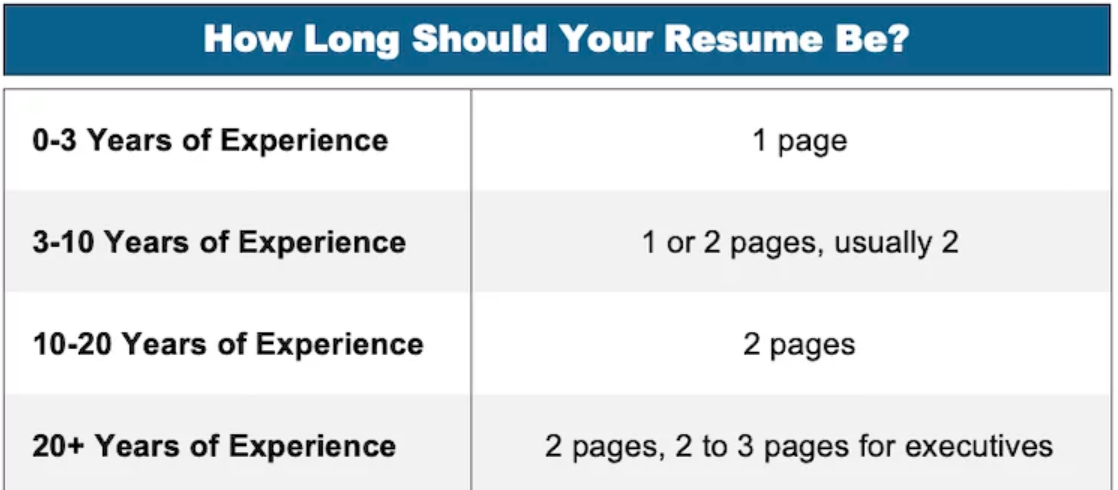
- Years of Experience: As a general rule, if you have less than 10 years of experience, a one-page resume is likely sufficient. For those with extensive, highly relevant experience, a two-page format can be effective.
- Industry Standards: Certain industries might have a preference for longer resumes. Research the typical resume format used in your target field.
- Content & Value: The most important factor is the content of your resume. If the information you have on a two-page resume is truly valuable and relevant to the position, it can be justified. However, ensure the information is tightly written and avoids redundancy.
- Career Change: If you’re transitioning careers, a one-page resume might be ideal to highlight transferable skills and relevant experience without overwhelming the recruiter with past, unrelated positions.
There’s no one-size-fits-all answer to the one-page vs. two-page resume debate. The ideal length depends on your career stage, experience level, and the specific job you’re applying for.
By following the tips above and carefully considering the factors mentioned, you can craft a compelling resume that effectively showcases your qualifications, regardless of its length.
FAQs on Resume Length
Is a one-page resume outdated?
Not at all! For recent graduates and professionals with under 10 years of experience, a one-page resume remains a strong and modern choice. It prioritizes focus and caters to busy hiring managers.
When is a two-page resume acceptable?
For seasoned professionals (10+ years) or those in specialized fields with extensive research or publications, a two-pager might be necessary. It can also be useful for career changers to bridge skill gaps.
How can I fit everything into a one-page resume?
Prioritize! Focus on the most relevant experience and achievements for the target job. Use strong action verbs and concise language. Consider a professional template for a visually appealing layout.
Do Applicant Tracking Systems (ATS) favor one-page resumes?
Many ATS systems are optimized for one-page documents. Exceeding the page limit could lead to information getting lost in the parsing process.
What if my experience doesn’t fit neatly on one page?
If you’re on the cusp, consider strategically summarizing older or less relevant experiences. Focus on achievements and transferable skills rather than elaborate descriptions.
Can I use a different font size to squeeze in more information?
Avoid shrinking fonts! This makes your resume difficult to read and can reflect poorly on your attention to detail.
Where should my references go on my resume?
Modern practice suggests omitting references from your resume. However, be prepared to provide them upon request, typically after a successful interview.
Is there a specific word count for a one-page resume?
Focus on visual impact rather than word count. Aim for a balanced layout with clear sections and white space for easy readability.
Latest Posts
What Is a Good ATS Score? Full Benchmarks Guide
A good ATS score is generally 80 or above out of 100; this range typically indicates your resume is well-formatted for automated parsing, relevant to the role you’re applying for,…
How to Improve Your Resume Score to 90+ (Step-by-Step)
To improve your resume score to 90+, you need to fix issues in a specific order — ATS parsing and formatting first, then keyword relevance, then content quality — because…
Job Profile vs Job Description: Which One Should You Read First?
Entering the job market as a fresher can be daunting. Your resume is the first impression you make on potential employers, so it’s essential to craft it meticulously. Understanding the…
How to Write an ATS-Friendly Resume? – Best Tips and Samples
In today’s competitive job market, fresh graduates often face significant challenges in landing their first job. A major hurdle is getting past the initial resume screening, usually handled by Applicant…
Popular Posts
What is SSC CGL Exam? – Complete Details for 2026
If you’re a college student or a fresh graduate wondering, “Should I appear for SSC CGL?” you’re in the right place. Every year, over 30 lakh students apply for this…
How to Make a Fresher Resume That Recruiters Notice
If you are a college student or a fresher stepping into the professional world, creating a well-structured resume is your first step to success. A polished and ATS-friendly resume can…
Engineering Student Resume: A Complete Guide for BTech Freshers
Engineering is a highly competitive field, with more than 1.5 lakh students graduating every year in India. That is why a strong engineering student resume is essential to secure a…
Best Fintech Companies for Freshers to Work at in India
India is one of the fastest-growing fintech markets in the world, with over 10,000 registered fintech startups and a market valuation projected to cross $150 billion by 2025. For freshers…
How to Find Off Campus Placement in 2026
You’ve just completed your degree, or you’re in your final year, and you realize your college’s placement cell might not be enough. Maybe your college doesn’t have top recruiters visiting,…