










Looping through the stack is not allowed.
You need to return a stack that is sorted in descending order.
Given stack S = 1 3 2
The output will be 3 2 1 since it is the sorted order.
The first line of input contains an integer ‘T’ denoting the number of test cases.
The second line of each test case contains a single integer ‘N’, denoting the stack size.
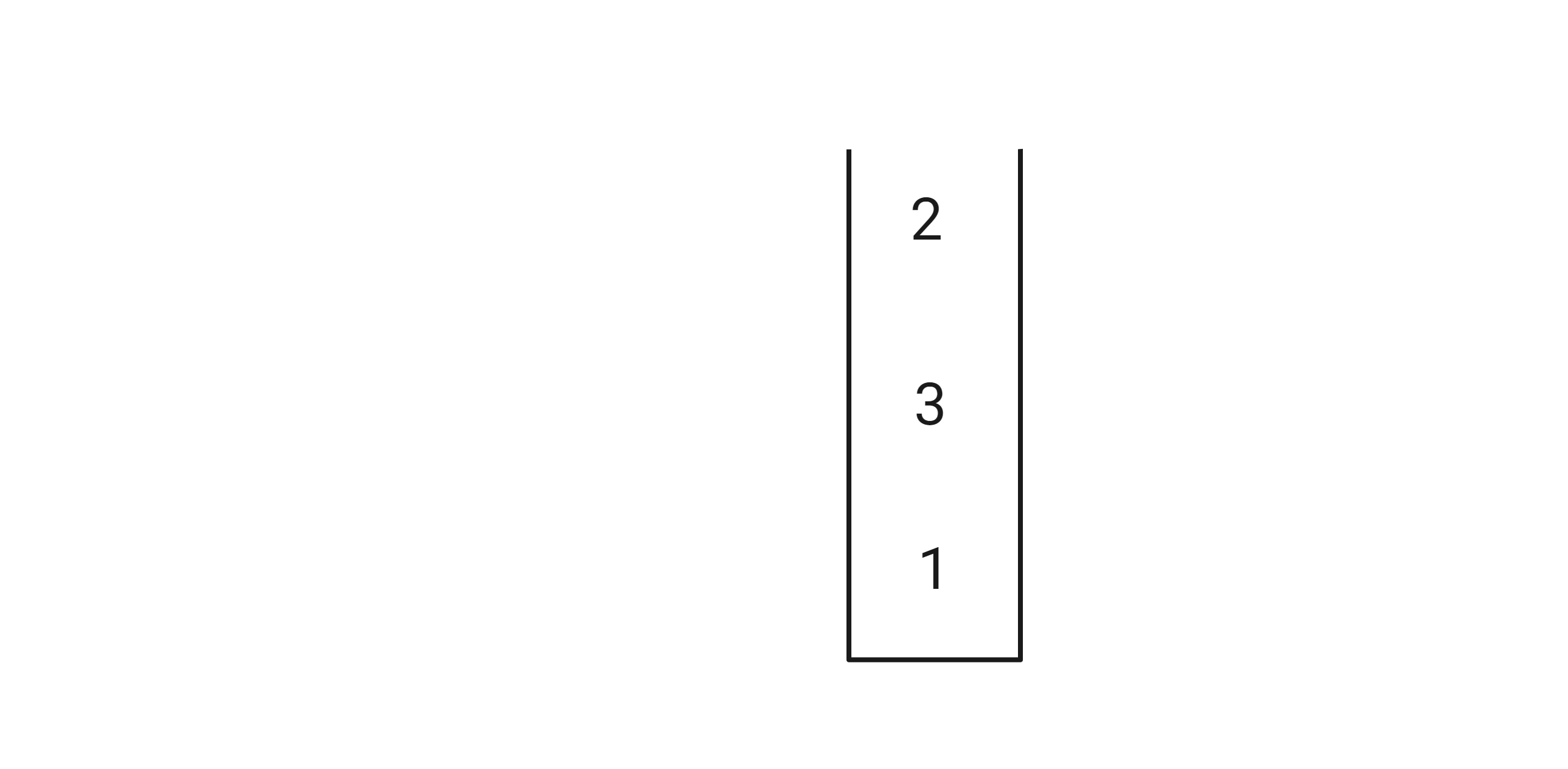
The next line contains ‘N’ space-separated integers denoting the elements of the stack, the last element of the input being the top of the stack.

If the input is 1 3 2 then the input stack will look like this :
For each test case, print the stack in descending sorted order.

The output of each test case will be printed in a separate line.
You do not need to print anything. It has already been taken care of. Just implement the given function.
The main idea is to remove the elements recursively from the stack until the stack becomes empty and then insert those values (from the call-stack [A call-stack is the stack that is made in the memory when recursive-calls are made. ]), back into the stack in a sorted position.

