










Ceil of an integer is the closest integer greater than or equal to a given number.
For example:
arr[] = {1, 2, 5, 7, 8, 9}, key = 3.
The closest integer greater than 3 in the given array is 5. So, its ceil value in the given array is 5.
The first line of input contains a single integer T, representing the number of test cases.

The first line of each test case contains elements in the level order form. The line consists of values of nodes separated by a single space. In case a node is null, we take -1 in its place.

The second line of each test case contains integer X, denoting the key value.
The first and only line of each test case in the output contains ceil of integer X from given BST.
You are not required to print the expected output; it has already been taken care of. Just implement the function.
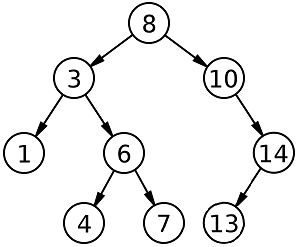
for the above tree
X=2
ceil =3
X=7
ceil =8
X=12
ceil =13
1 <= T <= 10
1 <= N <= 10^5
0 <= node data <= 10^9
1 <= X <= 10^9

Time limit: 1 second
We will traverse the Binary search tree from the root node till we find the node whose key value is given, and upon getting that, we return the ceil value of it.
The steps are as follows:
Guess Price
Unique BSTs
Unique BSTs
Unique BSTs
Kth Largest Element in BST
Two Sum IV - Input is a BST
Icarus and BSTCOUNT

