You are given a sentence in the form of a string ‘S’. You have to convert ‘S’ into its equivalent mobile numeric keypad sequence, i.e. print the sequence in such a way that if it is typed on the given keypad, the output should be the string ‘S’. A keypad for the reference is shown below.
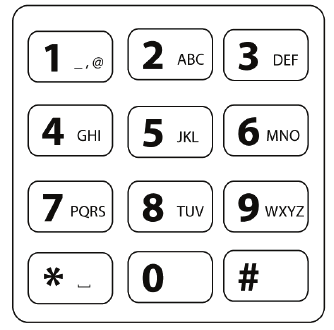
Note:
1. There will be only lower case letters.
2. There will not be any special characters or capital letters in the input string.
3. There will be no spaces in the string.
Input Format:
The first line of the input contains an integer T denoting the number of test cases.
The first line of each test case contains one integer N, denoting the length of the string ‘S’.
The second line of each test case contains the input string ‘S’.
Output Format:
The only line of output of each test case consists of an output string, denoting the pattern which is required to print ‘S’.
The output of each test case will be printed in a separate line.
Note:
You do not need to print anything, it has already been taken care of. Just implement the given function.
Constraints:
1 <= T <= 5
1 <= N <= 3000

Where 'T' is the number of test cases and ' N' is the length of the sentence 'S'.