










• The left subtree of a node contains only nodes with data less than the node’s data.

• The right subtree of a node contains only nodes with data greater than the node’s data.

• Both the left and right subtrees must also be binary search trees.
For the given BST, if we want to delete the node with data 5 :
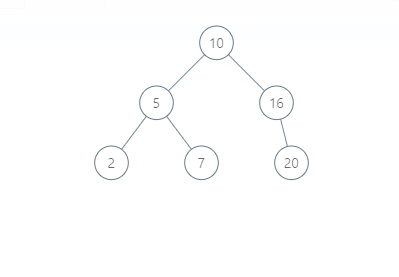
The modified BST will be:
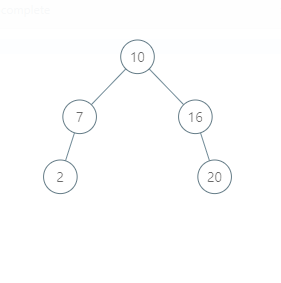
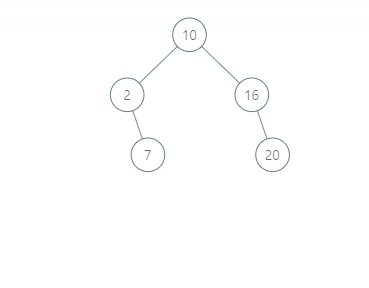
Please notice that another valid answer is:
1. The node which we want to delete will always be present in the given tree.

2. If after deletion the tree becomes empty, print -1.
The first line contains the elements of the tree in the level order form separated by a single space. If any node does not have a left or right child, -1 is used in its place. Refer to the example given below.

The second contains the data of the node which we want to delete.
Elements are in the level order form. The input consists of values of nodes separated by a single space in a single line. In case a node is null, we take -1 in its place.

For example, the input for the tree depicted in the below image would be :
1 2 3 4 -1 5 6 -1 7 -1 -1 -1 -1 -1 -1
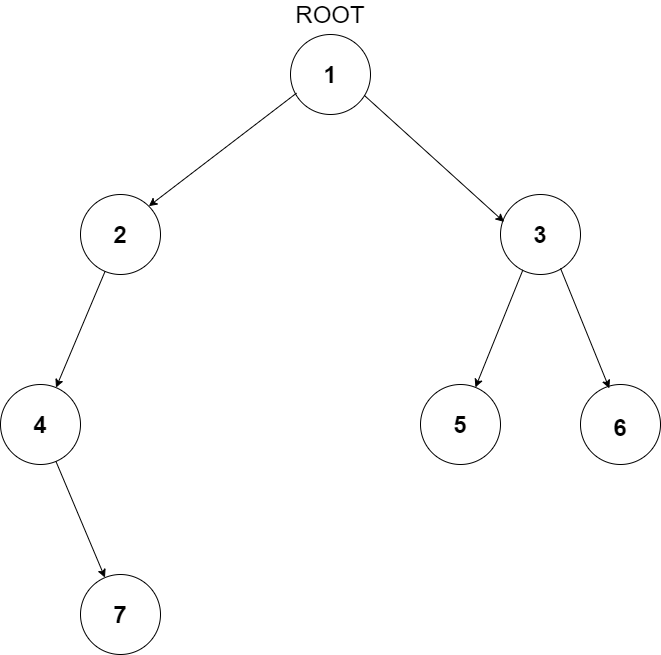
Level 1 :
The root node of the tree is 1

Level 2 :
Left child of 1 = 2
Right child of 1 = 3

Level 3 :
Left child of 2 = 4
Right child of 2 = null (-1)
Left child of 3 = 5
Right child of 3 = 6

Level 4 :
Left child of 4 = null (-1)
Right child of 4 = 7
Left child of 5 = null (-1)
Right child of 5 = null (-1)
Left child of 6 = null (-1)
Right child of 6 = null (-1)

Level 5 :
Left child of 7 = null (-1)
Right child of 7 = null (-1)

1
2 3
4 -1 5 6
-1 7 -1 -1 -1 -1
-1 -1
 1. The first not-null node (of the previous level) is treated as the parent of the first two nodes of the current level. The second not-null node (of the previous level) is treated as the parent node for the next two nodes of the current level and so on.

2. The input ends when all nodes at the last level are null (-1).
Print the inorder traversal of the modified Binary Search Tree.
1. The inorder traversal of a binary tree is the traversal method in which for any node its left subtree is visited first, then the node itself, and then the right subtree.

2. You don't need to print the output, it has already been taken care of. Just implement the given function.
1 <= N <=5000
0<= data <=10^5
Where ‘N’ is the number of nodes in the binary search tree and ‘data' denotes data contained in the node of the binary search tree.

Time limit: 1 sec
When we delete a node, three possibilities arise:
The inorder successor of a node in BST is that node that will be visited immediately after the given node in the inorder traversal of the tree.
The Steps are as follows:
In this approach, when both left and right subtree exist of the given node, then instead of finding the successor of the node:
The inorder predecessor of a node in BST is that node that will be visited just before the given node in the inorder traversal of the tree.
Guess Price
Unique BSTs
Unique BSTs
Unique BSTs
Kth Largest Element in BST
Two Sum IV - Input is a BST
Icarus and BSTCOUNT

