







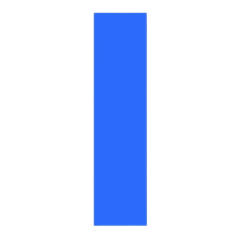
We are representing white money as positive integers and black money as negative integers.
Let‘s assume ‘HOUSES’ = [2, -2, -1, 2, -1]. In this example ‘HOUSES[0]’ and ‘HOUSES[3]’ ( 0-based indexing) contain white money while ‘HOUSES[1]’, ‘HOUSES[2]’ and ‘HOUSES[4]’ and (0-based indexing) contain black money.
Let‘s assume ‘HOUSES’ = [2, -2, -1, 2, -1]. If we want to transfer all black money from ‘HOUSE[1]’ to ‘HOUSE[3], then the cost of transferring the money is (abs(1 - 3) * (2)) => 4.
The sum of the amount of black money in all houses is exactly equal to the sum of the amount of white money in all houses.
The first line of input contains an integer 'T' which denotes the number of test cases or queries to be run. Then the test cases follow.

The first line of each test case contains a single integer ‘N’ representing the number of houses in the city.

The next line of each test case contains ‘N’ single space-separated integers denoting the amount of money in the houses.
For each test case, print the minimum cost of converting all the black money into white money.

Print the output of each test case in a separate line.
You do not need to print anything; it has already been taken care of. Just implement the given function.
1 <= ‘T’ <= 100
2 <= ‘N’ <= 5000
-10^5 <= ‘HOUSES[i]’ <= 10^5

Time Limit: 1 second
As we know we can choose any house which contains black money for converting it to white money. But the efficient way is to choose the nearest house which contains white money. For this first, we can put all the black money and their respective house number into a list/vector and do the same for the white money houses. And then we remove the 0’th elements of list/vector ‘blackMoneyList’ and ‘whiteMoneyList’ and start converting the black money to white money till the whole black money is not converted into white money.
Here is the algorithm :
As we know, the amount of black money and white money is the same. So we can greedily pick the nearest white money house for converting the black money to white money. So we traverse at every index and we pick money whether it is white or black and add it to the variable ‘currMoney’ in which we store the amount of money from house number 0 to current house. That is, we traverse at every index of the ‘HOUSES’ and store a cumulative amount of money till now. At every index, we add abs(‘currMoney’) * 1 into ‘totalCost’ in which we store the minimum amount of cost of converting all the black money into white. And we multiply ‘currMoney’ by 1 because the distance between any two adjacent houses is 1.
Here is the algorithm :

