

If you’ve been watching AI headlines and wondering how people actually land jobs building these systems, you’re asking the right question at the right time. Machine learning engineering is one…

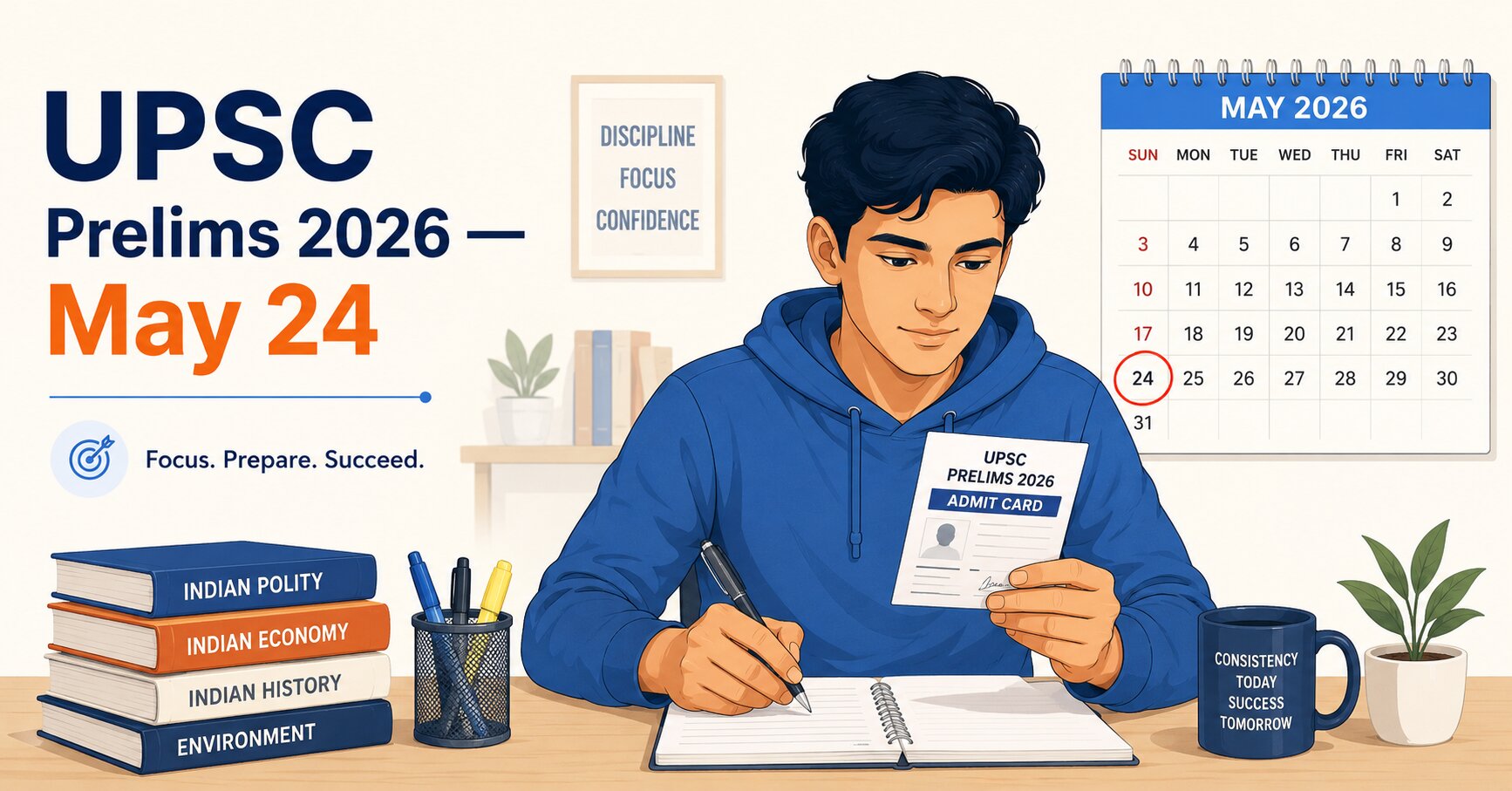
UPSC CSE 2026 Prelims: Results Out, Check PDF
10 min read
5,056 views

If you’ve been preparing for months, grinding through GS Paper I, brushing up on CSAT, and making peace with Polity and Economy, the last week can feel like a strange mix of urgency and paralysis. What do you revise? What do you stop touching? And more immediately, have you downloaded your admit card? Do you know where your center is?
This guide cuts through the noise. It covers everything you need to do, from downloading your UPSC CSE 2026 admit card to what you carry into the exam hall. Practical, sequenced, nothing skipped!
UPSC Prelims Result 2026 Declared
The UPSC Prelims Result 2026 was officially declared on 15 June 2026 by the Union Public Service Commission (UPSC). Candidates who appeared for the Civil Services Preliminary Examination can now check their qualifying status on the official UPSC website. The result contains the roll numbers of candidates shortlisted for the next stage, the UPSC Civil Services Main Examination 2026.
UPSC Prelims Result 2026 PDF Download
Qualifying the prelims is a significant milestone in the highly competitive UPSC recruitment process. Candidates whose roll numbers appear in the result list should begin preparing for the Mains examination, which includes descriptive papers covering General Studies, Essay, and an optional subject.
Those who did not qualify can analyze their performance and start planning for the UPSC CSE 2027. Aspirants are advised to regularly visit the UPSC portal for updates regarding the Detailed Application Form (DAF), Mains exam schedule, and other important notifications related to UPSC CSE 2026.
What Is UPSC Prelims and Who Can Appear?
UPSC Civil Services Preliminary Examination 2026 (also called UPSC CSE Prelims 2026) is the first stage of India’s most competitive exam, the Civil Services Examination, conducted by the Union Public Service Commission. It consists of two papers held on the same day:
- GS Paper I — General Studies (200 marks, 100 questions, 2 hours)
- GS Paper II / CSAT — Civil Services Aptitude Test (200 marks, 80 questions, 2 hours, qualifying in nature — minimum 33% required)
Only candidates who clear the prelims are eligible to sit for the UPSC Mains 2026. This year, lakhs of aspirants across India, including a significant number of college students in their final year or recent graduates, are appearing for the first time.
The exam date for UPSC CSE 2026 was Sunday, May 24, 2026.
UPSC Admit Card 2026 – How to Download It?
The UPSC Prelims 2026 admit card (also called the UPSC e-admit card or UPSC hall ticket 2026) is the single most important document you need before exam day. The commission releases it on the official portal, and you cannot enter the exam center without it.
The official UPSC portal for admit card download is upsconline.nic.in.
How to Download the UPSC Admit Card 2026
Follow these steps to download your UPSC CSE Prelims admit card:
- Go to upsconline.nic.in (the official UPSC online portal)
- Click on “e-Admit Card” under the Active Examinations section
- Select Civil Services (Preliminary) Examination, 2026
- Log in using your Registration ID and Date of Birth
- Your UPSC e-admit card 2026 will appear on the screen
- Download the PDF and take 2–3 colour printouts
Do not wait. Portal traffic spikes sharply in the last 48–72 hours before any UPSC exam. Download your admit card today if you haven’t already.
What to Check on Your UPSC Admit Card 2026
Once downloaded, verify every detail carefully:
- Your full name (as registered)
- Your photograph and signature (must be clearly visible)
- Exam centre name, address, and centre code
- Roll number
- Paper timings — GS Paper I (Morning) and CSAT (Afternoon)
- Date of exam — May/june
If any detail is incorrect, contact UPSC immediately at the helpline number listed on the official website. Do not assume it will sort itself out.
Last-Week UPSC Study Checklist: What to Revise, What to Drop
With five days left, your revision strategy matters more than the number of hours you put in. This is not the time for new topics; it’s the time for consolidation.
What to Focus On
- Static GS: Polity (constitutional provisions, amendments, bodies), Geography (physical + Indian), History (modern India—freedom struggle, post-independence), Economy (basics—budget, monetary policy, schemes)
- Current Affairs: Focus on the last 12 months. Go back to your notes or a reliable current affairs digest; don’t start reading newspapers fresh
- Environment & Ecology: High-yield area for Prelims. Cover protected areas, biodiversity conventions, and government schemes
- CSAT: If you’re strong in reading comprehension, basic aptitude, and math, do one mock under timed conditions. If you’ve been consistently scoring 50+, don’t overinvest here
- Previous Year Questions (UPSC PYQ): At least a 2-year brush-up on paper patterns; not for memorising answers, but for calibrating question types
What to Stop Doing
- Starting new books or new subjects
- Entering into debates about what “might” come in the paper
- Pulling all-nighters: your cognitive sharpness on exam day matters more than one extra topic
- Comparing your preparation with others on forums or social media
Checklist for UPSC Prelims 2027
The evening before your UPSC exam is not for studying; it’s for logistics. Run through this checklist on the night of May 23:
Documents to keep ready:
- UPSC Prelims 2026 admit card (printed, 2 copies minimum)
- Valid photo ID — Aadhaar card, PAN card, Passport, or Voter ID (original, not photocopy)
- Passport-size photographs (2–3, same as the one on your admit card)
Stationery:
- Black or blue ballpoint pens (2–3, no gel pens)
- Pencil (for OMR rough work if permitted — check your admit card instructions)
- No calculator, no electronic device, no smartwatch
Logistics:
- Confirm your exam centre address on Google Maps
- Estimate travel time and add a 30–45-minute buffer
- Set two alarms (and tell someone at home to wake you if needed)
- Keep your admit card in a folder. Do not fold or crumple it
The evening itself:
Light dinner, no heavy food.
Sleep by 10:30–11 PM. You need a functional brain, not a stressed one.
Exam Day Guide — Hour by Hour
Morning: GS Paper I
| Time | What to Do |
| 6:30–7:00 AM | Wake up, light breakfast (banana, toast, avoid coffee overload) |
| 7:00–8:00 AM | Light revision — only your condensed notes or revision sheets |
| 8:00–8:30 AM | Leave for the centre — reach by 9:00 AM at the latest |
| 9:00–9:30 AM | Entry, frisking, seating — settle in, don’t rush |
| 9:30 AM | ORS (OMR sheet) distribution |
| 9:30–9:45 AM | Fill in the basic details on the OMR carefully before the paper starts |
| 10:00 AM | GS Paper I begins |
| 10:00–12:00 PM | Attempt: aim for 80–85 questions, skip uncertain ones initially |
| 12:00 PM | Paper I ends — exit calmly |
Afternoon: CSAT (GS Paper II)
| Time | What to Do |
| 12:00–1:30 PM | Light lunch — dal, rice, roti. No heavy or oily food. Rest |
| 1:30–2:00 PM | Return to centre, settle in |
| 2:00 PM | CSAT Paper II begins |
| 2:00–4:00 PM | Attempt: prioritise comprehension passages first, then maths |
| 4:00 PM | Paper II ends |
Inside the Exam Hall: Rules You Cannot Ignore
- Report before the gate closes — typically 30 minutes before paper time. Latecomers are not allowed entry after the hall is sealed.
- Fill your roll number and other details on the OMR sheet carefully—errors here cannot be corrected
- Do not write anything on the question paper that is not permitted
- You cannot leave the hall before the exam ends
- No mobile phones, smartwatches, Bluetooth devices, or electronic items inside
- A water bottle (transparent/plain) is generally permitted—confirm from your admit card
OMR Sheet: The Most Common Mistakes to Avoid
The UPSC OMR sheet is scanned and machine-read. One careless marking can cost you a correct answer.
- Use only a black/blue ballpoint pen; not gel or pencil (unless specifically instructed for rough work)
- Fill circles completely and darkly; light or incomplete fills may not be read
- Do not overshoot the circle into adjacent options
- If you change an answer, do not try to erase; white-out is not allowed. In most cases, overmarking is treated as wrong. Check your admit card for specific instructions.
- Recheck your roll number on the OMR before submitting; this is non-negotiable
UPSC Prelims 2027 Marking Scheme
Many aspirants, especially first-timers, misapply the negative marking logic under pressure. Here’s the clean version:
GS Paper I:
- Correct answer: +2 marks
- Wrong answer: –0.66 marks (1/3rd of 2)
- Unattempted: 0 marks
CSAT (Paper II):
- Correct answer: +2.5 marks
- Wrong answer: -0.83 marks (1/3rd of 2.5)
- Unattempted: 0 marks
The strategy implication: If you can eliminate even one option with reasonable confidence, attempting is statistically favorable. If you’re guessing blindly among all four options, skip it.
What Happens After UPSC CSE Prelims 2026?
Once both papers are done on May 24, here’s the usual post-Prelims timeline (based on historical patterns; the UPSC announces exact dates officially):
- UPSC Answer Key: Unofficial answer keys from coaching institutes typically come out the same evening (May 24). The UPSC does not release an official prelims answer key.
- Cut-off estimates: Community discussions and expert estimates typically emerge within 24–48 hours. Treat these as indicative, not definitive.
- UPSC Prelims Result 2026: Results are typically declared 4–6 weeks after the exam. Track the official UPSC website for the announcement.
- UPSC Mains 2026: Usually held 4–5 months after the prelims result. If you’re clear, you’ll have time to prepare, but start mentally planning now.
While You Wait for Results: Don’t Put Your Life on Pause
Here’s something no one tells you clearly enough: the weeks after Prelims can be a long wait, and if you’re a college student or a recent graduate, it doesn’t have to be dead time.
Many UPSC aspirants use the result-waiting period to explore what else is out there, not as a backup plan but as a parallel reality check. India’s job market for graduates is active, and understanding your options doesn’t mean abandoning your UPSC dream.
Naukri Campus is a good place to start that exploration. It’s built specifically for college students and fresh graduates. You can browse entry-level opportunities, understand what companies are hiring for, and get a sense of the landscape. No commitment required, just awareness. Because knowing your options is always better than not knowing them.
Conclusion
The preparation is behind you. What the next five days, and specifically May 24, require is not more studying. It’s clarity, calm, and logistics.
Download your admit card today. Know your center. Sleep well on May 23. Walk in rested.
The exam tests knowledge, yes, but it also tests composure. The aspirant who reads questions carefully, manages time without panic, and doesn’t second-guess every marked answer has a real edge.
You’ve got this. Now go get it done!!
Frequently Asked Questions: UPSC Prelims 2026
How to download the UPSC admit card 2026?
Go to upsconline.nic.in, click on “e-Admit Card,” select the Civil Services Preliminary Examination 2026, and log in with your Registration ID and Date of Birth. Download and print at least two copies in color. Do this well before exam day as portal traffic rises sharply in the final 48 hours.
Has the UPSC admit card 2026 been released?
Yes, the UPSC Prelims 2026 admit card has been released on the official UPSC online portal (upsconline.nic.in). Candidates should log in immediately and verify all details, including center address, roll number, and photograph, before printing.
What is the official UPSC portal for the admit card download?
The official UPSC online portal is upsconline.nic.in. This is the only authorized source for downloading your UPSC e-admit card 2026. Avoid third-party websites — they may show outdated or incorrect information.
What documents are needed on UPSC exam day?
You must carry your printed UPSC Prelims 2026 admit card and a valid government-issued photo ID (Aadhaar, PAN, Passport, or Voter ID). Bring original documents, not photocopies. Also carry 2–3 passport-size photographs matching the one on your admit card.
What is the UPSC Prelims 2026 exam date?
The UPSC Civil Services Preliminary Examination 2026 is scheduled for Sunday, May 24, 2026. GS Paper I is held in the morning session (10 AM–12 PM), and CSAT (Paper II) is held in the afternoon session (2 PM–4 PM).
What is the negative marking in UPSC Prelims 2026?
In GS Paper I, a wrong answer deducts 0.66 marks (one-third of 2). In CSAT Paper II, a wrong answer deducts 0.83 marks (one-third of 2.5). Unattempted questions carry zero marks. If you can eliminate at least one option confidently, attempting is statistically advisable.
Can I use a gel pen on the UPSC Prelims OMR sheet?
No, UPSC specifies the use of a black or blue ballpoint pen for filling the OMR sheet. Gel pens, pencils (except where specifically permitted for rough work), and ink pens are not recommended. Fill circles completely and darkly to ensure accurate machine scanning.
What time should I reach the UPSC exam center on May 24?
You should reach your exam center by 9:00 AM at the latest for the morning paper (GS Paper I). Entry to the hall is typically closed 30 minutes before the paper starts (i.e., 9:30 AM). For the afternoon paper, return by 1:30 PM.
When will the UPSC Prelims 2026 results be declared?
The UPSC has not officially announced the Prelims result date yet. Based on historical patterns, results are typically declared 4–6 weeks after the examination. Monitor the official UPSC website (upsc.gov.in) for the announcement. Unofficial answer keys from coaching institutes are usually available on the evening of exam day.
What is the UPSC Prelims cutoff for 2026?
The official UPSC Prelims 2026 cut-off will be declared along with the result. Unofficial cut-off estimates from coaching institutes typically appear within 24–48 hours of the exam based on student responses. These are indicative. Final qualifying cut-offs vary by category (General, OBC, SC, ST, PwBD).
Is CSAT qualifying or counted in the merit list?
CSAT (GS Paper II) is qualifying in nature. You need a minimum of 33% (66 marks out of 200) to qualify. Your CSAT score is not counted toward the Prelims merit list; only GS Paper I marks determine whether you clear Prelims and appear in the UPSC Mains 2026.
What should I do if there is an error on my UPSC admit card 2026?
If you notice any discrepancy—name spelling, photograph, exam center, or roll number—contact UPSC directly through the official helpline or email listed on upsc.gov.in. Do not assume errors will be corrected automatically. Carry supporting documents to the exam center as a precaution.
Latest Posts
How to Become a Digital Marketer: Step-by-Step Career Guide
If you’ve typed “how to become a digital marketer” into Google, you’ve probably landed on a dozen conflicting answers; some say a free YouTube playlist is enough, others insist you…
Graduated. Taking a Gap Year. Now What?
You’ve just graduated; everyone around you is either starting a job or prepping for another exam, and you’re quietly wondering whether taking a year off is a smart reset or…
AI Jobs Are Booming in India: Here’s How to Land One in 2026
If you’ve been scrolling job portals wondering whether “AI jobs” are actually real career options or just buzzword listings, here’s the short answer: they’re very real, and they’re growing faster…
How to Optimize Your LinkedIn Profile as a Fresher
A standout LinkedIn profile as a college student combines a professional photo, a keyword-rich headline that goes beyond your default student title, a first-person summary highlighting your projects and coursework,…
Popular Posts
What is SSC CGL Exam? – Complete Details for 2026
If you’re a college student or a fresh graduate wondering, “Should I appear for SSC CGL?” you’re in the right place. Every year, over 30 lakh students apply for this…
How to Make a Fresher Resume That Recruiters Notice
If you are a college student or a fresher stepping into the professional world, creating a well-structured resume is your first step to success. A polished and ATS-friendly resume can…
Engineering Student Resume: A Complete Guide for BTech Freshers
Engineering is a highly competitive field, with more than 1.5 lakh students graduating every year in India. That is why a strong engineering student resume is essential to secure a…
Best Fintech Companies for Freshers to Work at in India
India is one of the fastest-growing fintech markets in the world, with over 10,000 registered fintech startups and a market valuation projected to cross $150 billion by 2025. For freshers…
How to Find Off Campus Placement in 2026
You’ve just completed your degree, or you’re in your final year, and you realize your college’s placement cell might not be enough. Maybe your college doesn’t have top recruiters visiting,…