Key highlights:
● Resume meaning and definition: Experts define resume as a short document employers use to shortlist candidates for a job interview.
● What to include in a resume? Add your contact details, summary, skills, education, and work experience.
● What are the types of resume format? There are three main types of resume formats: chronological, functional, and combination.
● What is the ideal resume length: Keep it under one page for freshers and two pages for experienced professionals.
● Is a resume the same as a CV? No, a resume is short and job-specific, while a CV is longer and lists your full academic and professional background.
A resume is a formal job application document that helps outline your key skills and qualifications in a standard format. It is a mandatory requirement in the hiring process and helps recruiters in understanding your suitability for a role. A well written resume can improve your chances of securing internship and job interviews.
This guide explains job resume meaning and its key elements. It also covers different resume types and structure along with examples for freshers and experienced professionals.
What is a resume? Definition and meaning
Cambridge Dictionary defines resume as “a written statement of your educational and work experience.”
Here is another commonly used resume definition:
“A short written description of your education, qualifications and previous jobs which you send to an employer when you are trying to get a job.”
In practice, a resume acts as a screening document. Employers rely on it to quickly understand a candidate’s professional profile and decide whether the application should move forward in the interview process. Rather than listing everything, a resume focuses only on details that support suitability for a specific role.
Here are the main characteristics of a resume:
● Written for a specific job role
● Used by employers to shortlist candidates
● Uses clear headings for each section
● Usually one to two pages long
● Written in a professional and factual tone
● Follows a standard format
● Avoids unnecessary personal details
● Sent in PDF or Word format
What is the purpose of a resume?
The purpose of a resume is to show employers why you are a suitable candidate for a role and why your application deserves to move to the next stage of the hiring process. It also helps recruiters compare applicants efficiently and identify profiles that match role requirements and hiring expectations.
Fun Fact:
In 1482, Leonardo da Vinci wrote a letter listing his skills and experience to seek employment. This letter is widely regarded as the earliest example of a resume.
How to structure your resume?
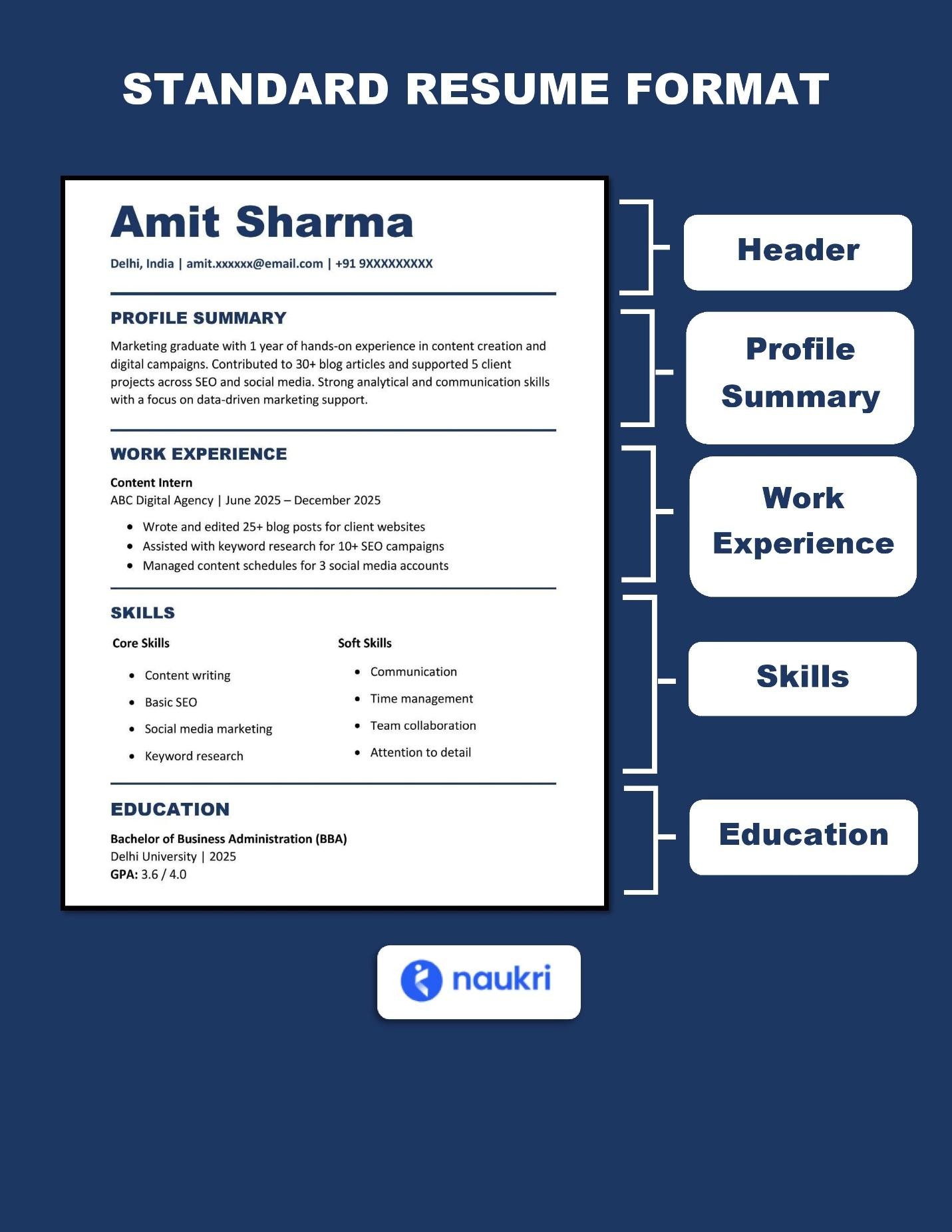
A resume is divided into clear sections that help employers quickly find important details. These sections organise details in a logical order for a specific job role.
Common resume sections include:
● Header with contact details
● Profile summary
● Work experience
● Skills section
● Education
Resume examples
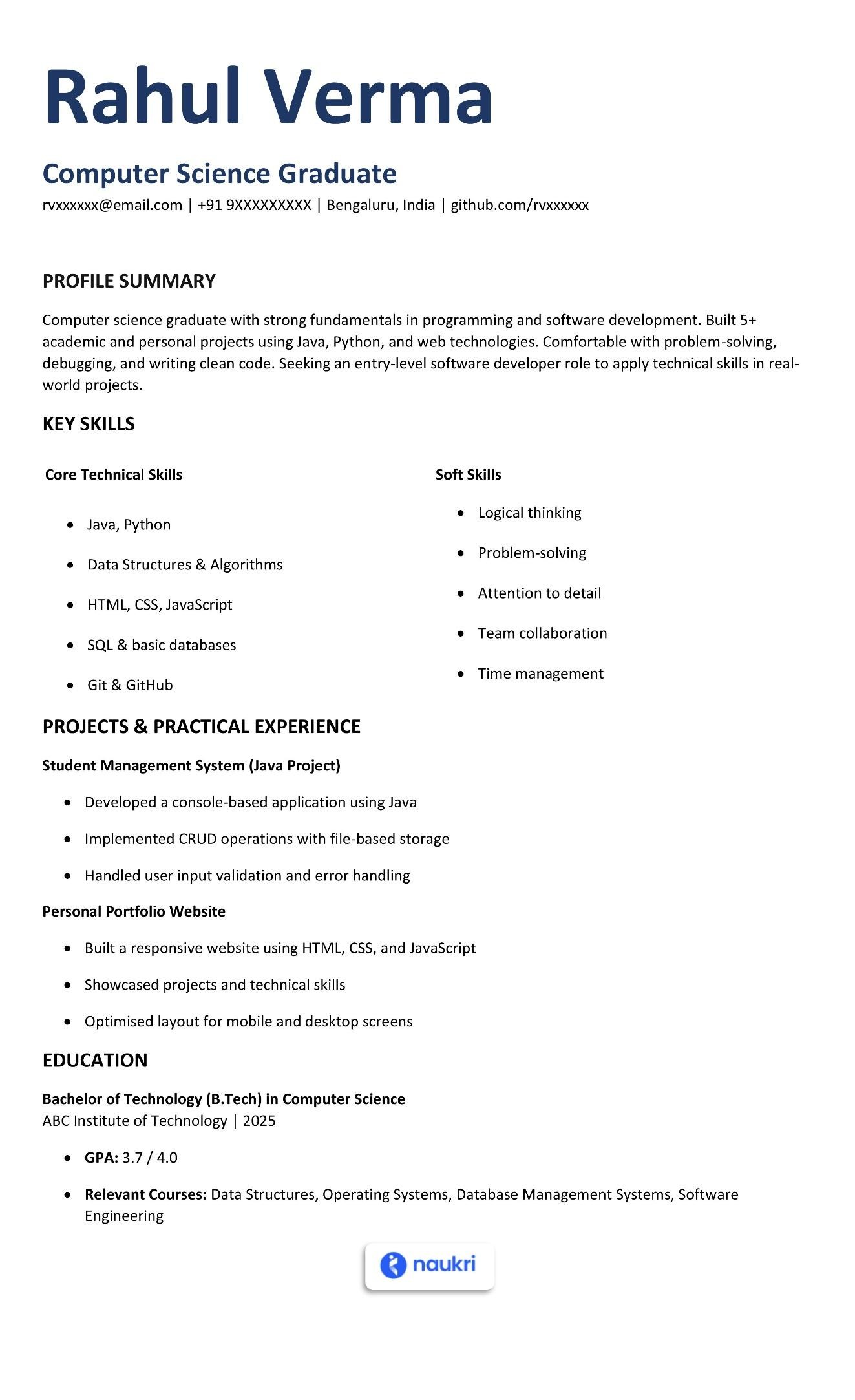
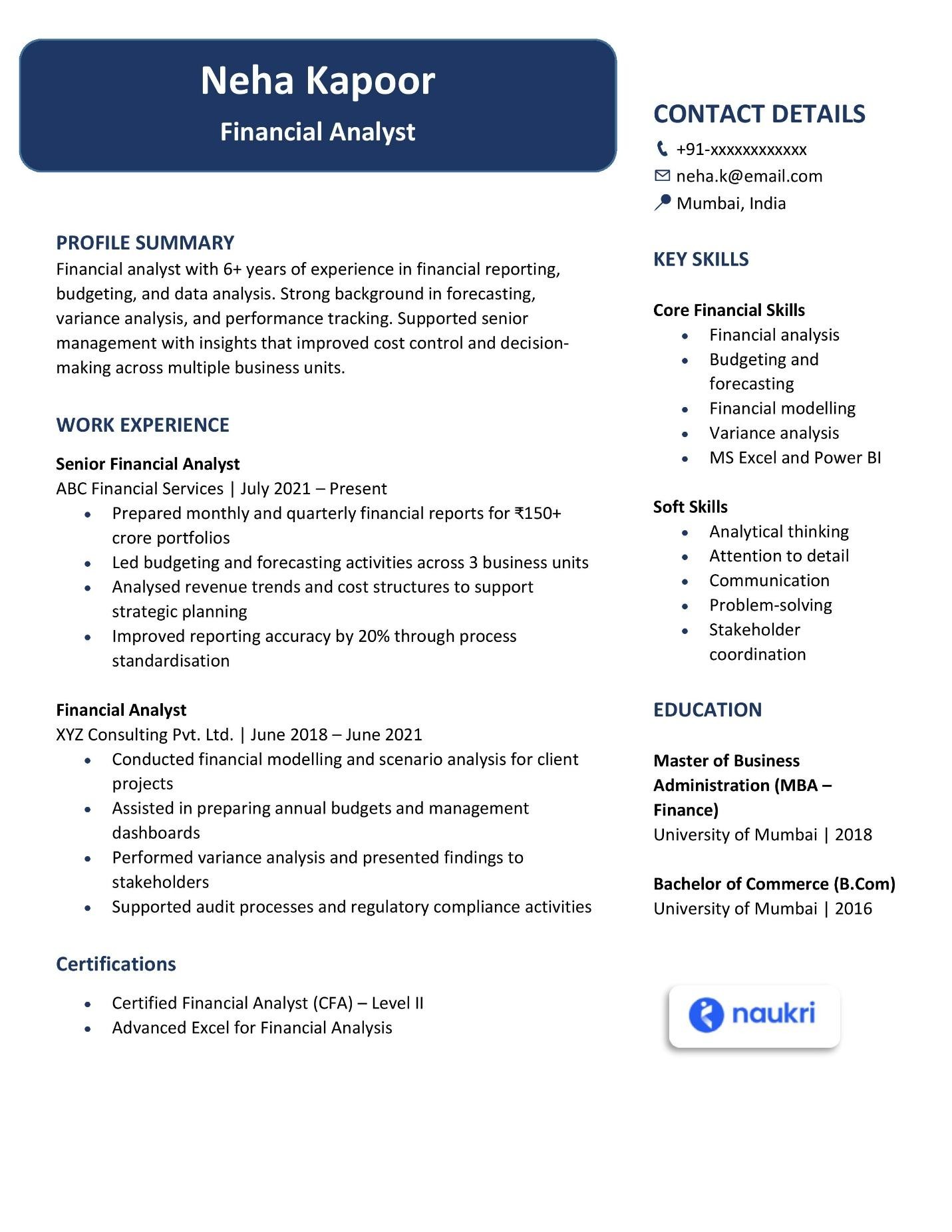
Now that you understand what resume means, here are two sample resumes to show how to present your information. The first example is for a fresher with limited experience, and the second is for an experienced professional with a work history.
Example 1: Resume for freshers
This sample resume follows a functional or skill-based format and focuses on skills rather than work history.
Example 2: Resume for experienced professionals
This sample resume uses a reverse-chronological format to highlight a candidate’s work history.
Key elements of a resume
A resume will work best when it includes only the essential sections employers expect to see and can easily review.
1. Contact information
This section appears at the top of the resume and tells employers how to reach a candidate. It usually includes the following:
● Full name
● Phone number
● Email address
● A professional online profile if relevant (LinkedIn or GitHub)
2. Resume summary or objective
This section gives a short introduction at the beginning of the resume. It briefly explains background, strengths, or career goals. Experienced professionals often use a summary, while freshers or career changers may use an objective.
3. Work experience
The work experience section lists previous roles that relate to the job being applied for. It must include the following things:
● Job title
● Organisation name
● Time period
● Short points explaining responsibilities or achievements
Note: You must start with your most recent work experience.
4. Skills
This section highlights key abilities relevant to the role. It may include technical skills, tools, or job-related competencies that help employers understand what a candidate can do. Make sure you list the key skills from the job description because they work as keywords and help in passing Application Tracking System (ATS).
5. Education
The education section shows academic background. It generally includes the degree earned, institution name, and completion year. For freshers, relevant coursework or academic achievements may also be added.
6. Optional sections
Depending on the role, you can also include additional sections in your resume to add more value. These may cover:
● Certifications
● Training programs
● Projects
● Volunteer work
● Languages
● Awards
● Professional memberships
Only include these sections if they support the job application. Otherwise, it is best to keep the resume short and limited to one page.
Types of resumes
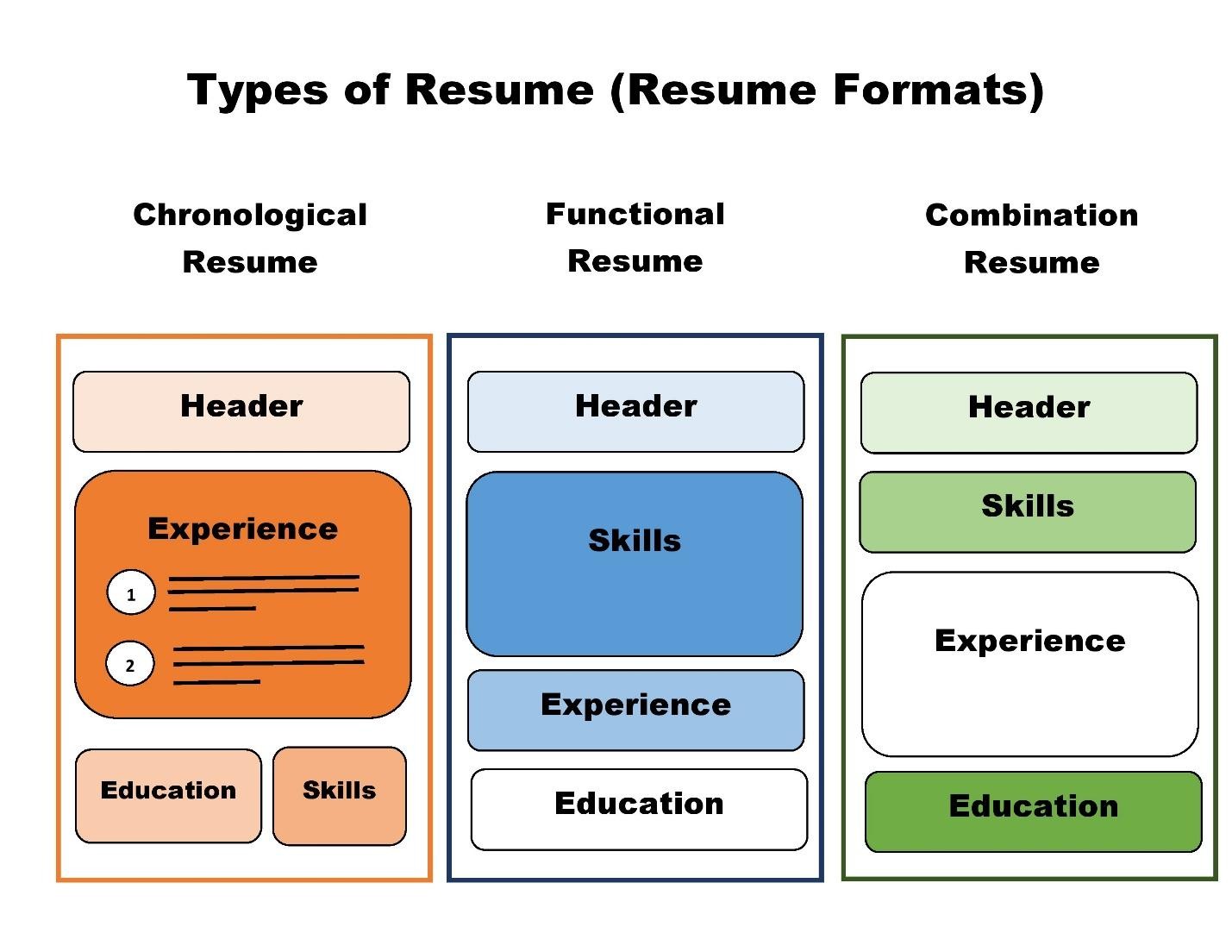
There is no single resume format that works for everyone. The right resume type depends on work experience and the role. Each format highlights information in a different way.
Below are the three most commonly used resume types.
1. Chronological resume
A chronological resume lists work experience in reverse order, starting with the most recent role. It places a strong focus on career progression. This format will suit professionals with steady work experience and a clear career path.
2. Functional or skill-based resume
A functional resume focuses on skills instead of job history. It groups abilities and strengths into skill-based sections rather than listing roles in detail. This format works well for freshers, career changers or candidates with limited experience.
3. Combination or hybrid resume
A combination resume blends skills and work history into one format. It highlights key abilities while also showing employment details in order. This format is often used by professionals who want to showcase both experience and specialised skills.
Resume writing best practices
Before writing a resume, it is important to understand what employers look for and how they review applications. A proper and neatly formatted resume makes information easier to read and improves shortlisting chances.
● Understand the job role before starting
● Read job descriptions carefully
● Note important skills and requirements
● Choose the right resume format
● Add important keywords to make your resume ATS-friendly
● Use one page unless experience requires more
● Use clear section headings
● Leave enough space between sections
● Choose a readable font such as Arial, Calibri, or Times New Roman
● Keep font size 11–12 for text and 14–16 for section headings
● Maintain standard margins, around 1 inch on all sides
● Avoid long paragraphs and clutter
Resume writing resources
Now that you understand resume meaning in job application, here are some helpful resources that can guide you while creating or improving your resume.