Do you think IIT Guwahati certified course can help you in your career?
Introduction
This article comprehensively explains dynamic scoping in R. We will explore its unique approach to variable binding and resolution. The article examines its meaning, compares it to lexical scoping, and provides practical examples to help programmers use dynamic scoping effectively and avoid potential pitfalls.
About R
R is a programming language designed specifically for statistical computing and graphics. It has many statistics and data analysis tools. Statisticians and data scientists like to use it because of this.
R helps you explore, visualize, and model data interactively. This makes it easier to analyze and understand data.
Its syntax is concise and easy to use for statistical programming.
R has a large community that creates and manages many extra packages. These packages help with data analysis and research for different purposes.
Dynamic Scoping in R
Dynamic scoping in R means that the value of a variable depends on where and how the function is called, not where it is defined. The value of a variable is determined at runtime based on the calling context. Therefore, functions can access and modify variables in the calling environment.
However, this can make the code more difficult to understand and debug. So it's usually better to use the lexical scope that matches the original definition of the variable instead.
Here's a point-by-point explanation of R's dynamic scoping:
Variable Resolution Based on Call Context
In dynamic scoping, the value of a variable is determined by the context of the calling function rather than where it is defined. When a function references a variable, R looks up its value in the environment it was called in and walks the call stack.
Resolving Context Dependent Values
Variable values can change dynamically depending on where and how the function is called. If a variable with the same name exists in multiple environments at the top of the call stack, the value of the closest environment on the call stack is used.
Flexibility and Runtime Adaptability
Dynamic scoping provides flexibility by allowing functions to access and modify variables defined in the calling environment. This is useful when a function needs to consider the current state of a variable instead of its original definition.
Possible Unexpected Results
Dynamic scoping provides flexibility but can produce unexpected results and make your code harder to understand and debug. Variables can be overridden inadvertently when name conflicts occur, making it difficult to keep track of variable values if they depend on the call stack.
Non Default Behavior
Dynamic scoping is used less frequently in R than in the default lexical scoping mechanism. Many R programmers may need to become more familiar with dynamic scoping, and code that relies heavily on dynamic scoping can be less portable and more accessible for others to understand.
Enforcing Lexical Scope
To ensure that R uses lexical scoping instead of dynamic scoping, use a local function to create a new environment with lexical scoping. Encapsulating code in local({ ... }) sets the scope where variables are resolved based on lexical definitions rather than call stacks.
Concept of Dynamic Scoping in R
Consider the following example:
x <- 100

Pooh <- function() {
  print(x)
}

Bear <- function() {
  x <- 20
  Pooh()
}

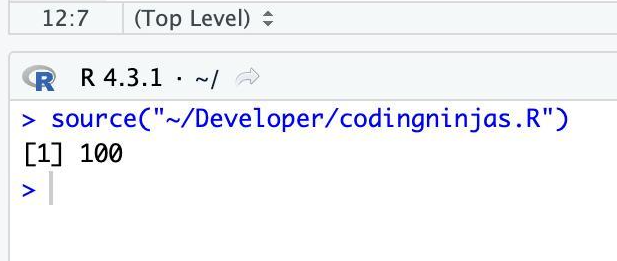
Bear()
This example has two functions.
Pooh and Bear. The variable x is defined outside both functions and has the value 100.
When the bear function is called, it creates a new local variable x with the value 200. Then the Pooh function is called inside the Bear function.
Dynamic scoping resolves the values of variables based on the calling context. So when Pooh is called within the Bear, it looks up the value of x in Bear's calling environment.
In this case, Pooh will return 200 instead of the global value of 100, because the value of x is 200 in Bear's calling environment.
This demonstrates how R's dynamic scoping allows the most recent calling environment to take precedence over the original definition and resolve variables based on the run-time call stack.
Output
Examples of Dynamic Scoping in R
Here are four example codes that showcase dynamic scoping in R, along with a brief explanation for each:
Dynamic Variable Assignment
In the below example, the Pooh function assigns a new local variable x with a value of 20 within its environment. When Pooh is called, it prints the local x's value, demonstrating dynamic scoping.
x <- 10

Pooh <- function() {
  x <- 20
  print(x)
}

Pooh()
Output
Changing Global Variable
Here, the Bear function creates a new local variable x with a value of 30. When Bear calls the Pooh function, the value of x in the calling environment of Bear (which is 20) is used, illustrating dynamic scoping.
x <- 10

Pooh <- function() {
  x <- 20
  print(x)
}

Bear <- function() {
  x <- 30
  Pooh()
}

Bear()
Output
Nested Functions
In the below example, the bar function defines a nested function Pooh_nested. The Pooh_nested function accesses the value of x from its calling environment ( Bear), demonstrating dynamic scoping.
The Pooh function recursively calls itself with a decreasing value of n. Each recursive call creates a new local variable x with the current value of n.
When each call to Pooh prints the value of x, it displays the value based on the dynamic scoping of the corresponding recursive call.
Pooh <- function(n) {
  if (n == 0) {
    print("Done!")
  } else {
    x <- n
    print(x)
    Pooh(n - 1)
  }
}

Pooh(10)
Output
Frequently Asked Questions
What is dynamic scoping in R?
Dynamic scoping in R is a variable scoping mechanism where the value of a variable is determined by the context of the calling function rather than the context in which it is defined. Resolve values based on the function call stack at runtime.
How is dynamic scoping in R different from lexical scoping?
In lexical scope, the value of a variable is determined by the context in which it is defined, whereas in dynamic scope the value is resolved based on the calling context. Lexical scoping is R's default and most commonly used scoping mechanism.
When is dynamic scoping useful in R?
Dynamic scoping is useful when a function needs to access variables defined in its calling environment. It provides flexibility in certain situations, such as dynamic configuration settings and changing environments.
What are the potential drawbacks of dynamic scoping?
Dynamic scoping can make code harder to understand and maintain because the value of variables depends on the calling context rather than the structure of the code. Unexpected results can occur if variables are overridden unintentionally, or if the call stack is complex and difficult to track.
How to force lexical scoping instead of dynamic scoping in R?
To apply lexical scope, use a local function to create a new environment with lexical scope. Change your code to local({ ... }) Ensures that variable resolution follows lexical scoping rules regardless of the surrounding calling context.
Are there any best practices for using dynamic scoping in R?
It is recommended to prefer lexical scoping over dynamic scoping unless you have a specific need for it. When using dynamic scoping, it's essential to be aware of potential side effects and to document non-standard behavior to improve code clarity and maintainability explicitly.
Conclusion
In summary, R's dynamic scoping introduces a dynamic and flexible approach to variable binding. Thus, allowing functions to access and manipulate variables based on the calling context. Programmers can improve their programming skills and adapt to changing runtime environments.







 5+ registered

