Do you think IIT Guwahati certified course can help you in your career?
Introduction
High level languages have transformed how we interact with computers, making programming more accessible & easy. Unlike low-level languages that are closer to machine code, high level languages use human-readable commands & syntax, bridging the gap between human thought processes & computer logic.
This article explores high level languages, showcasing their diversity, execution processes, applications, benefits, & challenges.
What is High Level Language?
A high level language is a type of programming language that is designed to be easy for humans to read & write. It's much closer to our everyday language, making it simpler to understand & use than low-level languages, which are closer to the binary code computers directly interpret. High level languages abstract away the complex details of the computer's hardware, letting you focus on solving problems & developing algorithms without worrying about the nitty-gritty of machine language.
For example, if you want to print "Hello, World!" on the screen in Python, a popular high level language, you would write:
print("Hello, World!")
This single line of code is straightforward & tells the computer exactly what to do in a way that's clear to the programmer. In contrast, achieving the same task in a low-level language would require multiple lines of more complex code, dealing with memory management & other lower-level operations.
High level languages come with a set of rules known as syntax, which defines how to write instructions that the computer can eventually translate into machine code. This translation is done by compilers or interpreters, tools that convert the high-level code into a form the computer can execute.
Understanding high level languages is crucial for anyone looking to get into programming because they serve as the foundation for creating software, applications, & solving complex problems through coding.
Examples of Some High Level Languages
There are many high level programming languages, each with its own strengths & uses. Here are a few examples:
Python
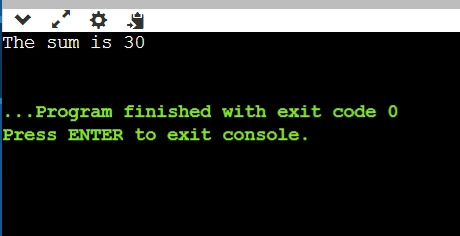
Known for its simplicity & readability, Python is great for beginners & is widely used in web development, data analysis, artificial intelligence, & more. A simple Python code to add two numbers looks like this:
Python
Python
a = 10
b = 20
sum = a + b
print("The sum is", sum)
You can also try this code with Online Python Compiler
Java is all about portability, meaning programs written in Java can run on any device that has the Java Virtual Machine (JVM). It's commonly used for building large-scale enterprise applications, Android apps, & web applications. An example of adding two numbers in Java is:
Java
Java
public class Main {

    public static void main(String[] args) {

        int a = 10;

        int b = 20;

        int sum = a + b;

        System.out.println("The sum is " + sum);

    }

}
You can also try this code with Online Java Compiler
Not to be confused with Java, JavaScript is the go-to language for web development, making websites interactive & dynamic. It runs in the browser & can be used for front-end & back-end development with Node.js. A simple JavaScript code snippet to show an alert is:
alert("Hello, World!");
C++
An extension of the C language, C++ is known for its performance & control over system resources, making it popular for game development, systems programming, & applications requiring high-performance computation. A basic C++ code to display a message is:
Each of these languages has a unique syntax & is used for different types of projects. The choice of language often depends on the project requirements, the environment it will run in, & the developer's familiarity with the language.
Execution of High Level Languages
When you write a program in a high level language, it needs to be translated into machine code before the computer can run it. This translation can happen in two main ways: compilation & interpretation.
Compilation
A compiler is a program that takes your entire high level code & translates it into machine code all at once. This machine code is then saved as an executable file, which you can run anytime. The process looks like this:
Write your high level code.
Run the compiler, which translates the entire code into a machine code file.
Execute the machine code file directly by the computer's CPU.
Languages like C & C++ use compilers. Here's a simple example with C:
Write a C program (hello.c)
#include <stdio.h>
int main() {
    printf("Hello, World!\n");
    return 0;
}
Compile it using a C compiler (like gcc):
gcc hello.c -o hello
Run the executable:
./hello
Interpretation
An interpreter, on the other hand, reads & executes your high level code line by line. Instead of translating the entire program at once, it reads each line, converts it to machine code, & runs it immediately. This process is repeated for every line of code.
Languages like Python & JavaScript often use interpreters. Here's how you'd run a simple Python script:
Write a Python script (hello.py)
print("Hello, World!")
Run it using the Python interpreter:
bash
python hello.py
Each method has its advantages & disadvantages. Compilation can make programs run faster because the translation is done beforehand, but it makes the development process slower since you need to compile every time you make a change. Interpretation allows for quicker testing & debugging since you can run your code immediately after writing, but the overall execution might be slower because each line is translated on the fly.
Use of High Level Languages
High level languages are used in almost every aspect of software development & computing due to their ease of use & versatility. Here are some common uses:
Web Development
Languages like JavaScript, PHP, Ruby, & Python are widely used to create dynamic & interactive websites. JavaScript powers the interactive elements of web pages, while languages like PHP & Ruby on Rails are used for server-side scripting.
Mobile App Development
Java & Kotlin are popular for Android app development, while Swift & Objective-C are used for iOS apps. These languages provide frameworks & tools that simplify the development of mobile applications.
Data Analysis & Machine Learning
Python has become the go-to language for data science & machine learning due to its simplicity & the powerful libraries like NumPy, pandas, & TensorFlow. R is another language that's specifically designed for statistical analysis & data visualization.
Game Development
C++ is a preferred language for game development because of its speed & control over system resources. Unity, a popular game development engine, uses C# for scripting.
System Programming
Languages like C & Rust are used for system-level programming, such as developing operating systems, file systems, & embedded systems. They provide close-to-hardware performance & control.
Desktop Applications
Java, C#, & Python can be used to develop cross-platform desktop applications. These languages offer libraries & frameworks that simplify GUI (Graphical User Interface) development.
The use of high level languages simplifies complex tasks like network communication, database interaction, & graphical user interface creation.
Advantages of High Level Languages
High level languages offer several benefits that make them ideal for a wide range of programming tasks. Here are some key advantages:
Easier to Learn & Use
High level languages are designed to be closer to human language, making them more intuitive & easier to understand. This accessibility encourages more people to learn programming & contribute to technological advancements.
Faster Development Time
With simpler syntax & powerful libraries, high level languages enable rapid development of applications. Developers can focus on solving problems rather than dealing with complex machine-level details.
Portability
Code written in high level languages can often be run on different types of computers & operating systems with minimal changes. This is because the languages abstract away the hardware specifics, relying on interpreters or compilers to manage the execution on the target platform.
Improved Readability & Maintainability
High level languages promote writing clear & readable code, which is crucial for maintaining & updating software over time. Readable code helps teams collaborate more effectively & makes it easier for new developers to understand existing projects.
Extensive Libraries & Frameworks
Most high level languages come with a vast ecosystem of libraries & frameworks, providing pre-written code for common tasks. This can significantly reduce the amount of code developers need to write themselves, speeding up the development process.
Community & Support
Popular high level languages have large, active communities. This means a wealth of tutorials, forums, & documentation is available, making it easier to learn the language & solve problems you might encounter.
These advantages make high level languages a preferred choice for both beginners & experienced programmers, streamlining the development process & enabling a focus on creating innovative & efficient solutions.
Disadvantages of High Level Languages
While high level languages offer numerous benefits, they also come with some limitations:
Lower Efficiency & Speed
Because high level languages are abstracted from the hardware, programs written in them may not run as efficiently as those written in lower-level languages. The abstraction layer adds overhead, which can lead to slower execution times, especially in resource-intensive applications.
Less Control Over Hardware
High level languages prioritize ease of use over direct control of the system's hardware. This means that for tasks requiring fine-tuned control over memory management, CPU usage, or other hardware specifics, high level languages might not be the best choice.
Overhead of Interpreters & Compilers
The need for interpreters or compilers to translate high level code into machine code adds an extra step to the execution process. This can sometimes complicate the development environment setup & increase the time it takes to start running your programs.
Dependency on Third-Party Libraries & Tools
While the extensive libraries & frameworks available for high level languages can speed up development, they also introduce dependencies. These dependencies can lead to issues like "dependency hell," where managing and updating numerous libraries becomes cumbersome.
Not Suitable for All Tasks
Certain applications, such as system-level programming, embedded systems, or high-performance computing, may require the efficiency & control provided by lower-level languages like C or assembly language.
Frequently Asked Questions
Can I use high level languages for all types of programming projects?
While high level languages are versatile & can be used for many types of projects, they might not be the best fit for every scenario. For tasks requiring close-to-the-metal performance or direct hardware control, like system programming or embedded systems, lower-level languages might be more suitable.
How do I choose the right high level language for my project?
Consider your project requirements, the language's ecosystem (libraries, frameworks, community support), & your familiarity with the language. For web development, JavaScript, Python, or Ruby might be good choices. For data science, Python or R could be ideal. For system-level tasks, consider a language like C++.
Are high level languages slower than low level languages?
High level languages can be slower due to the abstraction layer between the code & the hardware. However, advancements in compiler & interpreter optimizations, as well as powerful hardware, have significantly narrowed this gap. For many applications, the difference in speed is negligible & outweighed by the benefits of faster development & easier maintenance.
Conclusion
High level languages have revolutionized programming, making it more accessible & efficient. They allow developers to write code that's easy to read, maintain, & reuse across multiple platforms. While they offer numerous advantages like rapid development, readability, & extensive support through libraries & communities, it's essential to be aware of their limitations, such as reduced execution speed & less control over hardware. Choosing the right language depends on your project's specific needs, your familiarity with the language, & the support available. Despite their drawbacks, high level languages remain the backbone of software development, enabling innovations & simplifying complex tasks.







 1+ registered

