Do you think IIT Guwahati certified course can help you in your career?
Introduction
Scrum is a dynamic project management style that enables self-organized teams to complete projects quickly in an agile setting. Artifacts, roles, and ceremonies comprise the scrum structure. These factors help product and software development teams in project management.
Artifacts are frequently connected with archaeological ruins and ancient remains. However, in software development, the term artifact refers to the essential information required during product development.
What is Scrum?
Scrum is an Agile methodology-based project management system. Agile project management divides a project into sprints and short development cycles. Each sprint lasts around 2 to 4 weeks, during which the scrum team works on various elements of the project to fulfill a sprint target.
Scrum is a combination of meetings, tools, and roles for effective project delivery. Its techniques, like those of a sports team preparing for a big game, allow teams to self-manage, learn from experience, and adapt to change. Scrum is used by software teams to address complex problems in a cost-effective and long-term manner.
What is Scrum Artifacts?
The term "artifact" in software development refers to information that stakeholders and the scrum team use to define a product that is being created. Scrum artifacts describe the work to be done and always add value during a sprint. Scrum artifacts can be thought of as morsels of critical information for the scrum team. They structure the scrum process by serving as guidelines for the product development plan.
This is essential, especially for remote teams who may work from home because it provides a platform for them to monitor how they're performing on a given sprint goal. This keeps everyone on the same page, no matter where they are. Scrum artifacts are essential to scrum teams because they enable basic scrum qualities like transparency, inspection, and adaption.
What are the Main Scrum Artifacts?
Product backlogs, sprint backlogs, and increments are the three major agile scrum artifacts. We will discuss each of them in detail.
Product Backlog
A product backlog is a list of new features, additions, bug repairs, tasks, or work requirements that must be completed in order to construct a product. It is compiled using input sources such as customer service, competitive analysis, market demands, and general business analysis.
The product backlog is a "live" artifact in the sense that it is updated when new information becomes available. It's a cross-team backlog that the product owner maintains and curates between sprint cycles and as new ideas emerge. It contains items that were previously in a sprint but were deprioritized and moved to the backlog.
Sprint Backlog
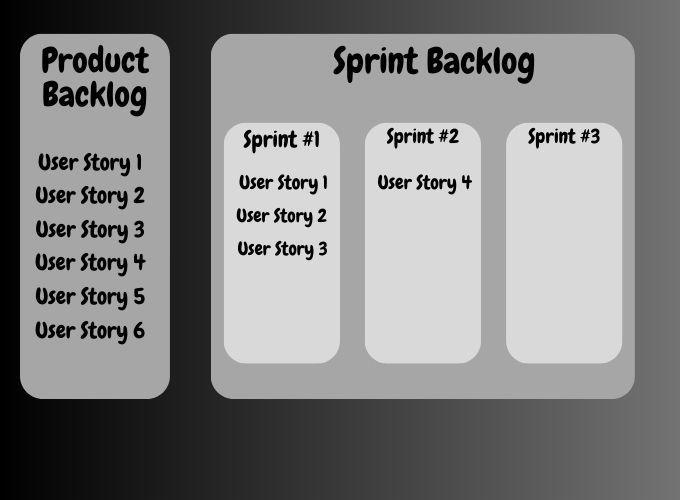
The sprint backlog is a collection of items from the product backlog that have been prioritized for development during the next product increment. Development teams construct sprint backlogs to plan deliverables for future increments and explain the work required to create the increment.
Sprint backlogs are produced by taking a task from the product backlog and breaking it down into smaller, actionable sprint tasks. Consider the task of "creating a shopping cart page," which necessitates numerous design and programming subtasks. The principal work is housed in the product backlog while supporting tasks such as "create a shopping cart visual design mockup" or "program the shopping cart sessions" are housed in the sprint backlog.
Product Increment
A product increment is the customer deliverables created by fulfilling product backlog items within a sprint. It also incorporates the increments from all prior sprints. Each sprint has one increment, which is established during the scrum planning phase. An increment occurs whether or not the team decides to release to the client.
Teams benefit from aligning all of their work to backlog items. For example, for each backlog item, create a branch and build. Teams who incorporate version control and CI/CD systems into their scrum tracking software can leverage data from those tools to better analyze work progress. They can also reason about which backlog items are launched and made available to clients.
Extended Artifacts
There are some extended or meta artifacts in addition to the previously discussed formal scrum artifacts. Some of them are discussed below:
Burndown Chart
A sprint burndown (or burnup) chart is not an official scrum artifact, but many teams use it during the sprint to communicate and track progress toward the sprint goal. Burndown charts are graphs that show the number of jobs accomplished during a sprint. Burndown charts are highly valuable in determining a team's active execution velocity so that they can determine whether they will complete what was intended or whether they need to reprioritize the sprint activities. Teams can look at earlier burndown charts during sprint planning to gain an estimate of how many tasks they can realistically achieve in a forthcoming sprint.
Definition of Done (DOD)
It’s important that teams have a clear definition of “done”. This definition could be considered an artifact that should be documented and shared. When code is covered with automated tests that match a specification and is released to a production environment, this is an example of “done” for a development team.
When assessing open scrum tasks, a team that lacks a defined concept of done will frequently find themselves in sprint review wondering, "Is this done?". The definition of done helps in the determination of an increment's bounds. Increments should be given in fully usable bundles that are cumulative to previous increments.
Some Tips for Managing Scrum Artifacts
In order to boost visibility and enable swift card dragging and dropping when priorities and statuses change, Kanban boards can be a useful tool for managing and tracking your Scrum sprint backlog
To keep everyone on the same page and ensure that no essential items are missing, the entire team should examine the backlogs on a regular basis, provide input, and discuss changes
Don't waste time excessively defining items lower on the product backlog list. Spend time explaining the current sprint backlog and product increment
Every stakeholder should understand what it takes to get a product increment or sprint "done." Document and distribute acceptance criteria so that there is no doubt about whether something is finished before moving it off the backlog
Frequently Asked Questions
What are the three roles 5 events and artifacts in Scrum?
In Scrum, the three roles are the Scrum Master, Product Owner, and Development Team. The five events are Sprint Planning, Daily Scrum, Sprint Review, Sprint Retrospective, and the Sprint itself. The artifacts include the Product Backlog, Sprint Backlog, and the Product Increment.
What is ‘Scrum of Scrums’?
It is a word used to describe scaled agile solutions that are needed to control and collaborate with many scrum teams. It works best in instances where teams are cooperating on difficult tasks.
What is Scrum's Empirical Process Control?
Empiricism refers to work that is founded on facts, experiences, evidence, observations, and experimentation. It is established and implemented in Scrum to ensure project progress and interpretation is based on facts of observation.
What is a Scrum Master's function in a sprint retrospective?
In a sprint retrospective, the scrum master examines the progress of prior enhancements. New enhancements are also inspected and altered with the help of team discussions. The Scrum Master acts as a facilitator for the team.
Conclusion
Scrum artifacts are important elements that help the Scrum framework be implemented and used successfully in software development and other iterative projects. They are critical in promoting transparency, communication, and collaboration among team members and stakeholders. In this blog, we discussed various aspects of Scrum Artifacts and how it is useful for development teams.









 1+ registered

