How does it Work?
Various Event sources such as AWS Services, custom apps, and SaaS apps are available. A serverless event bus named Amazon EventBridge allows publishing and subscribing to events. This event bus handles events published by SaaS applications and distributes them to one or more target services on AWS.
To begin, you need to create a rule. Whenever an event arrives, the rule will match it and forward it to one or more targets. You have to create the rule in the same region as where the target is. Targets process events and receive events in the JSON format. Rules require event patterns. It matches the events based on the pattern. There must be an event bus associated with every rule. Once the rule matches the event pattern, select a target to which the events will be routed.
Next, we need to create an event bus. Events emitted by AWS services are forwarded to the default event bus in every AWS account. Likewise, custom applications can be configured to send events to the default event bus. A partner event bus can be created for integration with SaaS partner applications.
Getting Started with Amazon EventBridge
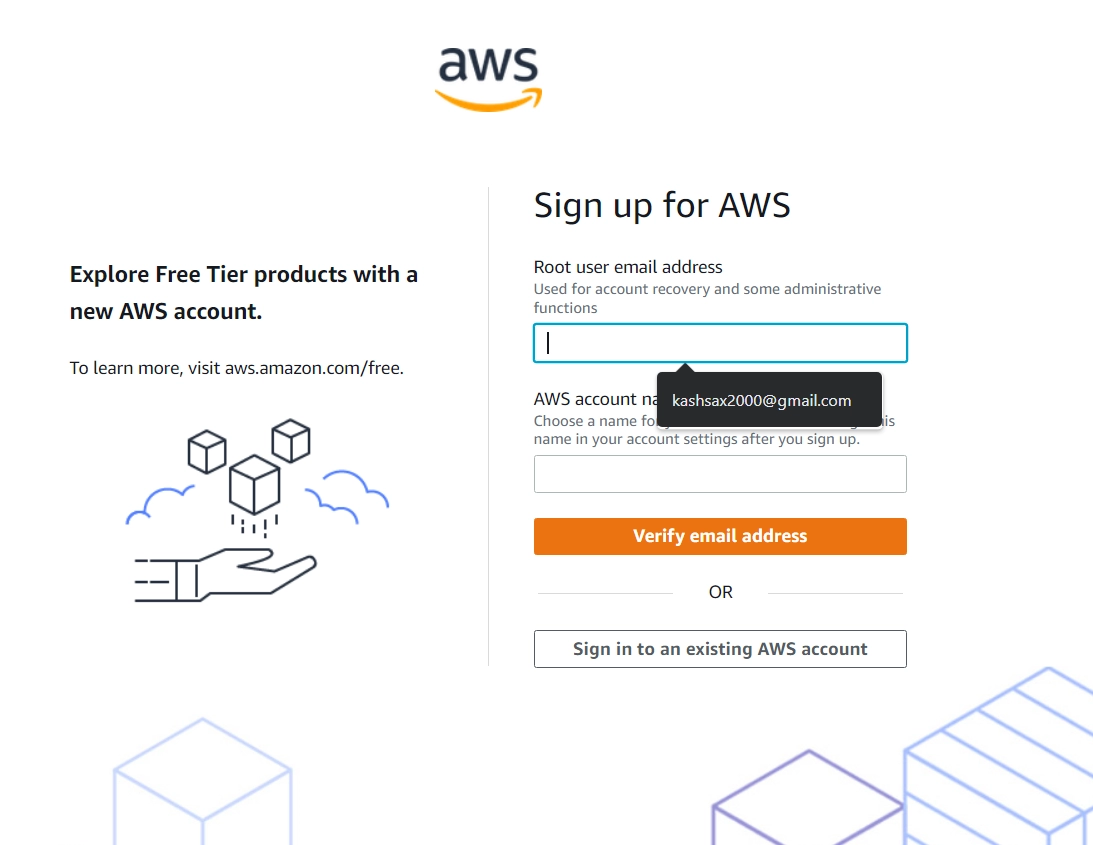
Step-1: You can log into your Amazon Web Services account if you already have one or create an account on the official AWS website if you do not have one yet. You can perform EventBridge operations using the AWS CLI.
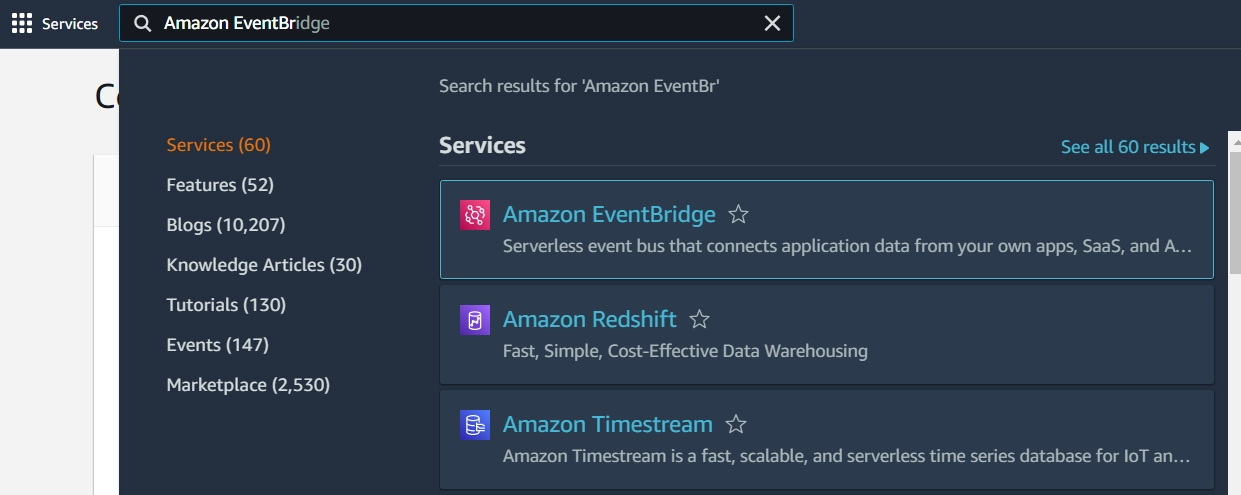
Step-2: You will need to navigate to the Amazon EventBridge console.
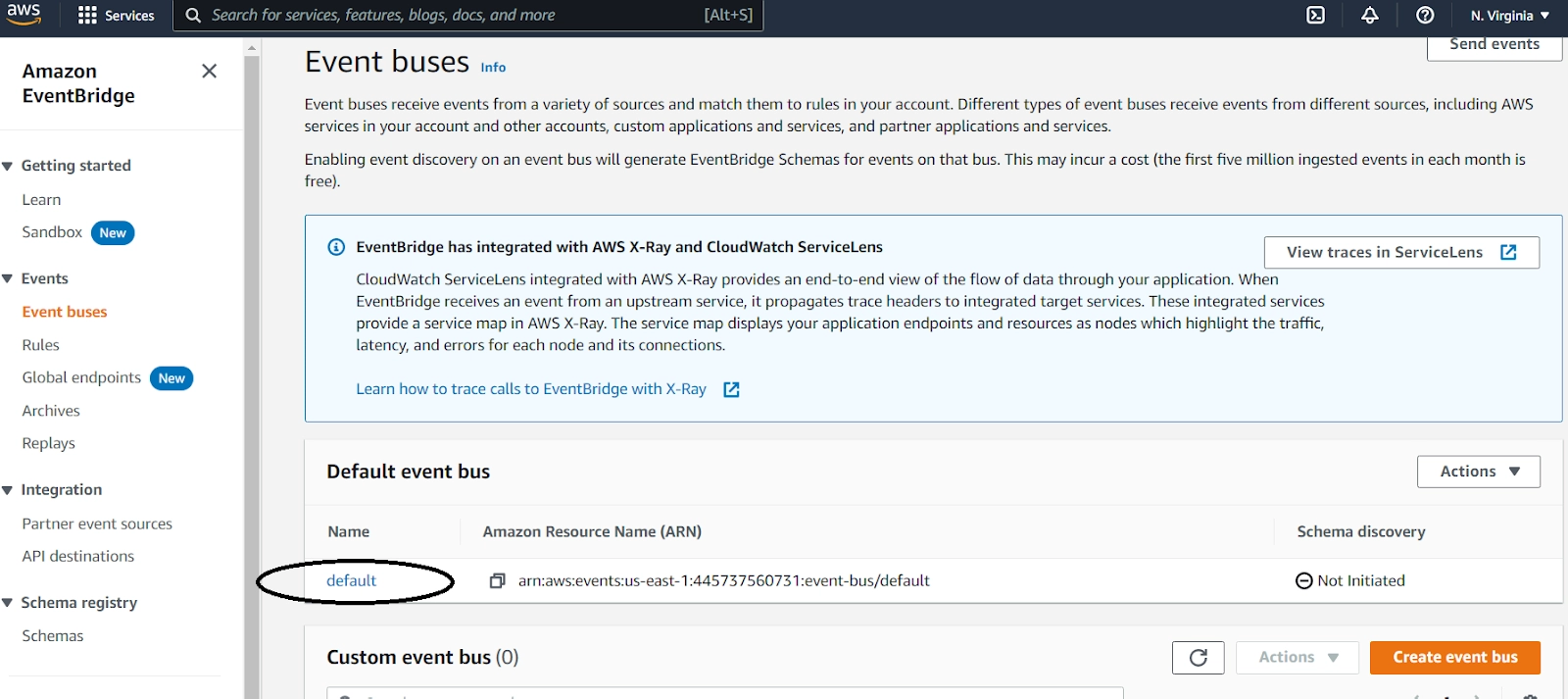
Step-3: With Amazon EventBridge, a default event bus will be created automatically to which all your events will be routed. The Amazon SDK can be used to gear up your application for emitted events to your event bus.
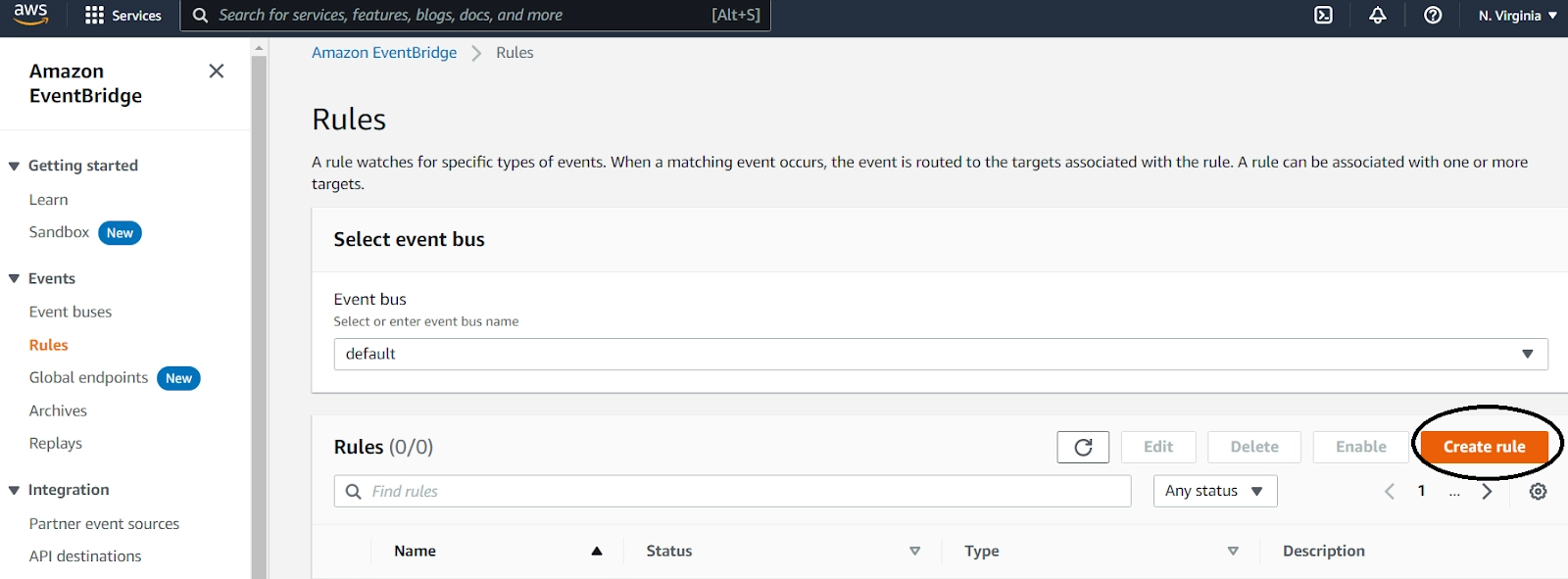
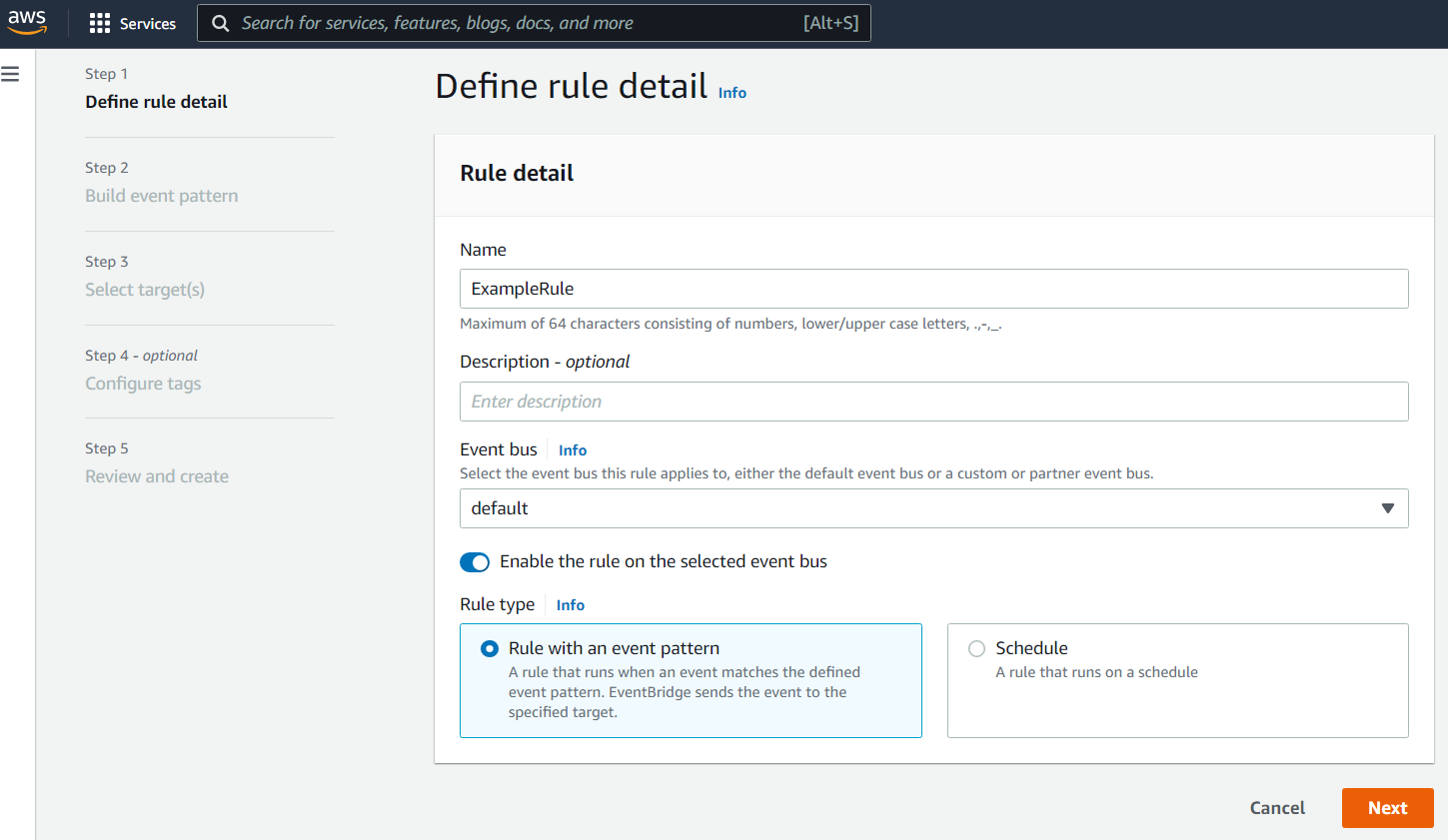
Step-4: Choose the default event bus and create a rule by clicking on the rules task.
Step-5: Enter the details of the rule, such as the name, type, and so on.
The Rule table displays your rule after entering all the details about it.
What is an EventBus?
AWS services can be configured to take action automatically whenever changes are made to other AWS services, SaaS applications, or your custom applications. An AWS account must be configured with an event bus to receive events from event sources. There are several types of event buses:
The default event: The default event bus is an AWS service that receives events from any AWS service by default.
Custom event bus: Custom applications must be created manually to receive events from them.
Partner event bus: Events from SaaS partners are received and must be manually created.
Whenever you create a rule, you connect it to a specific event bus, and the rule can only match events coming from that particular event bus. Default events are received from AWS services by the event bus of your account.
Also see, Amazon Hirepro
Amazon EventBridge security
To control access to other AWS services and resources, Amazon EventBridge uses AWS Identity and Access Management
The following are included:
- AWS Identity and Access Management (IAM) can be utilized to set up individual user accounts for Amazon EventBridge account credentials to ensure data security. This way, each user only receives permissions required for their work.
- With Amazon EventBridge, you can control resource access using policies based on tags.
- In order for your credentials to access AWS resources, such as retrieving event data from other AWS resources, they must have permission to access Amazon EventBridge and AWS Identity and Access Management.
- AWS EventBridge is integrated with AWS CloudTrail, which records AWS service actions. Using CloudTrail, you can capture API calls made from the EventBridge console and to EventBridge APIs by your AWS account.
- Validation of compliance in Amazon EventBridge is based on your company's compliance objectives, applicable laws and regulations, and the sensitivity of your data.
- Availability zones and regions make up AWS's global infrastructure, built around EventBridge. As a result of the AWS Regions, multiple physically separate and isolated Availability Zones are interconnected through low-latency, high-throughput, and highly redundant networking. There are many advantages to using availability zones over traditional single or multiple data center infrastructures, including high availability, fault tolerance, and scalability.
- Access policies in Amazon EventBridge allow you to restrict access based on source IP addresses, and API operations can be called from any network location.
- AWS and you are jointly responsible for Amazon EventBridge configuration, and IT controls.
Frequently Asked Questions
Should you use Amazon EventBridge or Amazon SNS?
You should use Amazon EventBridge for applications that react to events generated by SaaS applications or Amazon Web Services services. AWS SNS is recommended for applications with very high throughput (as it provides nearly unlimited throughput) or needs a very high fan-out (thousands or millions of endpoints) of messages published by other applications or microservices.
What is the purpose of EventBridge?
EventBridge can be used if you want to publish messages to many subscribers using event data to match targets interested in specific patterns. Looking for ways to automate discovering and incorporating schemas produced by other teams or if you want to send messages to your event bus periodically using regularly scheduled events.
What is the EventBridge schema?
Events sent to EventBridge are structured according to a schema. Schemas are provided for all events generated by AWS services by EventBridge. Schemas can also be uploaded, created, or inferred directly from events on an event bus.
What is the purpose of EventBus?
It is helpful to use event buses in applications where components shouldn't be dependent on one another. By using an Event bus, a component no longer has to refer to many other components and does not need to worry about who will handle the event.
Conclusion
This blog has discussed what Amazon EventBridge is and how it also works the setup for the EventBridge.
We hope that this blog has helped you enhance your knowledge about AmazonBridge and if you would like to learn more, check out our articles on the link. Do upvote our blog to help other ninjas grow.
Refer to our Guided Path on Coding Ninjas Studio to upskill yourself in Data Structures and Algorithms, Competitive Programming, JavaScript, System Design, and many more! If you want to test your competency in coding, you may check out the mock test series and participate in the contests hosted on Coding Ninjas Studio! But if you have just started your learning process and are looking for questions asked by tech giants like Amazon, Microsoft, Uber, etc; you must look at the problems, interview experiences, and interview bundle for placement preparations.
Nevertheless, you may consider our paid courses to give your career an edge over others!
Do upvote our blogs if you find them helpful and engaging!
Happy Learning!






 1+ registered