Do you think IIT Guwahati certified course can help you in your career?
Introduction
In this article, we will explore databases in Azure in detail. Azure is a cloud computing service created by Microsoft for building, testing, deploying, and managing applications and services through Microsoft-managed data centers.
What is a database?
Any data can be stored, maintained, and accessed using databases. They gather data on individuals, locations, or objects. It is gathered in one location to be seen and examined. You might think of databases as a well-organized collection of data.
What are databases used for?
Businesses use the data in databases to make wise decisions about their operations. The following are just a few applications for databases in organizations:
Improve business processes Businesses gather information on operational procedures, including sales, order processing, and customer service. They use that data analysis to enhance these procedures, grow their firm, and increase revenue.
Keep track of customers Information on people, such as clients or users, is frequently stored in databases. Social media networks, for instance, use databases to store user data, including names, email addresses, and usage patterns. The information is used to enhance user experience and propose content to users.
Secure personal health information Databases are used by healthcare providers to safely preserve patient information that will help them provide better treatment.
Store personal data Personal data can be kept in databases as well. Personal cloud storage, for instance, enables users to store media, like photos, in a controlled cloud.
Types of Azure Database
Relational databases
A collection of data elements with pre-established relationships make up a relational database. These things are arranged in a series of tables with rows and columns. Tables store data about the things that will be represented in the database.
Data management platforms, non-relational databases, do not apply a relational schema to the data. Even though some allow a SQL language variation, non-relational databases are frequently referred to as NoSQL databases.
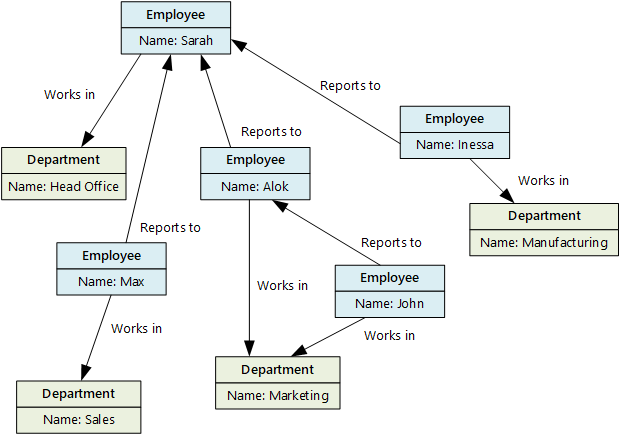
There are four common types of Non-relational databases commonly in use.
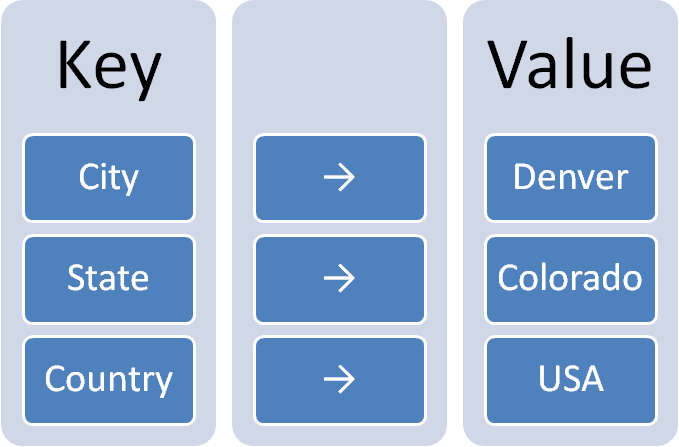
Key-value databases
Each record consists of a unique key and an associated value, which can be in any format.
which store tabular data comprising rows and columns, but you can divide the columns into groups known as column families. Each column family holds a set of columns that are logically related together.
Microsoft recently introduced a managed instance with an on-premises customer focus. Therefore, we can use a managed instance if we have some SQL databases in our on-premises datacenter, and we wish to move those databases into Azure (i.e., Azure database) without any complicated configuration or ambiguity. Because this primarily focuses on on-premises clients that want to share and lift their on-premises databases into Azure with the least amount of work and the lowest possible expense. Additionally, we can benefit from our on-site data center's licensing.
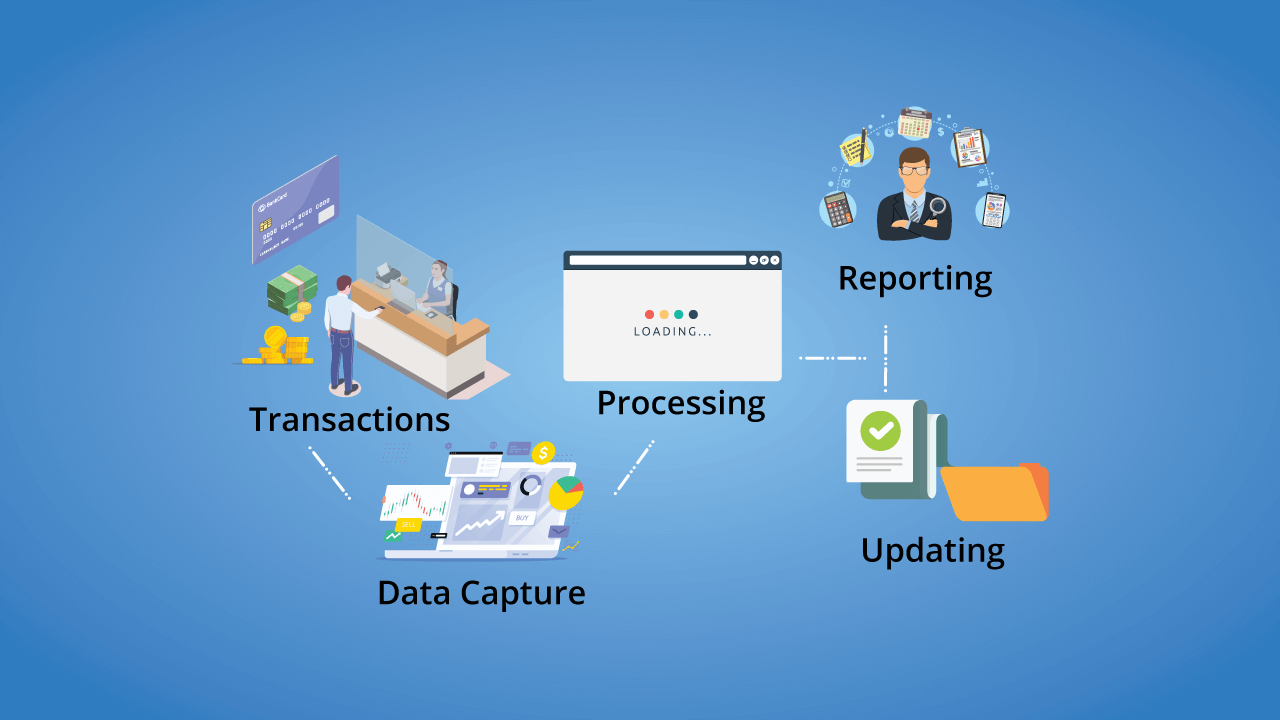
A method of computing known as transaction processing separates work into discrete, indivisible activities known as transactions. A software system or software/hardware combination that supports transaction processing is known as a transaction processing system (TPS). The majority of people believe that the primary purpose of business computing is a transactional data processing system.
High-volume transactional systems frequently process millions of transactions in a single day. The processed data needs to be easily accessible. Online Transaction Processing is a common term used to describe the work done by transactional systems (OLTP).
OLTP solutions rely on a database system in which data storage is optimized for reading and writing operations to support transactional workloads in which data records are created, retrieved, updated, and deleted (often referred to as CRUD operations). These operations are applied transactionally to ensure the integrity of the data stored in the database.
To accomplish this, OLTP systems enforce transactions that support so-called ACID semantics:
Atomicity
Every transaction is viewed as a single entity that either totally succeeds or completely fails. For instance, a transaction that requires debiting money from one account and crediting it to another must do both tasks. Both actions must fail if one of them cannot be executed.
Consistency
Transactions can only move data in the database from one legitimate state to another. The finished status of the transaction must indicate the transfer of funds from one account to the other to continue the past debit and credit example.
Isolation
Concurrent transactions must produce a consistent database state and cannot interact with one another. A balance-checking transaction, for instance, cannot retrieve values for one account reflecting the balance before the transfer and the other reflecting the balance after the transfer while the transaction to transfer money from one account to another is in progress. Instead, the balance-checking transaction must return consistent results.
Durability
A transaction that has been committed will not be changed. The corrected account balances are saved once the account transfer transaction is finished, ensuring that the committed transaction would be reflected even if the database system is turned off and back on.
OLTP systems are typically used to support live applications that process business data - often referred to as line of business (LOB) applications.
Analytical data processing
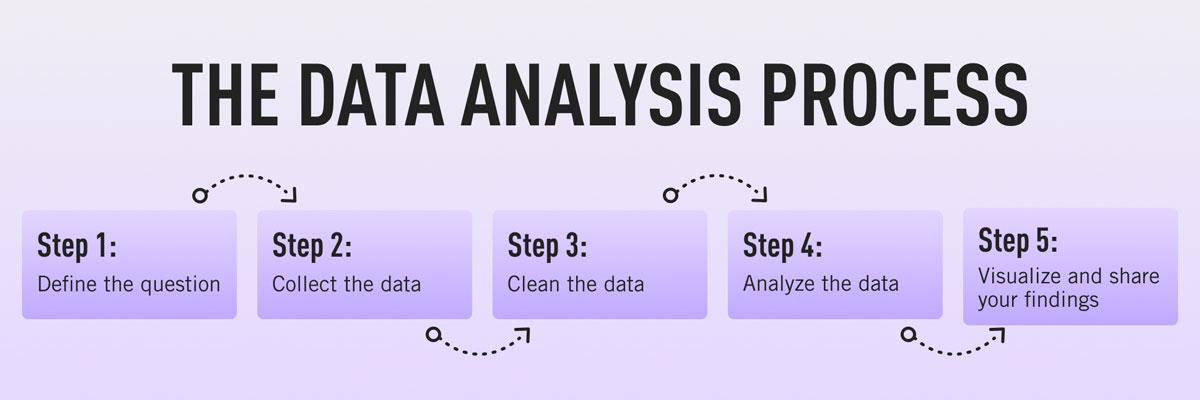
The act of gathering, processing, cleansing, and modeling data to find the necessary information is known as data analysis. The findings are shared, offering interpretations and aiding in decision-making. Sometimes data is presented using data visualization to make it simpler to spot patterns in the data that can be beneficial. Data analysis and data modeling refer to the same thing.
Data lakes are common in large-scale data analytical processing scenarios, where a large volume of file-based data must be collected and analyzed.
Data warehouses are an established way to store data in a relational schema optimized for reading operations – primarily queries to support reporting and data visualization. The data warehouse schema may require denormalization of data in an OLTP data source (introducing some duplication to make queries perform faster).
An OLAP model is an aggregated data storage type optimized for analytical workloads. Data aggregations are across dimensions at different levels, enabling you to drill up/down to view aggregations at multiple hierarchical levels; for example, to find total sales by region, city, or individual address. Because OLAP data is pre-aggregated, queries can be run quickly to return the summaries it contains.
Different users might perform data analytical work at different stages of the overall architecture. For example:
Data scientists might work directly with data files in a data lake to explore and model data.
Data Analysts might query tables directly in the data warehouse to produce complex reports and visualizations.
Business users might consume pre-aggregated data in an analytical model through reports or dashboards.
Frequently Asked Questions
How does Azure connect to database?
If it doesn't open automatically, choose Object Explorer > Connect > Database Engine to launch it manually. Select Database Engine as the server type (usually the default option). Enter the name of your Azure Database or Azure Managed Instance in the Server name field. Connect using SQL Server Authentication for Azure SQL.
What are Azure resources?
Any entity managed by Azure can be referred to as an Azure resource. The following are some examples of Azure resources: Storage accounts, virtual networks, virtual machines, etc.
What is meant by Microsoft Azure and Azure diagnostic?
Microsoft has built Microsoft Azure, a cloud computing interface, to gain from cloud computing. The continually running application can be diagnosed using Azure diagnostics, an API-based approach. Turning on the cloud services' roles adjusts to the verbose monitoring.
Conclusion
This article has given an overview of the Microsoft Azure Database and its types and discussed various reasons behind using Azure Database; it also explored the ACID properties in transactional and analytical data processing in depth.










 1+ registered

