Features Of Internet
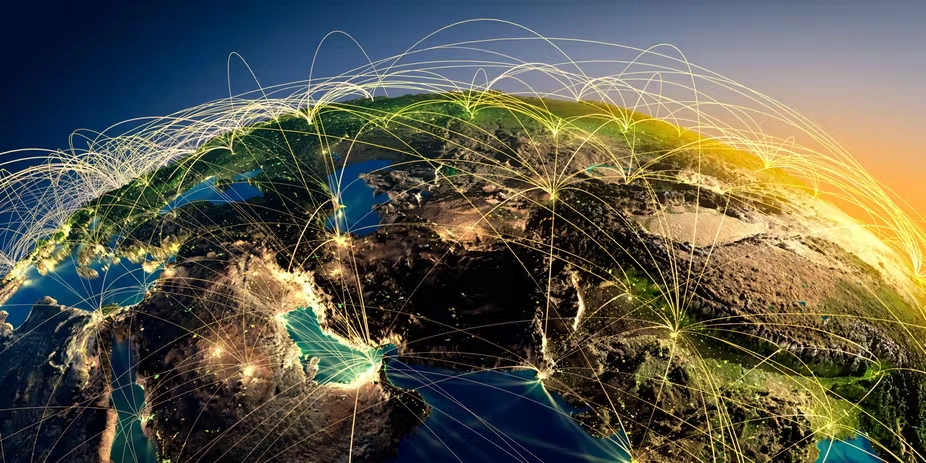
- One of the supreme features of the Internet is the ability to communicate with anyone in the world almost instantly. Email is one of the earliest and most widely used methods of communication and information sharing on the Internet, with billions of people using it. People can use social media to connect in a variety of ways and to form online communities.
- There are numerous other activities available on the Internet. There are thousands of ways to stay up to date on news or shop for anything on the internet. You can manage your bank accounts, pay your bills, meet new people, watch TV, or learn new skills. Almost anything can be learned or done online.
Some other functionalities are:
Accessibility
The Internet is a global service that is available to everyone. People in remote parts of an island or the interior of Africa can also access the Internet.
Simple to Use
The software used to access the Internet (web browser) is designed to be simple; thus, it is simple to learn and use.
Other Media Interaction
The Internet has a high level of interaction with other media. News and other magazine publishing houses, for example, have expanded their business with the help of Internet services.
Low Price
The cost of developing and maintaining an Internet service is relatively low.
Security
Last but not least, Internet access has aided the security system at both the individual and national levels through the use of components such as CCTV cameras, etc.
Role Of Internet In Information System
Because of its fundamental characteristics such as widespread usability and access, the Internet has enabled entirely new forms of social activities, interaction, and organisation. Social networking sites like Twitter, Facebook, and MySpace have introduced new ways to socialise and interact.
Users of these sites can add a wide range of information to their pages, pursue common interests, and connect with others. It is also possible to locate pre-existing acquaintances and facilitate communication among pre-existing groups of people. Sites such as Linked In facilitate commercial and business connections. Users' videos and photographs are the focus of YouTube and Flickr.
It is possible to receive/transmit information containing images, graphics, sound, and videos using the internet. The ISP (Internet service provider) industry can provide the following services:
1. Using the internet to connect consumers and businesses.
2. Monitoring and upkeep of customers' websites.
3. Network administration/systems integration.
4. Access to the Internet backbone for other ISPs.
5. Overseeing online purchasing and payment systems
The internet is designed to be infinitely expandable, and its dependability is primarily determined by the quality of the service providers' equipment.
Drawbacks Of Internet
Along with the good side of the Internet, there are equivalent drawbacks that can be very harmful if not taken care of correctly.

Source: SocialBee
Some of the drawbacks are:
Virus Threat – A virus is a program that corrupts the operation of computer systems. It enters the system via the Internet and has the potential to crash the entire system in seconds. Viruses and malware spread quickly over the Internet, and the device's entire data set can be corrupted. Many multinational corporations have suffered massive losses in the past as a result of viruses in the system. Cybersecurity is one of the biggest concerns confronting the IT department today. Many countries have enacted specific legislation to address the issue, but everything appears to be far-fetched today.
Spam – Unwanted emails, advertisements, and so on are sometimes referred to as spam because they require the ability to disrupt the system.
Personal Information Theft – When people use social networking websites or online banking services, they enter personal information such as their email ID, bank account number, credit card number, phone number, and so on. A software expert or a hacker can easily retrieve this information and cause massive damage to the users. A hacker creates a malicious virus that infiltrates the computer system and destroys valuable data.
As security is a big concern, let us have a look at some basic features to ensure Security:
Basic Features To Ensure The Security
-
Confidentiality: The goal of 'Confidentiality' is to protect data by preventing unauthorised information disclosure. Only individuals with legitimate authorization to access the required information should be granted access, also known as "need to know" permissions. In general, the goal of confidentiality is to keep sensitive information out of the hands of the wrong people.
Multi-factor authentication, strong passwords, encryption, data segregation, and assigning appropriate user privilege levels are some of the measures that can be considered to help with confidentiality. However, before implementing such measures, it's critical to categorise your information assets based on how much damage they could cause if accessed by an unauthorised entity.
The greater the negative impact, the tighter the security controls must be.
Eavesdropping attacks, encryption cracking, malicious insiders, and man-in-the-middle attacks are all common threats to confidentiality.
-
Integrity: This principle aims to ensure the accuracy, dependability, and validity of information throughout its life cycle. Since the information only has value if it is true, effective measures must be put in place to prevent unauthorised individuals or processes from altering data at rest or in transit.
Regular backups, as well as effective access privileges, version controls, and input validation, are required to prevent unwanted modifications and ensure that information can be restored if it is altered.
The following issues could jeopardise the integrity of your data:
Human error, Compromise of a server in the absence of end-to-end encryption, Physical compromise of a device.
-
Authentication: The process of recognising a user's identity is known as authentication. It is the process of matching an incoming request with a set of identifying credentials. The provided credentials are compared to those on a file in a database containing the authorised user's information within an authentication server or on a local operating system.
The authentication process is always run at the beginning of the application, before the permission and throttling checks, and before any other code is allowed to run. To verify a user's identity, different systems may require different types of credentials. The credential is frequently in the form of a password, which is kept private and is known to the individual and the system. We can use One-time Passwords, Digital Signatures, Digital Certificates, and other methods to achieve authentication.
FAQs
-
Which one is more important, confidentiality or integrity?
When the value of the information relies on limiting access to it, the CIA triad goal of confidentiality takes precedence over the other goals.
-
What is the distinction between confidentiality and authenticity?
Both are distinct in the sense that authentication is the process of proving you are who you claim to be. Confidentiality is in place to ensure that no one else has access to the information.
-
Can you have confidentiality without integrity?
No system can provide confidentiality if it lacks integrity. If the integrity is not maintained, the existence of the information may be revealed, jeopardizing confidentiality.
-
What are the security precautions taken when using the internet?
1) Create strong passwords. 2) Install a firewall. 3) Consider antivirus software. 4) It is critical to keep your information up to date. 5) Make backups a priority. 6) Consistently monitoring and many more.
-
Who invented the internet?
Computer scientists Vinton Cerf and Bob Kahn are credited with developing the Internet communication protocols that we use today and the system referred to as the Internet.
Key Takeaways
In this article, we have extensively discussed the Internet, its features, and most importantly its importance in Information Systems followed by some drawbacks. At last, we discussed the basic measures to ensure the security of your data.
We hope that this blog has helped you enhance your knowledge regarding the Internet and its importance, and if you like to learn more, check out our articles.
You can also refer to these articles to enhance your knowledge - Security Goals, Cyber security Technology, Types of cyber attackers, and many more.
Do upvote our blog to help other ninjas grow.
HAPPY LEARNING NINJA :)







 5+ registered

