Primary Master Configuration
The settings mentioned in this section of the blog are mainly used to configure the Salt master primarily. Let’s look at those settings
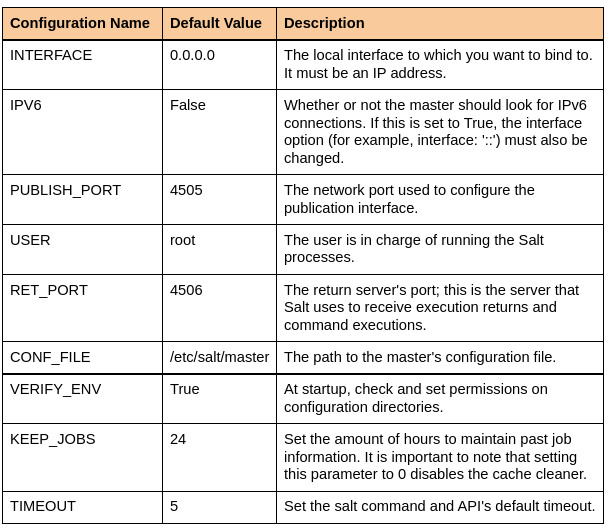
There are many other configuration settings available for Salt master. To get the full list of all the primary configuration settings, visit the below-mentioned link
PRIMARY MASTER CONFIGURATION
Salt-SSH Configuration
This section of the blog contains configurations related to Salt-SSH.
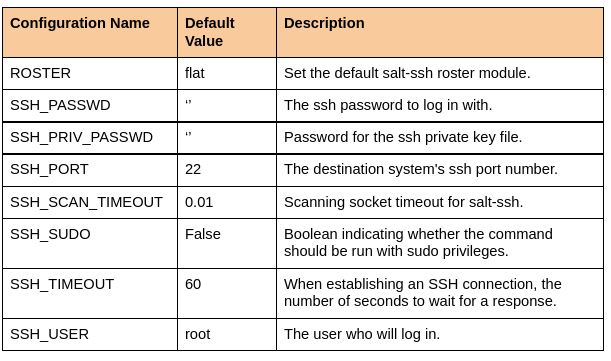
There are many other configuration settings available for Salt master. To get the full list of all the Salt-SSH configuration settings, visit the below-mentioned link
Salt-SSH Configuration
Master Security Settings
All of the settings mentioned in this section of the blog are related to the Security of Salt Master.
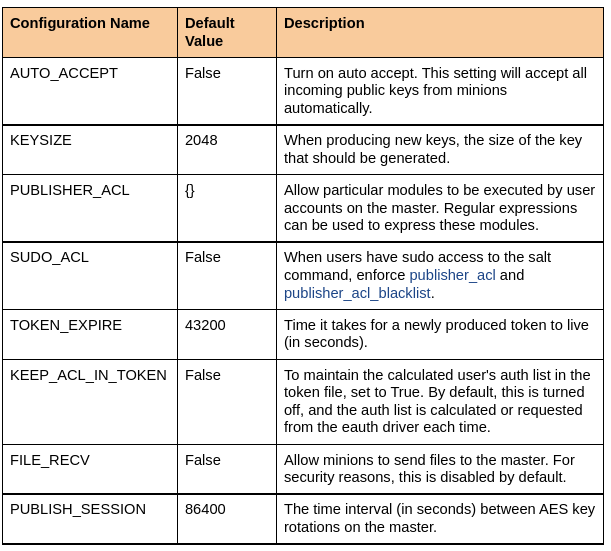
There are many other configuration settings available for Salt master. To get the full list of all the Master Security configuration settings, visit the below-mentioned link
Master Security Settings
Configure Master on Windows
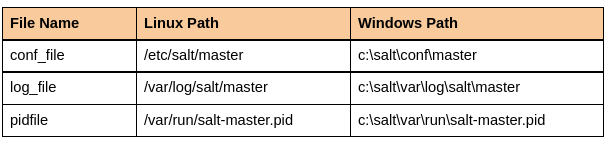
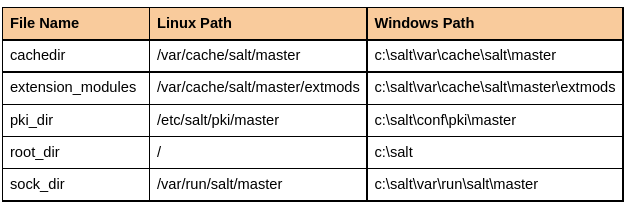
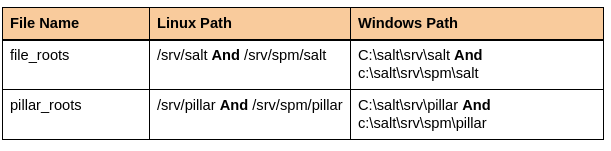
On Windows, The master requires no further settings. You can change the master configuration by modifying the master config file, which is located at c:\salt\conf\master. As long as they apply, the same configuration choices available in Linux are available in Windows. SSH settings, for example, would not be applicable under Windows. The key distinction is in the file paths. If you are familiar with common salt pathways, the table below may be helpful:

In Linux, for example, the master configuration file is /etc/salt/master. The master configuration file on Windows is c:\salt\conf\master. In Windows, the Linux route /etc/salt becomes c:\salt\conf.
Common File Locations
Common Directories
WIN REPO Settings

Roots
✴️ There are still hundreds of settings available in Salt Master. Explaining each and every Setting in this blog is not a good idea. To get the detail of every setting, you can visit the link mentioned below
Configuration of Salt Master
Frequently Asked Questions
What is a Salt Master?
Salt's central concept is that of a Master who commands one or more Minions. The Central Management System is the Master. The Salt minion communicates with the Salt Master via instructions and configurations when run on managed systems. The Salt Master's operating system is Linux, but any other system can be a minion.
What is a Minion?
Salt minions are the servers that power your apps and services. These are the managed systems that respond to Salt Master orders. The Salt master can send directives to specific minions by utilising the ID issued to each one.
How to configure Salt Master and Minions?
The master configuration file is used to configure the salt master, and the minion configuration file is used to configure the salt minion. The salt-configuration master's file is located at /etc/salt/master by default. Atomic configuration files can be found in the directory /etc/salt/master.d/*.conf. It is not possible to include files with extensions other than .conf.
Conclusion
In this blog, We discussed many settings that can be used to configure the salt master. In the last, we talked about the different file locations available in windows.
If you think this blog has helped you enhance your knowledge about the above question, and if you want to learn more, check out our articles.
🔥 About Salt Engine
🔥 About Salt Mine
🔥 Job Management In Salt
🔥 Salt as a Cloud Controller
And many more on our Coding Ninjas Studio.
Visit our website to read more such blogs. Make sure that you enroll in the courses we provide, take mock tests, solve problems available, and interview puzzles. Also, you can pay attention to interview stuff- interview experiences and an interview bundle for placement preparations.
Please upvote our blog to help other ninjas grow.
Happy Learning!








 5+ registered

