




Introduction
DevOps(Development and Operations) is a software development approach emphasizing communication, collaboration, and integration between development and operations teams. The goal is to create a culture of trust, collaboration, and accountability that results in the efficient deployment of software systems. DevOps principles are critical to the success of any software development project.

In this article, we will discuss the key principles of DevOps, their benefits, tools used, challenges in implementing DevOps, and why it is essential to implement DevOps in software development projects.
DevOps Principles
There are many DevOps Principles, some of them are mentioned here:
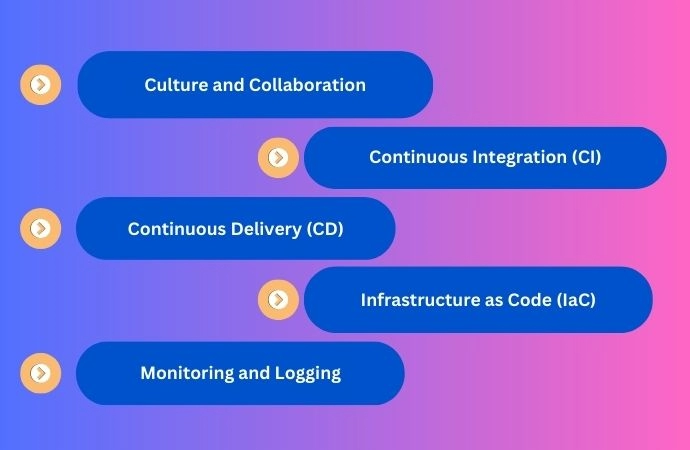
Culture and Collaboration
DevOps culture emphasizes teamwork and collaboration between developers, operations, and quality assurance teams. The goal is to align everyone involved in software development to work as a unified team, sharing knowledge and responsibilities. Adopting a DevOps approach requires a cultural shift, where everyone works together towards achievable goals.
Continuous Integration (CI)
Continuous Integration (CI) is a process of continuously building, testing, and integrating code changes into a common repository to ensure faster and more reliable delivery of applications. CI ensures that code changes do not break the application and helps reduce merge conflicts and errors. It enables developers to check the quality and performance of the code.
Continuous Delivery (CD)
Continuous Delivery is a process of continuously deploying application changes to production. It ensures that software changes are tested and released frequently and bugs are identified and fixed quickly. The CD is all about providing new features quickly and reliably to end-users.
Infrastructure as Code (IaC)
Infrastructure as Code (IaC) is a process of using code to automate and manage IT infrastructure instead of manually configuring servers and networks. It helps eliminate manual configuration errors and ensures consistency in configurations across multiple environments. Automating infrastructure provides higher scalability and flexibility, making it easier to deploy innovations faster.
Monitoring and Logging
Monitoring and logging is tracking system- and application-level metrics to identify performance issues and bugs. Monitoring systems help identify and fix issues before they impact end-users, while logging provides a way to trace issues and provide solutions. With the right monitoring and logging practices in place, teams can identify areas for improvement to ensure better delivery of software systems.


 1+ registered

