Do you think IIT Guwahati certified course can help you in your career?
No
Introduction
Cryptography, the art of secret writing, has been pivotal in securing communication since ancient times. In the digital age, its relevance has only amplified, with numerous methods evolving to protect sensitive information. Two classic techniques that stand as foundational pillars in the study of cryptography are the Monoalphabetic Cipher and the Polyalphabetic Cipher. These methods, though elementary compared to modern standards, provide a fascinating insight into the evolution of cryptographic techniques.
This article will delve into the intricacies of these ciphers, offering a comprehensive understanding of their workings, accompanied by illustrative examples. We will then contrast these two methods to highlight their unique characteristics and limitations.
The Monoalphabetic Cipher is one of the simplest forms of encryption where each letter in the plaintext is replaced by a different letter. This replacement remains consistent throughout the message. Historically, it dates back to ancient times, being used by civilizations like the Greeks and Romans for military and diplomatic communication.
How It Works
In this cipher, a key is used to define the substitution. For instance, if 'A' is replaced by 'D', 'B' by 'E', and so on, this pattern is consistently followed. The key here would be the shift of three letters in the alphabet.
Example
Let's consider a simple example to understand this better.
Plaintext: "HELLO"
Key: Shift each letter by 3
Cipher Text: "KHOOR"
Each letter in "HELLO" is shifted three places down the alphabet, turning 'H' into 'K', 'E' into 'H', and so on.
Code Implementation
Here's a basic Python code to implement a Monoalphabetic Cipher:
Python
Python
def monoalphabetic_cipher_encrypt(plaintext, shift): encrypted = "" for char in plaintext: if char.isalpha(): shifted = ord(char) + shift if char.islower(): if shifted > ord('z'): shifted -= 26 elif char.isupper(): if shifted > ord('Z'): shifted -= 26 encrypted += chr(shifted) else: encrypted += char return encrypted
In this code, the monoalphabetic_cipher_encrypt function takes a plaintext and a shift value as inputs. It shifts each alphabetic character in the plaintext by the shift amount and handles the wrap-around for both uppercase and lowercase letters.
The Polyalphabetic Cipher, a more complex form of encryption compared to the Monoalphabetic Cipher, involves using multiple substitution alphabets to encrypt a message. This technique was developed to overcome the vulnerabilities of monoalphabetic ciphers. It was first proposed by Leon Battista Alberti in the 15th century and later perfected by Blaise de Vigenère, hence sometimes referred to as the Vigenère Cipher.
How It Works
In a Polyalphabetic Cipher, a keyword is used to determine which alphabet to use for each letter of the plaintext. The keyword is repeated or truncated as needed to match the length of the plaintext. Each letter of the keyword corresponds to a shift value (e.g., 'A' = 0, 'B' = 1, ... 'Z' = 25), determining the substitution alphabet for each plaintext letter.
Example
Consider the following example:
Plaintext: "HELLO"
Keyword: "KEY"
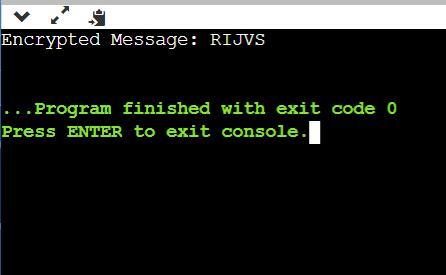
Cipher Text: "RIJVS"
Here, 'H' is shifted by the value corresponding to 'K' (10), 'E' by 'E' (4), 'L' by 'Y' (24), and so on. The keyword 'KEY' repeats to match the length of 'HELLO'.
In this code, the polyalphabetic_cipher_encrypt function generates a sequence from the keyword equal in length to the plaintext. Each letter in the plaintext is then shifted according to the corresponding letter in the keyword sequence.
Difference Table
Feature
Monoalphabetic Cipher
Polyalphabetic Cipher
Substitution Rule
Uses a single alphabet substitution rule for the entire text.
Utilizes multiple alphabets for substitution, changing with each letter based on a keyword.
Key Complexity
Generally has a simpler key, often a single number (shift) or a rearranged alphabet.
Uses a keyword or phrase, making the key more complex.
Security Level
Lower security due to frequency analysis vulnerability. Common letters in a language can be spotted.
Higher security as it counters frequency analysis by varying the substitution.
Historical Context
Older and simpler, used in ancient times (e.g., Caesar Cipher).
Developed to overcome the weaknesses of Monoalphabetic Ciphers, more sophisticated.
Example
Caesar Cipher: A shift of 3, 'A' becomes 'D', 'B' becomes 'E', etc.
Vigenère Cipher: Uses a keyword to shift letters differently throughout the message.
Decryption Method
Requires knowing the single substitution rule or shift.
Requires knowing the exact keyword or phrase used for encryption.
Pattern Repeatability
Patterns in text can be more easily identified due to consistent substitution.
Patterns are less discernible as the substitution method changes throughout the text.
Can Monoalphabetic Ciphers be Secure in Today's Digital World?
While Monoalphabetic Ciphers are historically significant, their simplicity makes them highly vulnerable to modern decryption techniques, especially frequency analysis. They are not secure for serious use in today's digital world but serve as excellent educational tools for understanding the basics of cryptography.
How Does the Polyalphabetic Cipher Counteract Frequency Analysis?
The Polyalphabetic Cipher counters frequency analysis by using multiple substitution alphabets. This variation in substitution patterns makes it difficult to use letter frequency to determine common letters, as the same plaintext letter can be encrypted differently each time, depending on the keyword.
Are There Any Modern Applications of These Classical Ciphers?
In modern times, these ciphers are rarely used for actual secure communication due to their vulnerability to various cryptographic attacks. However, they are crucial in educational contexts for teaching the fundamentals of cryptography and for recreational purposes like puzzle games and escape rooms.
Conclusion
The exploration of Monoalphabetic and Polyalphabetic Ciphers reveals the fascinating evolution of cryptographic techniques. While these methods laid the groundwork for modern cryptography, advancements in computational power and mathematical algorithms have led to much more sophisticated and secure systems. Understanding these classical ciphers, however, remains crucial for grasping the fundamental principles of encryption and decryption that underpin contemporary cryptographic practices.