Do you think IIT Guwahati certified course can help you in your career?
Introduction
Cache control in Sinatra is a header that controls browser caching. When someone visits a website, their browser saves specific resources, such as images and website data, in a cache. When the user visits the same website again, cache control in Sinatra determines whether those resources are loaded from the user's local cache or whether the browser must send a request to the server for new resources.
Cache
To improve the efficiency of recently or frequently retrieved data, a small quantity of quicker, more expensive memory is employed. Data that has been cached is transiently kept on a local storage medium available to the cache client and unrelated to the main storage. The central processing unit (CPU), programmes, web browsers, and operating systems all frequently employ cache.
Web caches are used for two major purposes:
To lessen latency.
It takes less time to obtain and show the representation since the request is satisfied from the cache than the origin server. This gives the Web a more responsive appearance.
Network traffic reduction
Reusing representations lowers the bandwidth a client uses because of this. If the client is paying for traffic, it will save them money and keep their bandwidth needs more reasonable.
Cache control in Sinatra
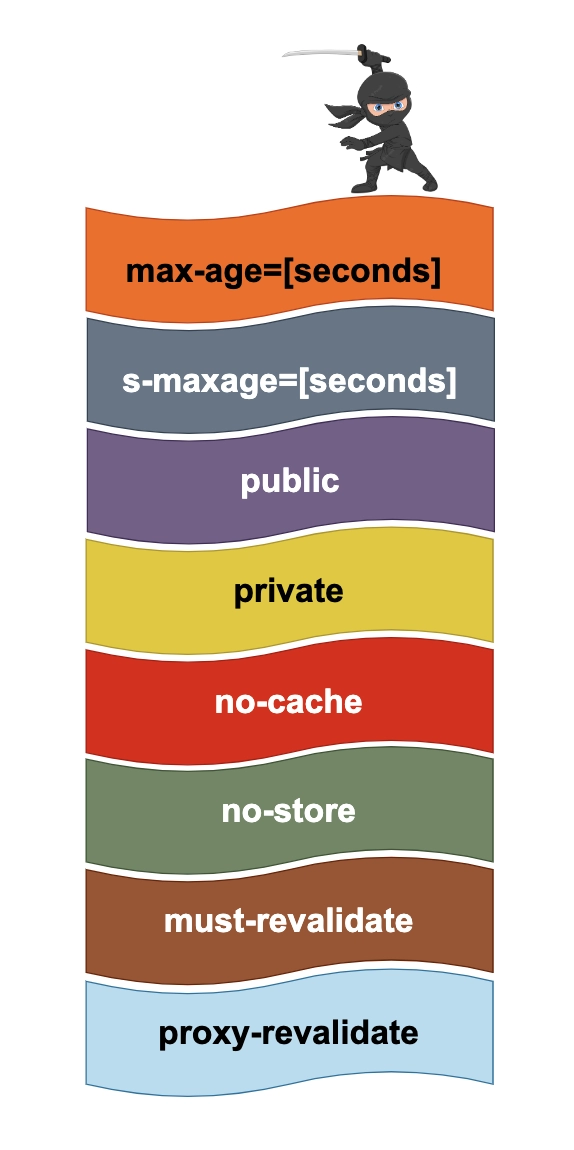
The following are useful Cache Control response headers:
max-age=[seconds].
The maximum period of time that a representative will be regarded as fresh is specified by the parameter max-age=[seconds]. This directive is related to the time of the request, not absolute, like Expires. The number of seconds after the request time that you want the representation to be current is [seconds].
s-maxage=[seconds]
Similar to max-age, s-maxage=[seconds] only applies to shared (such as proxy) caches.
public
When HTTP authentication is required, answers are typically private; however, the public keyword designates authenticated responses as cacheable.
private
Private — Permits only shared caches (such as those in a proxy) and user-specific caches to store the answer.
no-cache
In order to release a cached copy, no-cache forces caches to report each request to the origin server for verification. This is helpful to preserve rigorous freshness without surrendering any of the caching's advantages or to ensure that authentication is respected.
no-store
It directs caches under any circumstances not to preserve a copy of the representation.
must-revalidate
Caches are instructed to abide by whatever freshness information you provide them on a representation by the command must-revalidate. By setting this header, you are instructing the cache to abide closely by your rules even though HTTP permits caches to serve stale representations under certain circumstances.
proxy-revalidate
Similar to must-revalidate, but exclusively for proxy caches, is proxy-revalidate.
Cache Control in Sinatra
Correct header setting is the cornerstone of effective HTTP caching.
This is an easy way to set the Cache control in Sinatra header:
get '/' do
  cache_control : public
  " Cache control in Sinatra"
end
Advice: Configure caching before the filter.
before do
  cache_control : public, :must_revalidate, :max_age => 120
end
When setting the corresponding header using the expires helper, Cache Control in Sinatra will be configured for you automatically:
before do
  expires 600, : public, : must_revalidate
end
You want to think about utilising ETag or last modified to use caches appropriately. Before doing any heavy work, it is advised to call those helpers as they will quickly flush if the client already has the most current version of the answer cached:
get "/article/:id" do
  @article = Article.find params['id']
  last_modified @article.updated_at
  etag @article.sha1
  erb : article
end
Another option is to employ a weak ETag:
etag @article.sha1, : weak
These assistants will simply give the appropriate data to your cache rather than performing any caching on your behalf. Try rack-cache if you need a quick reverse-proxy caching solution:
require "rack/cache"
require "sinatra"

use Rack::Cache

get '/' do
  cache_control: public, : max_age => 48000
  sleep 6
  "hi"
end
According to RFC 2616, depending on whether the resource requested already exists, your application should behave differently if the If-Match or If-None-Match header is set to *. Sinatra treats some resources (such as post requests) as new resources while presuming that resources for safe (such as get) and idempotent (such as put) requests already exist. By including the:new resource option, you can modify this behaviour:
get '/create' do
  etag '', : new_resource => true
  Article.

create
  erb : new_article
end
Pass in the a: kind option if you still wish to utilise a weak ETag.
etag '', : new_resource => true, : kind => : weak
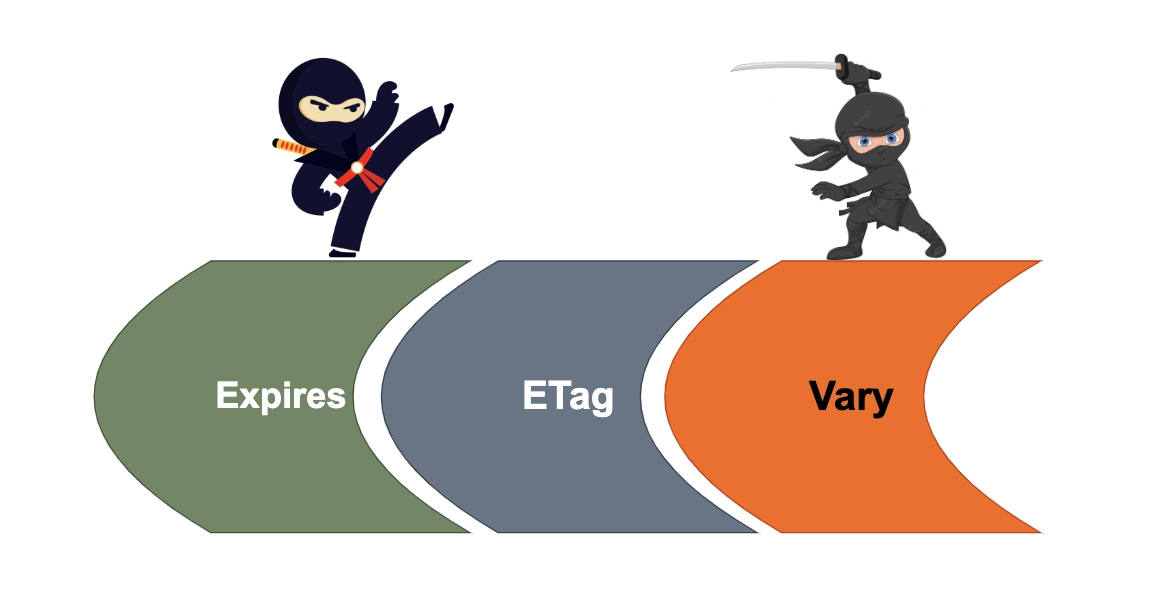
A further set of Cache Headers
Cache-control is just one of the prominent cache headers.
Expires:
The Expires header gives a cached resource a set expiration date and time. Expires: Sat, 13 May 2017 07:00:00 GMT, for instance, indicates that the cached resource expires on May 13, 2017, at 7:00 am GMT. When a cache control header with a max-age directive is present, the expired header is disregarded.
ETag:
When a resource is modified, a token, which is a string of characters surrounded by quotes, such as "675af34563dc-tr34," changes, identifying the version of the served item as an ETag. Before making a request, if a token is unaltered, the browser keeps using its local copy.
Vary:
Vary is a header that specifies which replies must match a cached resource for the response to be accepted. In the header Vary: Accept-Language, User-Agent, for instance, it is stated that a cached version must exist for each combination of user agent and language.
What advantages do caches offer?
Caching has several advantages, including the following:
Performance. A cache is a storage space that speeds up computer operation. A browser cache, for instance, speeds up access to subsequent sessions by storing files from earlier browsing sessions. Data retrieval that would often need a significant amount of time and resources to download is sped up by a database cache.
Offline Activity Applications can operate without an internet connection, thanks to caches. Data that has recently been viewed or is often used can be quickly accessed via the application cache. The cache might not, however, give users access to every feature of a programme.
The efficiency of resources In addition to speed and adaptability, caching aids in resource conservation for physical devices. For instance, quick cache access saves battery life.
Frequently Asked Questions
What is the purpose of cache control in Sinatra?
In both client requests and server responses, the HTTP header known as cache control in Sinatra is used to describe the caching settings for browsers. Policies provide a resource's caching method, storage location, and maximum lifespan.
How does default cache control in Sinatra work?
Private is the standard cache control in Sinatra header. This page may be stored in a private cache via a caching mechanism, and it will only be sent to one client again. This is the preset option. With this setting, the majority of proxy servers will not cache pages.
How does Sinatra function?
The web server responds to a series of queries that Sinatra sends and receives. These requests are contained in a controller file, which is part of your program and communicates with the internet. A controller is a component of the MVC architectural design pattern (Models-Views-Controllers).
How does a Web browser's cache management function?
Cache control in Sinatra instructs your web browser to verify the content against the server rather than immediately referring to the cache. It can be served directly from the cache if it is still fresh. Instructs the browser in no way to cache the content.
What does "Cache Control No Store" mean?
I believe no-store indicates that no cache device is permitted to cache the answer. Contrarily, no-cache means that no cache device is permitted to serve a cached response without first validating it with the source.
Conclusion
We have talked about Sinatra's Cache Control in this blog. Furthermore, a proper header setting provides the basis for efficient HTTP caching. The response header is visible. And some cache benefits.
If you face any doubt, please comment, and we will love to answer your questions.
Want expertise in Ruby on rails for your next web development project? Check out our course.
Nevertheless, you may consider our paid courses to give your career an edge over others!
Do upvote our blogs if you find them helpful and engaging!









 7+ registered

