




Introduction
Businesses can utilize the "Common data service" feature of Microsoft Dataverse, a cloud-based storage platform, to store data from the business application.
We'll learn about Microsoft Dataverse in this article. The Microsoft Power Platform, Office 365, and Dynamics 365 applications are supported by a functional implementation of the Common Data Model.

Source - Link
It includes a sizable collection of preset entities, or "tables," metadata definitions of the most widely used business objects and processes, including Accounts, Contacts, Services, Invoices, etc.
Microsoft Dataverse
A cloud-based solution called Microsoft Dataverse makes it simple to organize various types of data and business logic to support connected apps and processes securely and legally. Dataverse is managed and maintained by Microsoft. It is geographically deployed to comply with your prospective data residence. You will require an internet connection to access and use it because it is not intended for stand-alone use on your servers.
Source-Link
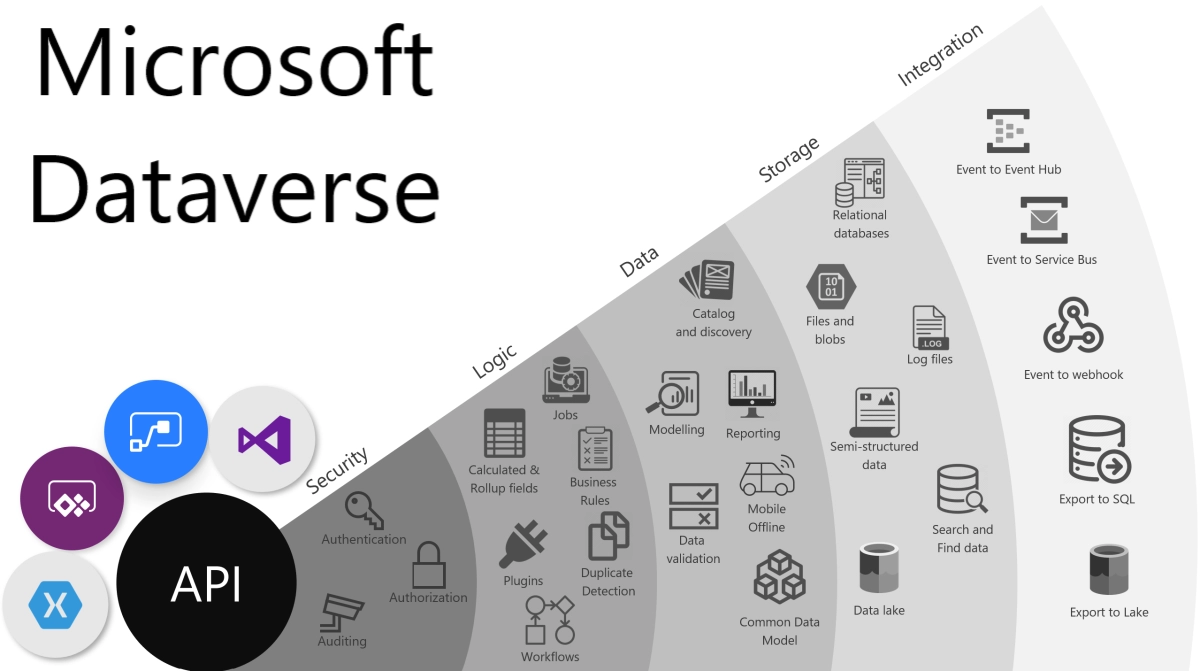
Microsoft Dataverse provides a tonne of capabilities, as you can see. Each featured category is briefly described below.
Data
By letting you explore, model, validate, and report on your data, Dataverse gives you the power to shape your data. No matter how it is used, this control ensures your data looks how you want it to.
Security
Conditional access and multi-factor authentication are supported by Dataverse using Azure Active Directory (Azure AD). It has extensive auditing features and supports authorization down to the row and column level.
Logic
Applying business logic at the data level is simple with Dataverse. The same guidelines apply regardless of how a user interacts with the data. These rules may include workflows, business rules, duplicate detection, etc.
Integration
To support your business needs, Dataverse connects in a variety of ways. Thanks to APIs, webhooks, eventing, and data exports, you have freedom in how you receive data in and out.
Storage
Dataverse keeps your actual data in the Azure cloud. Using cloud-based storage lets, you stop worrying about where your data is located or how it will scale. All of these issues are taken care of for you.


 1+ registered

