Do you think IIT Guwahati certified course can help you in your career?
Introduction
Hii Ninjas! As you know, over the last 20 years, websites have gone through lots of changes, from simple pages to web applications with thousands of developers working on them. To make these complex web applications much easier, they use different patterns in the projects to make the code easy to understand. For this, we will see the most popular pattern, i.e., MVC, also known as Model View Controller.
In this blog, we will discuss MVC Pattern in detail using examples. Let's start going!
What is MVC Pattern
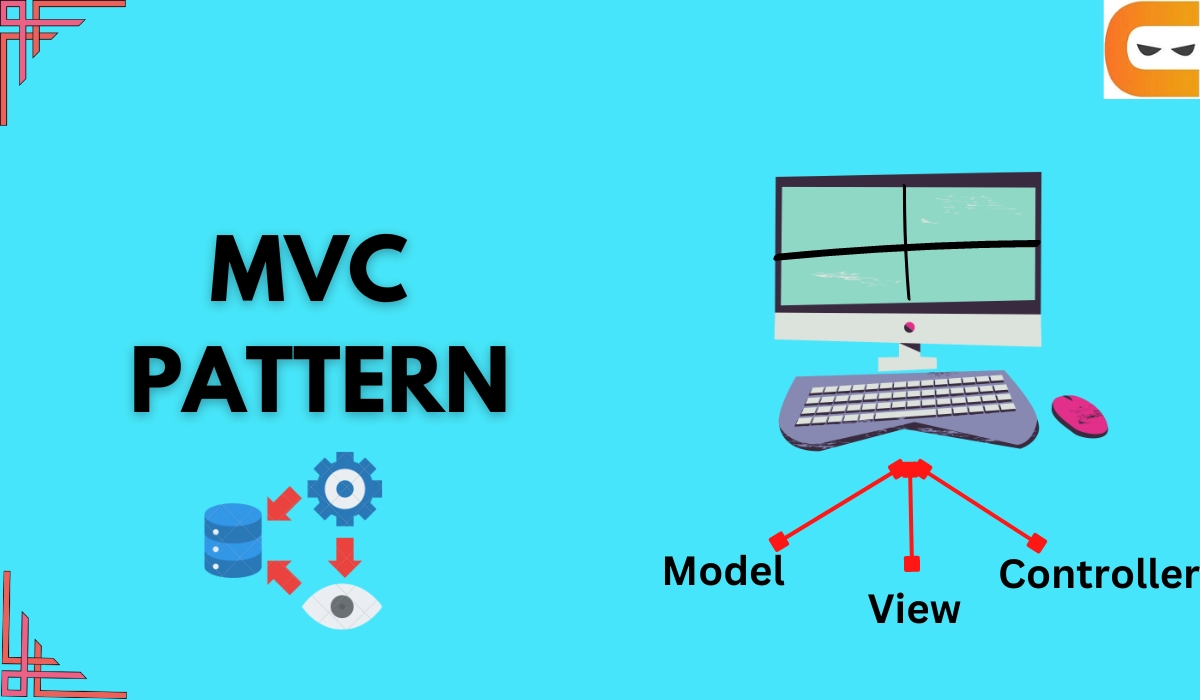
MVC Pattern, i.e., Modern View Controller pattern. It is used to separate the application's concerns. The main goal of the mvc pattern is to break a large complex application into different sections where all have their own purposes and where many developers can work together on the application.
Model
The model component is the backend of the mvc architecture and is responsible for data maintenance. They contain pure application business logic.
The model component interacts with the database and handles all the validation like saving, updating, deleting, etc.
View
The view is the frontend or the GUI of the mvc architecture.
The view component represents the information from diagrams and tables. For example, the user will view all the UI components.
Controller
The controller component is the brain of the mvc architecture. The controller controls the entire request from the user and responds to the user's actions whenever they ask for it. It acts as an intermediary between the other two sections of architecture models and views and should not have very much code.
It handles the data logic using the Model and interacts with the view to provide the final output.
Go through the pic below for more information regarding the components and their functioning.
MVC pattern breaks up a whole application into separate components. That's why it's easy for multiple developers to modify or update the application simultaneously.
Features and Applications of MVC
Various features of the Modern View Controller are:
To take control over JavaScript, URLs, and HTML.
Have complete control over the application's behavior.
It provides separate business logic, input logic, and UI logic.
It is easily modifiable.
It organizes large-size web applications.
Multiple developers can work on Models, controllers, and views at the same time.
Various applications of Modern View Controller are:
Used to implement user interfaces.
Used in designing web apps and mobile applications.
Used in developing web applications.
Integration of MVC Pattern with Various Frameworks
There are various frameworks of MVC pattern that we will discuss further in detail.
Spring MVC
Kendo
Backbone
CherryPy
Web2Py
Spring MVC
The spring model view controller is a java framework that follows the mvc pattern to build web applications. It is a library within the spring framework. It is designed around a DispatcherServlet(a front controller) that simplifies handling HTTP requests and responses.
Spring MVC separates each component where controller, model, DispatcherServlet, view resolver, etc., can be fulfilled by a specialized object. It promotes parallel development.
We'll see an overview of how to integrate Web Flow into a Spring Modern View Controller application.
Configure the Dispatcher Servlet in web.xml using Spring MVC. A Dispatcher servlet is used to handle requests. In Spring MVC, dispatcher Servlet is utilized to develop web applications and REST services.
The next step is dispatching to flows, where flow is one type of handler. You can transmit and process Messages and Runnable objects by using a Handler.
The next step is to Map the specific application resources to your flows.
The next step is to handle the flow workflow depending on the HTTP request information.
Implement the custom FlowHandlers.
The next step is the View Resolution to handle the mapping of the flows.
The next step is to trigger the events from HTML-based views.
Embedding a flow on a page.
Flow output automatically gets saved to the MVC flash scope and your integration is complete.
Here is a list of more example frameworks that can be integrated with the MVC pattern.
Kendo
It is a javascript MVC framework used for mobile and web applications. It has three widgets: UI mobile, UI web, and UI DataViz.
Backbone
It is a simple and easy-to-learn framework when it comes to deployment. It offers a model view controller(MVC) framework which abstracts data into models and DOM into views and binds these two using events.
CherryPy
CherryPy is a Python framework designed on the concept of multithreading. CherryPy follows the Model View Controller(MVC) pattern to build web applications. And this is the reason it is fast and developer friendly.
Web2Py
Web2py supports an mvc pattern that enables the development of web applications simply by dividing them into models, views, and controllers. Web2Py customizes the models and controllers in terms of HTTP requests.
Implementing MVC Pattern with Examples
Let's see an example of the mvc pattern in Java language.
// Model Component
class Project
{
	private String ProjectName;
	private String ProjectId;
	private String ProjectManager;

	public String getProjName()
	{
		return ProjectName;
	}

	public void setProjName(String name)
	{
		this.ProjectName = name;
	}

	public String getId()
	{
		return ProjectId;
	}

	public void setId(String id)
	{
		this.ProjectId = id;
	}
	public String getManager()
	{
		return ProjectManager;
	}

	public void setManager(String manager)
	{
		this.ProjectManager = manager;
	}
}


// View Component


class ProjectView
{
	public void printProjDetails(String projectName, String projectid, String projectmanager)
	{
		System.out.println("Project Details: ");
		System.out.println("Name: " + projectName);
		System.out.println("Id: " + projectid);
		System.out.println("Manager Name: " + projectmanager);
	}
}


// Controller Component


class ProjectController
{
	private Project model;
	private ProjectView view;


	public ProjectController(Project model, ProjectView view)
	{
		this.model = model;
		this.view = view;
	}


	public void setProjectName(String ProjectName)
	{
		model.setProjName(ProjectName);
	}


	public String getProjectName()
	{
		return model.getProjName();
	}


	public void setProjectId(String ProjectId)
	{
		model.setId(ProjectId);
	}


	public String getid()
	{
		return model.getId();
	}

	public void setProjectManager(String ProjectManager)
	{
		model.setId(ProjectManager);
	}


	public String getmanager()
	{
		return model.getManager();
	}


	public void updateViewdetails()
	{
		view.printProjDetails(model.getProjName(), model.getId(), model.getManager());
	}
}


// Main Function


class MVCPattern
{
	public static void main(String[] args)
	{
		Project model = retriveProjectfromDatabase();


		ProjectView view = new ProjectView();


		ProjectController controller = new ProjectController(model, view);


		controller.updateViewdetails();

		System.out.println("After Updating...");
		controller.setProjectName("Akshit Gupta");


		controller.updateViewdetails();
	}


	private static Project retriveProjectfromDatabase()
	{
		Project proj = new Project();
		proj.setProjName("Meta");
		proj.setId("16T69U4");
		proj.setManager("Sarthak Singhal");
		return proj;
	}

}
You can also try this code with Online Java Compiler
In the above code, the Project class consists of the getter and setter methods, which will take and return the value and make the code more secure. The project class sets and gets three details regarding the project(Name, Id, and ManagerName) using getter and setter methods.
ProjectView class(View Component)
In the above code, the ProjectView class is responsible for printing the values of the Project details. It displays the data that the view component gets from the Project class(model component) by the controller and presents the data to the user whenever asked.
ProjectController class(Controller Component)
The controller component acts as an intermediary between the model and the view components. The ProjectController class calls the Project class to set/get the data and update the view of the ProjectView class based on that.
MVC Pattern class
This is the main function where all three classes are tied together. In this class, all the project details are fetched, and the function is used to enter the values, which are further pushed into the model, and then the view is initialized to write the project details on the console.
The CourseController is the brain of the mvc that binds the Project and ProjectView Class. And updateViewdetails method updates all the project details on the console.
Frequently Asked Questions
What are the advantages of MVC architecture?
The main advantage of MVC is that multiple developers can work simultaneously on the components.
What is the role of the View component in MVC?
The view denotes the user interface through which end-users interact. It is mainly concerned with how to present the data that the controller has sent it.
Name some of the frameworks that use MVC concepts.
Some MVC frameworks are spring MVC, CherryPy, backbone, kendo, Django, aurelia, Qlik sense, etc.
Conclusion
Congratulations on finishing the blog! We have discussed the MVC pattern. We further discussed how to implement MVC patterns in Java with the help of an example.
This blog has helped you enhance your knowledge of MVC architecture and MVC patterns. Read out more articles based on this.
But you have just started your learning process and are looking for questions from tech giants like Amazon, Microsoft, Uber, etc. For placement preparations, you must look at the problems, interview experiences, and interview bundles.







 1+ registered

